Berisha: Altin "Troplini" Dumani amnestied electoral crimes, SKA...
/ 2026-10-19 11:44:20Focus


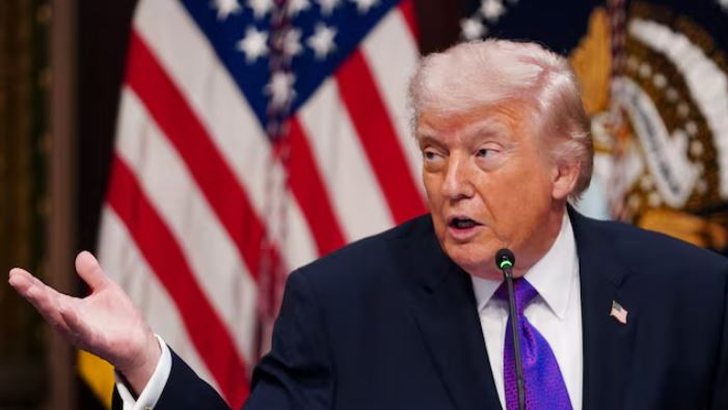
Donald Trump's ambiguous and often contradictory stances on Iran are not only creating uncertainty among international leaders and financial markets, but also within his own administration.
According to sources cited by Axios, the US president's advisers remain unclear about the real strategy he is pursuing in one of the most sensitive crises of the moment.
Some of Trump's aides suggest he is operating more on an improvisational basis than on a well-defined plan. He, they say, prefers to keep all options open, testing different ideas in front of different audiences and reacting to developments.
“At the end of the day, no one knows what he really thinks,” a senior adviser is quoted as saying. A former US official adds that the initial plan only existed for the first week, and then decision-making was done “in real time.”
On the other hand, figures like Senator Lindsey Graham suggest that this ambiguity is intentional: "That's the plan - to not understand anything."
"Being unpredictable"
Secretary of Defense Pete Hegseth justified this approach by emphasizing that the goal is to maintain unpredictability in the face of adversaries.
"The point is to be unpredictable and not tell anyone what you're willing to do," he declared.
Another administration official described the situation as a complex strategy: "It's not 3D chess, it's 12-dimensional."
Despite the harsh rhetoric, Trump has hinted that he may seek a quick exit from the confrontation with Iran, talking about a deadline of "two to three weeks" to declare some form of victory.
Behind the scenes, however, he is increasingly engaging with figures who support a more aggressive approach, such as Lindsey Graham and conservative commentator Mark Levin.
Meanwhile, the US is increasing its military presence in the region, including elements that could be interpreted as preparations for a broader intervention.
Concerns from allies
Key allies in the Middle East, such as Israel, Saudi Arabia, and the United Arab Emirates, view with concern the possibility of the US withdrawing without a final solution, leaving the Iranian regime weakened but still functional.
According to sources, some of these actors prefer a final blow to Iran, while Trump himself seems more reserved about direct involvement on the ground.
One of the options being discussed is a final, strong strike on Iran's military and nuclear infrastructure, followed by a US withdrawal.
Another strategy mentioned is what is called "mowing the grass" - occasional military interventions to weaken Iran's capabilities even after the main confrontation is over.