Protests, violence, curfews: From France to Albania, why Europe'...
/ 2026-10-20 23:47:20Focus


President Donald Trump's "reciprocal" tariffs on dozens of countries took effect on Wednesday, including a massive 104% tax on Chinese goods, deepening his global trade war even as he prepared for negotiations with some countries. Trump's punitive tariffs have shaken the decades-old global trading order, raised fears of a recession and sent stocks around the world plummeting.
The S&P 500 has lost nearly $6 trillion since Trump announced the tariffs a week ago, the deepest four-day loss since its inception in the 1950s. The index is now approaching a bear market, defined as 20% below its most recent high.
Asian markets resumed selling on Wednesday, with Japan's Nikkei down more than 3%, South Korea's currency hitting a 16-year low and government bonds suffering big losses as investors sought the safety of cash. U.S. stock futures also pointed to a fifth straight day of losses on Wall Street.
Trump has given mixed signals to investors about whether the tariffs will remain in place over the long term, describing them as "permanent" but also boasting that he is pressuring other leaders to seek negotiations.
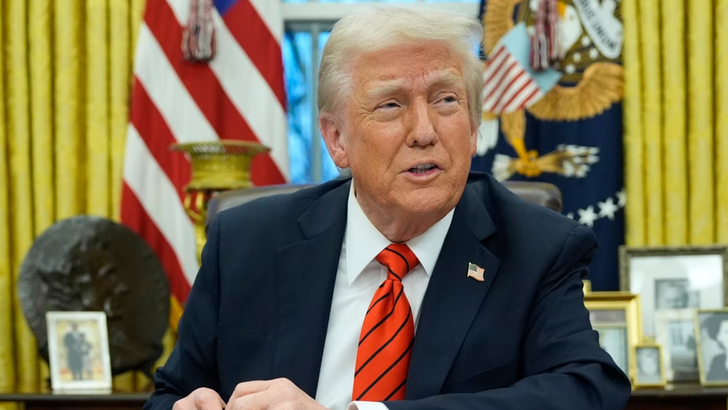
"We have a lot of countries coming in and wanting to make deals," he said at the White House on Tuesday afternoon. He later said he expected China to pursue a deal as well.
The Trump administration has scheduled talks with South Korea and Japan, two close allies and major trading partners, and Italian Prime Minister Giorgia Meloni will visit next week. The deputy prime minister of Vietnam, a low-cost Asian manufacturing hub hit with some of the highest tariffs globally, will speak with Trump's Treasury Secretary, Scott Bessent, later Wednesday. The prospect of deals with other countries had pushed stock markets higher earlier on Tuesday, but U.S. stocks had given up their gains by the end of the trading day.
China promises war
Trump nearly doubled the tariff on Chinese imports, which had been set at 54% last week, in response to counter-tariffs that Beijing announced last week. China has vowed to fight what it sees as economic blackmail.
Other countries are racing to protect their key industries from tariffs, with South Korea announcing a range of emergency measures for the automotive sector, including tax cuts and subsidies.
Some economists have warned that, ultimately, American consumers are likely to bear the brunt of the trade war, facing higher prices for everything from sneakers to wine. A new Reuters/Ipsos poll shows that nearly three-quarters of Americans expect prices of everyday items to rise in the next six months.
The full effects of the tariffs may be felt for some time.
The full effects of Wednesday's tariffs may not be felt immediately, as any goods already in transit as of midnight will be exempt from these new taxes, as long as they arrive in the U.S. by May 27. Trump's previous tariffs, 10% on all imports from many countries, went into effect on Saturday.
The latest round of tariffs, which went into effect at 12:01 a.m. ET, targets countries that Trump has accused of "causing harm" to the United States. The list includes many close U.S. allies, including the European Union, which was hit with a 20% tariff, as well as specific duties on certain industries. The 27-member bloc will vote on the initial countermeasures later Wednesday.
Trump has said the tariffs are a response to barriers imposed on American goods that have hampered American businesses. He has also accused countries such as Japan of devaluing their currencies to gain a trade advantage, a charge Tokyo denies. Japan's finance minister said on Wednesday that trade negotiations with Washington could include foreign exchange rates.
Further tariffs may be on the horizon
Trump has hinted that he may not be done with tariffs. In a speech to Republican lawmakers on Tuesday night, he said he would soon announce "major" tariffs on pharmaceutical imports, one of the few categories of goods exempt from these new taxes.
As the global economic landscape shifts under the weight of these tariffs, the full impact remains to be seen, with international leaders racing to mitigate the effects on their economies and industries./Reuters