"The fate of the homeland is in our hands" - An appeal by Ismail...
/ 2026-10-18 16:09:54Focus


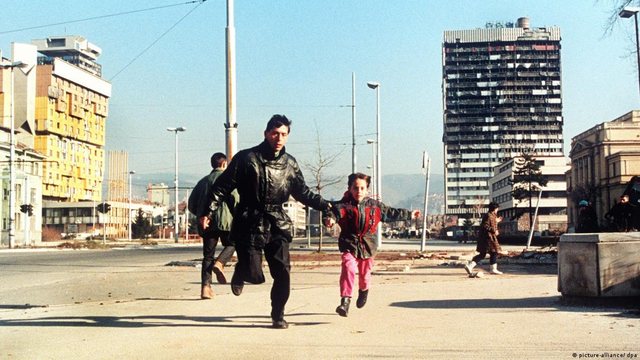
Italy's public prosecutor's office has opened an investigation into allegations that Italians traveled on "sniper safaris" to Sarajevo to shoot citizens during the Bosnian Serb Army's siege of the city, where more than 11,000 people were killed between 1992 and 1996.
The alleged “safari” – a grotesque reference to expeditions to hunt or observe wildlife – took place as Bosnian Serb forces surrounded the city in what became the longest siege of a city in modern European history.
The Milan investigation, led by prosecutor Alessandro Gobbis, was launched after journalist and novelist Ezio Gavazzeni, in collaboration with lawyers Nicola Brigida and former judge Guido Salvini, filed a legal complaint for “murder aggravated by cruelty and despicable motives” against suspected groups of Italians who traveled to Sarajevo to join the trips.
According to Italian media, investigators hope to track down the people who took part in the alleged "safaris", in addition to the five men who have already been identified in Gacazzeni's indictment.
Gavazzeni, who has handed over all his evidence to prosecutors, told Italian newspaper La Repubblica on Tuesday that his lawsuit "reveals a part of society that is sweeping its truth under the carpet."
"Because we are talking about wealthy people with reputations, entrepreneurs, who during the siege of Sarajevo paid to be able to kill defenseless civilians," he added.
How did sniper safaris work?
Between 1992 and 1996, Italian citizens and others who were mostly gun enthusiasts would gather in Trieste, northwestern Italy, on the border with the former Yugoslavia on Fridays for a weekend of “hunting.” It remains unclear who organized the trips for the suspected groups to take.
Participants were reportedly to be flown by Yugoslav/Serbian airline Aviogenex to the hills around Sarajevo, where they would pay off Bosnian Serb militias loyal to President Radovan Karadzic, who was later convicted of genocide and crimes against humanity by the International Criminal Tribunal for the former Yugoslavia in 2016 and sentenced to life imprisonment after an appeal in 2019, for shooting at citizens.
According to La Repubblica, these "tourists" paid up to 100,000 euros, adjusted for current inflation rates and currency fluctuations, as the euro was not introduced until 1999, to join the trips to Sarajevo to carry out the murders.
Gavazzeni claims that participants would be given a price list for the type of assassination that foreigners would pay for the person they wanted to target, with children costing the most, then men, women and the elderly, who could be killed for free.
“[A participant] left Trieste for research. And then he returned and continued his life as usual, respectable in the eyes of everyone,” Gavazzeni said.
"People with a passion for weapons, for pleasure, who prefer to go to bed with a rifle, with money at their disposal and the right contacts of intermediaries between Italy and Serbia. It is the indifference of evil: to become God and remain unpunished," he added.
Gavazzeni’s 17-page dossier includes the testimony of Edin Subasic, a Bosnian military intelligence officer, who claims that he and several of his colleagues informed the Italian military intelligence agency, Sismi, about reports of Italians flying from Trieste to Sarajevo to participate in early 1994. In his testimony, he stated that the Italian intelligence service told him that it had “banned” the trips a few months later.
The Sismi report said it had discovered the launch points in Trieste and had interrupted the operation.
Another witness cited in the case file gave Gavazzeni details of three men now under investigation, who come from Turin, Milan and Trieste. According to a Sismi report cited in the lawsuit, the Milanese man who took part in the 1993 shooting was the owner of a private plastic surgery clinic.
Former Sarajevo mayor Benjamina Karic also sent a case file to the Milan Prosecutor's Office on these "wealthy foreigners involved in inhumane activities," Italian news agency ANSA reported.
Who knew about these "safaris"?
Serbia has denied any involvement in the murders, but investigators believe Serbian intelligence services were aware of the tourist trips.
According to the testimony of Subasic, the Bosnian military intelligence officer who is expected to be one of the first people called by the prosecutor's office, the way the airline trips were organized indicated that the Serbian State Security Service was "behind all of this," ANSA reported.
While Sismi was informed about the first trip, the official told La Repubblica that this was never discussed again between the Bosnian and Italian spy agencies.
The Bosnian consul in Milan, Dag Dumrukcic, told La Repubblica on Tuesday that his government was working in "full cooperation with the investigation".
"We are eager to uncover the truth of such a cruel case and to settle accounts with the past. I have some information that I will pass on to the investigators," Dumruckic added.
The current investigations by Italian authorities into tourist snipers in the Bosnian War could lead to the first trials against European citizens involved in war crimes outside formal military hierarchies, but with the support or knowledge of a warring party - in this case Bosnian Serb forces.