"The fate of the homeland is in our hands" - An appeal by Ismail...
/ 2026-10-18 16:09:54Focus


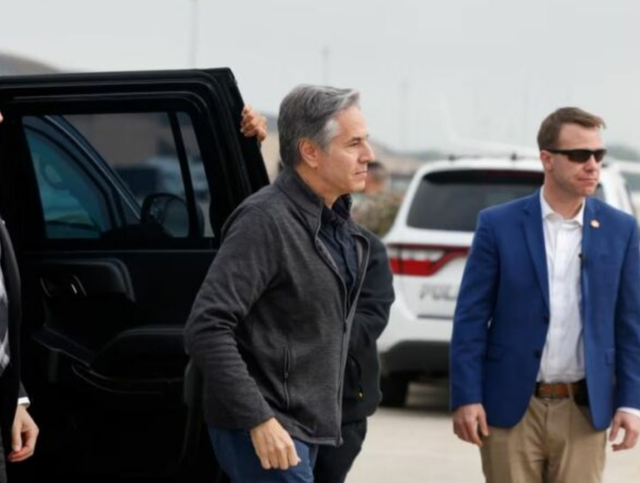
US Secretary of State Antony Blinken left for Jordan on Wednesday and will then travel to Turkey, in an effort to unite regional countries around a shared vision for the future of Syria, following the overthrow of authoritarian ruler Bashar al-Assad.
Mr. Blinken is scheduled to travel to Aqaba, Jordan, and Ankara, Turkey, where he will meet with leaders of major Arab and Muslim countries to discuss developments in Syria, Israel, Gaza, Lebanon and the wider region, according to the US State Department.
A spokesman said Mr. Blinken aims to secure consensus among regional leaders on key principles for Syria’s post-Assad transition. He said they include full respect for minority rights, facilitating humanitarian assistance, ensuring that Syria does not become a haven for terrorism or a threat to its neighbors, and securing and safely destroying its chemical or biological weapons stockpiles. Mr. Blinken has said the United States will recognize a Syrian government that upholds those principles.
Speaking before the House Foreign Affairs Committee on Wednesday, Mr. Blinken said he believes the incoming administration of President-elect Donald Trump will have an interest in preserving what has been achieved toward eliminating the “territorial caliphate” that the terrorist group known as the Islamic State had established in Syria. Mr. Trump and his team have said the United States should not be involved in Syria.
"This is not our fight. Let's see what happens," Mr. Trump said on December 7 on his Truth Social platform.
During a hearing on Wednesday that lasted more than four hours, Mr. Blinken told lawmakers:
"If Syria goes the other way – if it breaks apart – we are likely to see more mass migrations. We are likely to see more areas in Syria become centers of terrorism and extremism, neither of which is in our interest."
In Aqaba, Secretary of State Blinken will meet with Jordan's King Abdullah II and senior officials to discuss bilateral issues, emphasize the U.S.-Jordan strategic partnership, and reaffirm U.S. support for regional stability.
In Ankara, Mr. Blinken will engage with senior Turkish officials to strengthen bilateral cooperation on shared priorities, including counterterrorism and regional stability with NATO ally Turkey.
Some analysts argue that there is a strategic reason, at least for now, to maintain the current American presence of about 900 American troops in Syria to control ISIS and prevent a resurgence of terrorist groups in the region.
"But greater involvement is probably contrary to American interests. And of course, we haven't actually been very involved in Syria since the civil war began, more than a decade ago," Thomas Graham, a former US diplomat now a fellow at the Council on Foreign Relations, tells VOA.
On Tuesday, Mr. Blinken held talks with his counterparts from Jordan, the United Arab Emirates, Qatar and Egypt, where he reiterated the need for a Syrian-led transition.
Syrian rebel leader Abu Mohammed al-Golani said Wednesday he would disband the security forces of the ousted Assad regime. He also said his group was working with international organizations to identify and secure potential sites where chemical weapons could be stored.
The United States reacted cautiously to Golan's comments. Pentagon spokeswoman Sabrina Singh told reporters: "We welcome this kind of stance, but ... actions must match words."
Meanwhile, United States President Joe Biden will participate in a virtual G7 meeting on Friday to discuss Syria and other pressing issues in the Middle East.
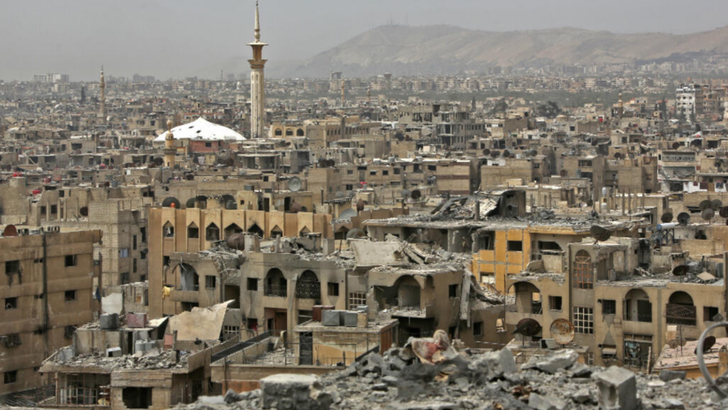
Last Sunday, Syrian rebel groups overthrew the Assad regime after a surprise offensive that lasted less than two weeks, ending decades of brutal oppression. While many Syrians are welcoming Assad's departure, there is also uncertainty about the country's future.
The Islamist group Hayat Tahrir al-Sham, the dominant faction among the opposition forces, is rapidly consolidating power. Meanwhile, foreign actors are competing for influence with the newly formed government or trying to limit its potential as a security threat.
Gerald Feierstein, director of the Arabian Peninsula Affairs Program at the Middle East Institute, told VOA that “the Turks view political Islam much more positively and have longstanding ties to Hayat Tahrir al-Sham and the Golan — not close, but they have ties. The Gulf countries will be watching with more concern which direction Damascus will go.”
Mr. Feierstein noted that while there is currently “not a huge gap” between Turkey and the Gulf countries’ perspective, this difference could deepen over time if the new government in Damascus pursues a tougher Islamist stance than expected.
Syria's nearly 14-year civil war has killed 500,000 people and displaced half of its pre-war population of 23 million. Millions of Syrians have fled to neighboring countries such as Jordan, Turkey, Iraq and Lebanon, with many continuing their journey to Europe in search of safety. / VOA