How Belinda Balluku is fabricating the rumor about Top Channel's...
/ 2026-10-19 16:19:54Focus


The German government has accused Russia of a major cyberattack and disinformation campaign during the federal election campaign. The Russian ambassador has been summoned to the Foreign Ministry, a ministry spokesman said on Friday.
First, a cyberattack against German air traffic control in August 2024 can be clearly attributed to the Russian hacking group "Fancy Bear." "Our intelligence findings confirm that the Russian military intelligence service GRU bears responsibility for this attack," the spokesman added.
Furthermore, it can now be definitively stated that Russia, through the "Storm 1516" campaign, attempted "to influence and destabilize both the recent federal elections and the ongoing internal affairs of the Federal Republic of Germany."
There is reliable information indicating that organizations supported by the GRU intelligence service were behind this campaign.
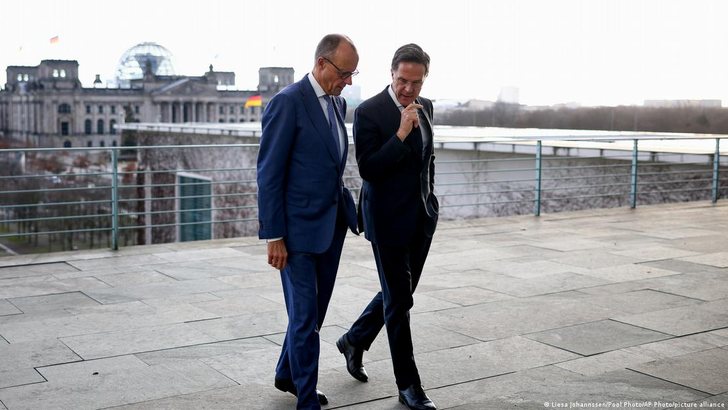
Specifically, the investigation concerns the "Storm 1516" campaign, which has been running since 2024 and is primarily aimed at influencing Western elections. Ahead of the German federal elections, the campaign targeted, among others, the Green Party's lead candidate, Robert Habeck, and the then CDU chancellor candidate, Friedrich Merz. Two days before the snap elections on February 23, 2025, the German government announced that German security authorities had received indications that fake videos about alleged ballot manipulation were part of a Russian disinformation campaign.
The German Foreign Ministry spokesman said that Russia's actions "very concretely threaten our security, not only through its aggressive war against Ukraine, but also here in Germany."
He added that the German government, in coordination with its European partners, would "take a series of countermeasures to make Russia pay for its hybrid actions."
From January 2026, cross-border travel by Russian diplomats within the European Schengen Area will also be monitored, a Foreign Ministry spokesman said. “The aim is to facilitate better information exchange and minimize intelligence risks.” Further bilateral restrictions on Russian diplomatic personnel are also planned. The spokesman did not provide details.
According to its statements, the German government has long noticed an increase in hybrid threats from Russia. Hybrid warfare is understood as a combination of military, economic, intelligence and propaganda tools, which can also be used to influence public opinion; it also includes state-sponsored cyberattacks.