"We are drowning..." - From Lisbon, Milan to Tirana, "The Guardi...
/ 2026-10-18 23:13:32Focus


The winner of the German election, Friedrich Merz, warned the United States about turning its back on allies, but also urged Europeans to strengthen their defensive capabilities, saying it is now "5 minutes to midnight for Europe."
His comments underscored the turmoil that has engulfed the transatlantic alliance since the re-election of US President Donald Trump and fears that he could reach a deal with Russia over Ukraine while Kiev and Europe simply stand by.
Merz's conservatives are seeking to quickly form a government after winning national elections on Sunday, but will face complicated coalition talks and the prospect of a truce parliament as far-right and left-wing parties surged.
Time is running out for Europe's ailing largest economy. German businesses are seeking help to be globally competitive, society is divided over migration, and the new government must also deal with a confrontational Trump administration threatening tariffs, as well as a hostile Russia and an assertive China.
"And what we also see with the greatest concern, of course, is the attempt (by Trump) to make a deal with Russia on Ukraine over the heads of the Europeans, over the heads of Ukraine," Merz said at a press conference.
"It will come as no surprise to you when I say that this is unacceptable for both Ukraine and Europe," Merz said, adding that it would be difficult if those who decided "America first" were to make their motto "America alone."
His conservative bloc wants to form an alliance with Olaf Scholz's Social Democrats (SPD), who came in third place, after the far-right Alternative for Germany (AfD) climbed to a historic second place.
But Merz's offer of an alliance with the SPD comes after a bitter campaign that highlighted deep policy divisions, particularly over migration. The SPD, coming off its worst post-war record, could set a high price for any deal.
The AfD and the radical Left Party together secured a third of the seats in the new parliament, enough to block constitutional changes needed to ease state borrowing limits – changes that some economists say are crucial to reviving the domestic economy.
Debt curbing
Merz said he was in talks with other parties to reform the debt curb that limits borrowing, even before the new parliament is officially sworn in. He would also urge allies to create another special fund outside the budget to boost defense spending.
However, a resurgent “Left” party and the AfD could possess a blocking minority in parliament that could prevent any increase in defense spending needed to support European security.
The Left said on Monday it wants more loans, but its support will depend on not using the money for rearmament. Both the AfD and the Left oppose military aid to Ukraine.
“Friedrich Merz must be strengthened now,” said Left co-leader Jan van Aken.
Known until now as an Atlanticist, Merz again on Monday questioned the credibility of the United States as an ally, adding: “This is really 5 minutes to midnight for Europe.”
On Sunday, Merz criticized what he called "harsh" comments from the Trump administration during the election campaign, comparing them to hostile interference from Moscow.
He also warned Washington not to create divisions by offering preferential tariffs to some European Union members.
In another bold move on Monday, Merz invited Benjamin Netanyahu to visit Germany in defiance of an arrest warrant for the Israeli prime minister issued by the International Criminal Court over alleged war crimes in Gaza.
Merz's conservative CDU/CSU bloc took first place in Sunday's election with 28.5% - their second-worst result of the post-war era - while the AfD won 20.8%, its best result ever, according to provisional results.
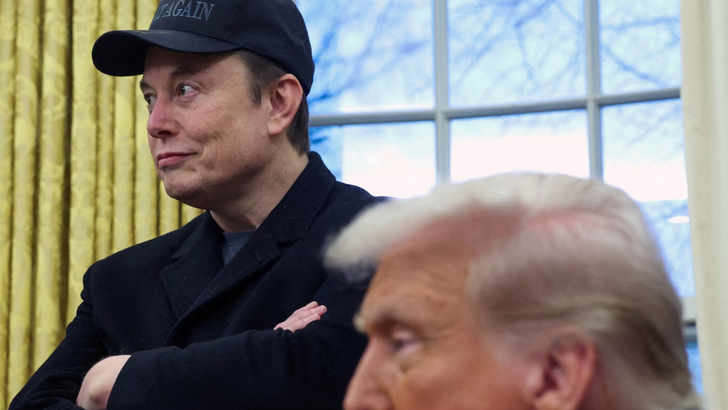
However, the main parties rule out the possibility of working with the AfD, a party that is monitored by German security services on suspicion of extremism, but which has been supported by some Americans, including billionaire Elon Musk.
Hard work ahead
Merz, who has no previous experience in office, aims to have a government in place by Easter, although the SPD warned that its support was not a given.
During the election campaign, Merz promised a radical crackdown on immigration, saying he would not compromise on the issue. He drew sharp criticism from the SPD for pushing through a parliamentary resolution on migration last month with the support of the AfD.
The move was seen by critics as an unforgivable breach of a political quarantine to keep the AfD out of power. SPD politicians said they could no longer trust Merz as a result.
Analysts say the pressure is on for the next coalition to come together quickly to hold its own against the Trump administration and fend off the AfD by showing that the mainstream parties can address voters' concerns.
If not, then the 12-year-old AfD, which is expected to be the largest opposition party in the Bundestag, could be a frontrunner for the next election set for 2029.
Musk reaffirmed his support for the party on Monday, predicting in X that the AfD "will be the majority party by the next election."