Is this police force professional and capable of handling violen...
/ 2026-10-16 18:54:07Focus


Cuba's foreign minister has accused the United States of constructing a "fabricated case" to justify military intervention, following reports that Havana has secured attack drones that could hit Florida.
Bruno Rodríguez declared that Cuba "neither threatens nor wants war," after the American portal Axios reported, citing classified intelligence, that Cuba already possesses 300 drones and is discussing the possibility of striking nearby American targets.
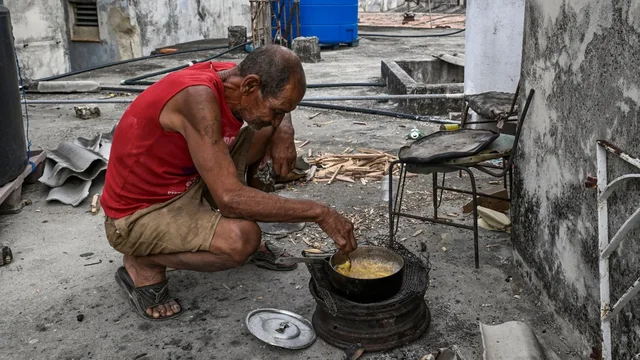
Cuba is facing a severe fuel crisis, exacerbated by what is considered a US blockade on oil, as the Trump administration is increasing pressure on Havana to "make a deal."
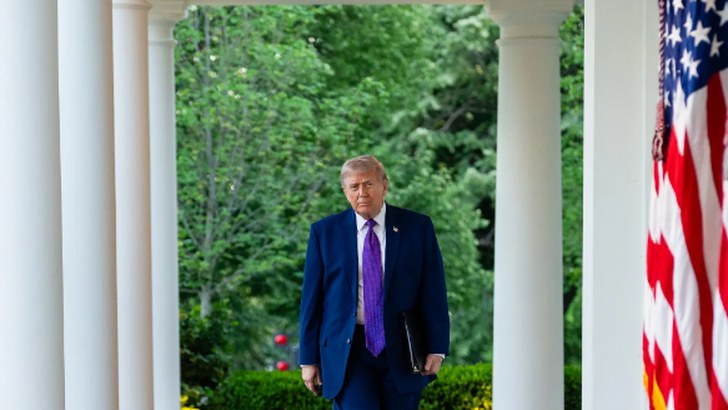
US President Donald Trump has threatened the Cuban communist regime with an intervention similar to the one that led to the capture of Venezuelan President Nicolás Maduro.
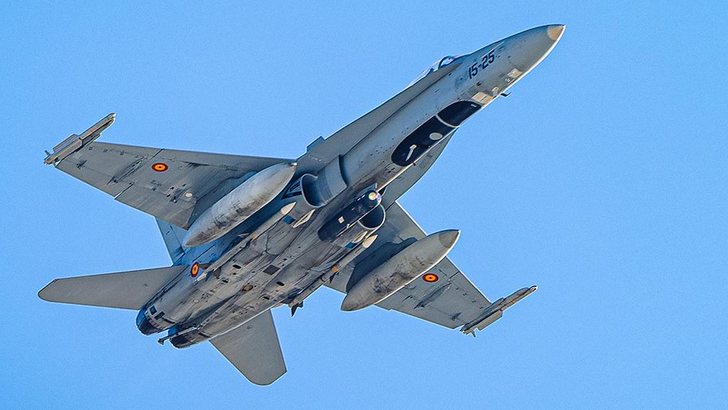
According to the Axios report , Cuba is considering using these drones to strike the US base at Guantanamo Bay on Cuban soil, as well as warships and possibly Key West in Florida. The report quotes a US official as saying that intelligence, presented as a possible basis for US military intervention, also suggests the presence of Iranian military advisers in Havana.
Iranian drones have played an important role in both the Middle East war and Ukraine.
"Without any legitimate reason, the US government is building a false case day after day to justify the ruthless economic war against the Cuban people and a possible military aggression," Rodríguez wrote on social media.
He also accused the media of collaborating with this narrative, spreading slander and publishing insinuations that, according to him, come from the US government itself.
Rodríguez added that, although Cuba does not want war, it is preparing for "external aggression" and for self-defense.
Havana has been in talks with the US for several months to find a solution to the disputes between the two countries, but the only Russian oil shipment allowed to reach the island ran out earlier this month.
Meanwhile, Cubans are facing persistent power outages that have affected hospitals, water pumping stations, public transportation and basic services. These difficulties, combined with food and medicine shortages, have also sparked rare signs of public discontent with the communist regime, which is also facing deteriorating infrastructure.
Until recently, Cuba had managed to survive under Western sanctions thanks to the help of regional allies, particularly Maduro's government in Venezuela, which is believed to have been sending it around 35,000 barrels of oil a day before Maduro was captured by US forces in early January.
Now it appears that the Trump administration is further increasing the pressure on Havana.
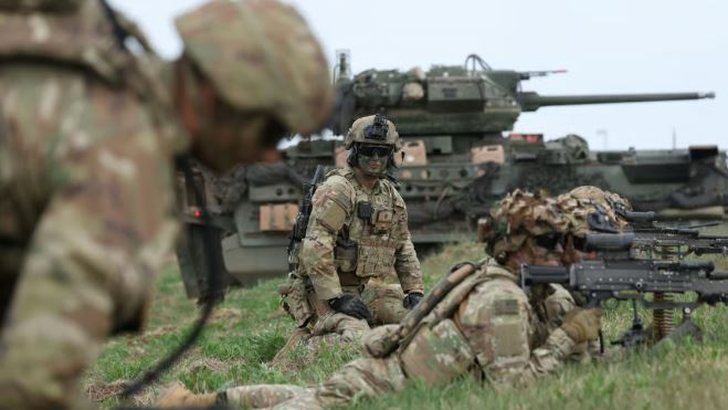
According to the New York Times , American surveillance flights around Cuba have increased and a new buildup of American forces in the region is being planned.
CIA Director John Ratcliffe had demanded during a visit to Havana that Cuba "no longer be a safe haven for US adversaries in the Western Hemisphere."
His meeting with Cuban officials came at the same time as reports emerged that the US was preparing to file criminal charges against Raul Castro, who took over Cuba after the ouster of his brother Fidel Castro, the leader who overthrew the US-backed government in 1959.
It was a federal indictment against Nicolás Maduro that the Trump administration used as justification for the bold operation in Caracas that led to the arrest of him and his wife, Cilia Flores. Both are expected to stand trial in New York on charges that include drug trafficking.
In the months leading up to that operation, Trump had repeatedly accused Maduro's government of posing a threat to the US, while a large US military force was massing nearby.
Since Maduro's capture, Trump has declared that "it's Cuba's turn" and even said that he would be "honored to take Cuba."
Trump has increasingly seen American policy in the region as a return to what is known as the Monroe Doctrine of 1823, according to which the US should be the sole arbiter in the Western Hemisphere. He has even dubbed this approach the “Donroe Doctrine.”
His administration has shown greater interest in Latin America and in leftist leaders with whom it clashes ideologically, more so than his recent predecessors. (BBC)