Is this police force professional and capable of handling violen...
/ 2026-10-16 18:54:07Focus


The Pentagon's decision to cancel the planned deployment of a US armored brigade to Poland has added to the uncertainty over the future of the United States' military presence in Europe.
The move, which affects more than 4,000 troops and heavy military equipment, came just days after President Donald Trump's administration announced the reduction of about 5,000 US troops from Germany.
Many analysts have interpreted this development as part of a broader review of the American military footprint on the continent.
In this climate of uncertainty, a question began to circulate in the Western Balkans: could Kosovo also be affected?
For now, the official signal from Washington is negative.
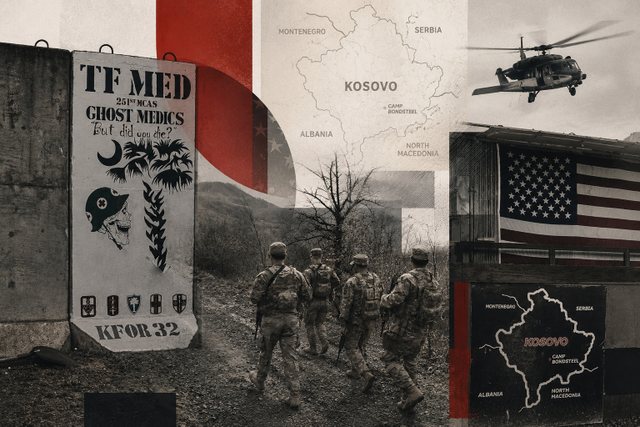
In a communication with Albanian Post, the Pentagon confirmed that there are currently no planned changes to the American military presence within the NATO mission in Kosovo, KFOR.
"We have no changes in the position of forces to announce regarding KFOR," the official US Defense response states.
The wording is brief and diplomatically cautious, but it essentially sends a clear signal: unlike Germany or Poland, Kosovo does not appear to be part of the current phase of the review of the US military presence in Europe.
For security people in Kosovo, such a formulation does not read as a routine bureaucratic response.
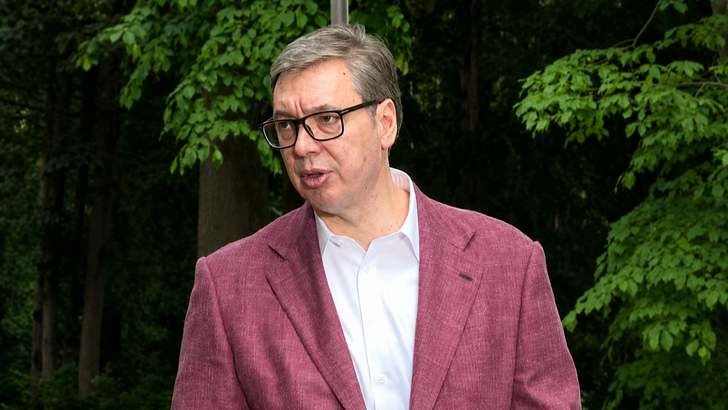
Former Kosovo Security Force colonel Afrim Veseli says that the weight of the American presence in Kosovo cannot be understood solely through statistics or the number of troops.
“In our case, the American military presence is vital; it is a matter of existence, freedom and our state itself,” he tells the Albanian Post, arguing that American influence in Kosovo has historically been much greater than the simple military dimension.
For Veseli, any discussion on a possible reduction of the American role in the region cannot be seen in isolation from Kosovo's security history.
"Wherever there is an American military presence, that country and that region are safer," he argues.
According to reports confirmed by American and European media, the Pentagon suddenly canceled the deployment of the 2nd Armored Combat Brigade of the 1st Cavalry Division to Poland - a mission in which some parts of the personnel and equipment had already begun moving towards Europe.
The decision also caught some American military officials by surprise, while NATO was forced to reassure allies by stating that changes to American rotational forces do not affect the alliance's plans for deterrence and defense.
In parallel, the Trump administration has announced that around 5,000 US troops will leave Germany within the coming months, bringing the US presence in Europe closer to the levels that existed before the Russian invasion of Ukraine in 2022.
For many European capitals, the message is clear: Washington is seriously reviewing the global distribution of its military forces.
In the background lies a broader strategic shift by the Trump administration, which has long argued that Europe should take more responsibility for its own security, while the US should shift its focus to the Indo-Pacific, the rivalry with China and the crises in the Middle East.
At first glance, Kosovo may not seem like the biggest strategic priority for Washington in such an era.
However, this is where the paradox begins.
Because while the US reduces its presence in other parts of Europe, Kosovo remains one of the places where the political symbolism of the American presence often weighs more than the number of troops themselves.
Camp Bondsteel, near Ferizaj, remains one of the most important American assets in the Western Balkans.
Built after the NATO intervention in 1999, the base serves as the main American center of operations in Kosovo and a key logistical hub for NATO's presence in the region.
The United States also leads the Eastern Regional Command within the KFOR structure, giving the American presence a much larger role than the number of troops alone might suggest.
According to data from the Council on Foreign Relations, around 690 US troops are currently in Kosovo as part of KFOR – a relatively modest number compared to US contingents in Germany, Italy or Poland, but with disproportionate political and strategic weight for regional stability.
For Veseli, this is precisely why the American presence in Kosovo cannot be seen as an ordinary military statistic.
"The American soldier defends the mission and freedom of Kosovo as if he were defending America itself," he argues, adding that the American role in Kosovo has a deterrent effect that goes far beyond the symbolic dimension.