Berisha: Altin "Troplini" Dumani amnestied electoral crimes, SKA...
/ 2026-10-19 11:44:20Focus


A leaked draft of the US national security strategy suggests that the US government is trying to divide the EU. The US is reportedly planning to pull four countries out of the union. How realistic is this?
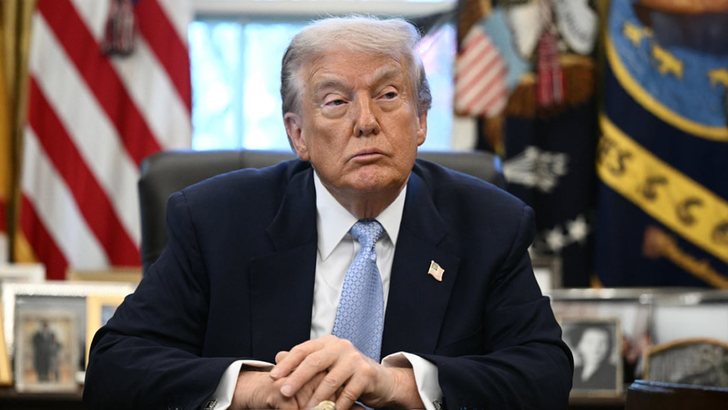
Transatlantic relations have been severely damaged since Donald Trump came to power. The publication of the National Security Strategy (NSS) on December 4, 2025 was understood by many European politicians as an open insult. In the strategy document, which every US government must submit to Congress, the Trump administration describes Europe as a continent in decline. It explicitly speaks of a “censorship” of freedom of expression in Europe, a “suppression of political opposition” and a “potential extinction of civilization” due to the current migration policy.
But in the meantime, information has leaked from an unpublished part of the NSS document, which is even more complicated and contains more details about how the US will act in the future in Europe.
The draft stipulates that US cooperation should be intensified, especially with Italy, Austria, Poland and Hungary, "with the aim of detaching them (from the European Union)," cites the US portal Defense One, which claims to have read the draft.
When asked by the Defense One portal, the White House denied the existence of such a draft.
However: Is the US trying to divide the European Union? Why exactly are there efforts to reach out to these four EU countries?
Hungary, Austria, Poland, Italy
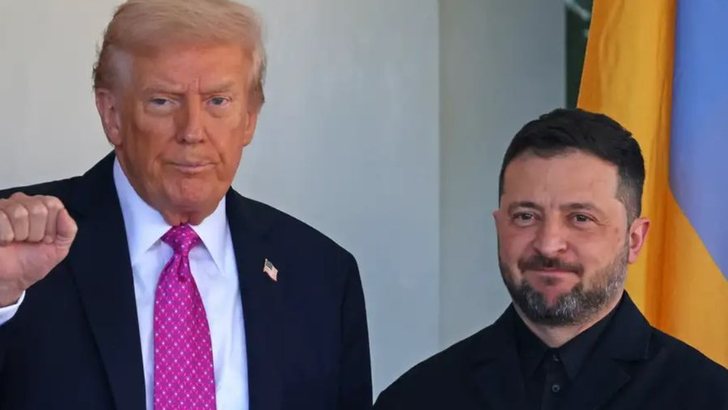
Less surprising on this list is Hungary. Prime Minister Viktor Orban and President Donald Trump are considered close allies. Orban supported Trump during the 2016 election campaign - at the time the only prime minister from the EU. The two know what they have in common. Orban's stances consistently destabilize the EU, weakening an institution that Trump deeply distrusts.
Orbán, for his part, is enjoying the political support of the superpower. The US has apparently offered Hungary, similar to Argentina recently, a $20 billion “financial shield” – Hungary’s economy has been weakening recently and important EU funding has been suspended. In a recent interview with Politico, Trump did not recall making such a promise. But there have been talks about financial cooperation. Trump is always ready to help his – as he calls it – “great friend”.
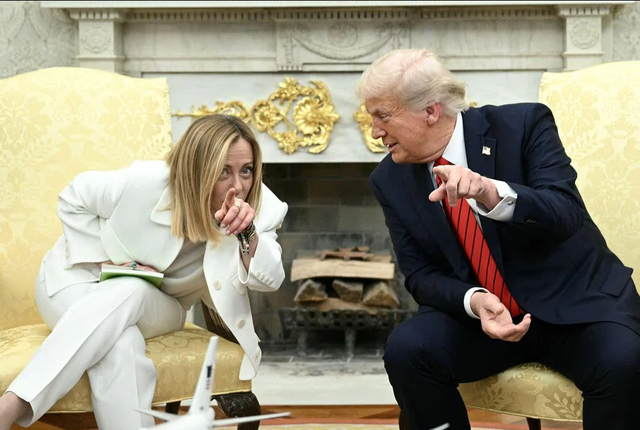
The US president also praises Italian Prime Minister Giorgia Meloni and her post-fascist Fratelli d'Italia party.
However, Daniel Hegedus, regional director for Central Europe at the German Marshall Fund of the United States, thinks it is a "misunderstanding" by the US government that Meloni could come out against the EU.
Because although Meloni has a similar worldview to Orban, she has not become one of the blockers in the EU, but has a very pragmatic stance: No one else has understood better than Meloni what a stable and functioning EU brings to her country, Hegedus tells DW.
Although Poland and Austria do not currently have right-wing populist governments, until recently both countries had right-wing Eurosceptic parties in power, which continue to have great influence. In the last elections in Austria, the Freedom Party (FPÖ) emerged as the largest force and is currently leading the polls. In Poland, the candidate of the right-wing conservative Law and Justice party (PiS) won the presidential election in the summer with Karol Nawrocki. It is possible that the Trump administration in both these countries will soon feel that it can once again have greater influence.
Why not Slovakia and the Czech Republic?
Observers may be surprised that the list of countries does not include the Czech Republic and Slovakia.
In the Czech Republic, the right-wing populist ANO party of billionaire Andrej Babis won the parliamentary elections in October and has formed a coalition with other right-wing parties such as the Drivers' Party (Motoriste) and the far-right Freedom and Direct Democracy (SPD).
Slovakia has been moving to the right since 2023 under the government of Robert Fico. His nominally social democratic and in fact largely nationalist right-wing Smer-SD party was recently expelled from the ranks of the Social Democratic Parties of Europe (SPE).
Both Babis and Fico are EU skeptics, both have the potential to foment chaos in European decision-making and undermine the EU's authority on strategic issues, particularly as it relates to Russia and Ukraine – traits that the Trump administration in its current orientation should have appreciated.
The fact that these two countries do not appear in the strategy document, according to political scientist Hegedus, has to do with the roots of each party. ANO was not classified as a classic left-right party for a long time, while Smer-SD initially considered itself left-wing. “You can clearly see how ideologically the American approach is,” says Hegedus. “Since Smer and ANO do not have a classic right-wing populist background, they are not considered ideal companions, even though they may pursue policies that are beneficial to the Trump administration.”
Gradual decomposition of European integration
The first attempt by the new US administration to interfere in democratic processes in Europe came earlier this year, when Vice President JD Vance gave a provocative speech at the Munich Security Conference. This attempt was partly dismissed by observers of transatlantic relations, who argued that the new administration in Washington must first define its new role. But since then, the US government has repeatedly intervened in European election campaigns, such as those in Germany, Romania and Poland. The intervention always follows the same pattern: Support when the Trump administration sees ideological allies – and who weakens Brussels.
The US goal cannot be a Huxit, Italexit, Auxit or Polexit, experts like Hegedus believe – but a gradual disintegration of European integration, which it can encourage with diplomatic, political and perhaps even financial support.
The first signs of this are now visible: the EU, for example, has agreed to gradually wean itself off Russian energy. By the end of 2026, the import of liquefied natural gas will be banned, and by November 2027, the import of gas via pipelines.
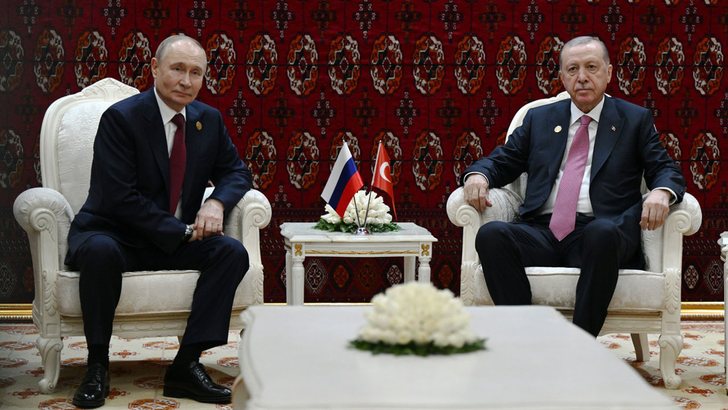
Hungarian Prime Minister Orban in November received an exemption from Trump in the context of US sanctions on Russian gas imports. He stated that the EU will not accept this decision and that the case will be referred to the European Court of Justice. At a joint press conference with Turkish President Recep Tayyip Erdogan on Monday (08.12.2025), Orban stated that Turkey will continue to guarantee that Hungary will receive gas supplies through the TurkStream pipeline.
Expert Hegedus believes that in the coming years there will be more and more cases where member states in certain sectors do not adhere to the rules that have been set jointly, and this will increasingly call into question European integration. The EU would thus be increasingly eroded - until it could actually lose its relevance. / Taken from DW