Is this police force professional and capable of handling violen...
/ 2026-10-16 18:54:07Focus


The Bank of Albania and Governor Gent Sejko have raised a weak alibi in SPAK, when they reply to the special prosecutors as to why they did not revoke the license of Micro Credit Albania. The letter obtained by Voxnews.al and submitted to SPAK on April 15, 2024 and signed by the deputy governor, Natasha Ahmetaj, says textually that:
'The Bank of Albania has not proceeded so far with taking the measure of revoking the license, taking into consideration several factors. By revoking (abolishing) the license, MCA would no longer be subject to supervision by the Bank of Albania and thus would be outside the scope of supervision, which would result in the subject no longer reporting to the credit register, no longer communicating with the Bank of Albania and thus situations could be created, perhaps even more serious in relation to the obligations of the borrowers'.
The argument raised by the Bank of Albania does not hold for several reasons. First, the Bank of Albania, as Voxnews.al was able to confirm, has been notified in several cases by second-level banks of the illegal, abusive practices and fraud schemes in which Micro Credit Albania was involved.
Sources of Voxnews.al claim that the first notification to the Bank of Albania regarding the actions of the enforcement offices acting on behalf of Micro Credit Albania, arrived at the Bank of Albania in the fall of 2019, almost five years ago. The letter was from a second-tier Greek bank that has been closed in Albania today.

In it, the second-tier bank raised concerns that the enforcement office had sought to block the accounts where some of its customers received salaries. The second-level bank expressed concern that this practice was extralegal and violated the rights of borrowers, since the vital minimum was not guaranteed.
However, the Bank of Albania and Governor Gent Sejko reacted only at the end of 2023, and the measure taken was not the annulment of Micro Credit Albania's license, but its revocation, leaving opportunities to the financial institution, which is suspected of extorting from citizens until 200 million euros through fraud schemes to continue collecting the existing loan portfolio.
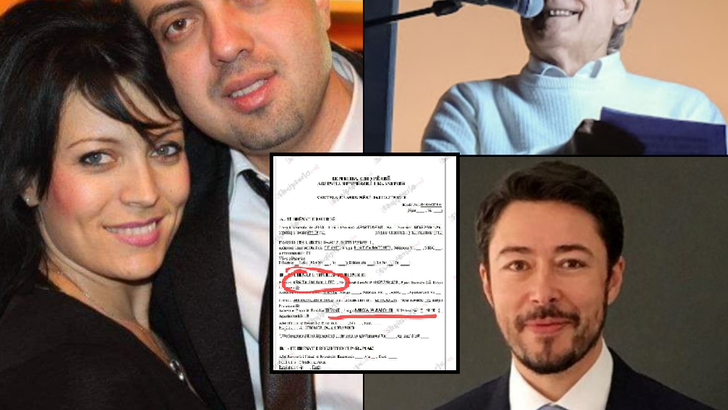
Secondly, the official documents of the Bank of Albania, such as the List of Non-Financial Entities whose licenses have been revoked, also have Micro Credit Albania, without clarifying by what decision this license was revoked and when. The company owned by Olsi Ibros, which is accused of setting up a real fraud scheme with Arben Meskutin, according to Bank of Albania documents, was first licensed on February 27, 2015, while it received another license in May 2016.

Thirdly, the Bank of Albania and Governor Gent Sejko were aware that a good part of the victims of the company Micro Credit Albania are citizens who received the loan from the second level banks before 2015. The banks, before this year, sold them Micro Credit Albania loans, avoiding a law passed at the time, which forced them to delete from the balance sheets all loans that had not been paid for 3 years. The law only required banks to write off these loans, not financial institutions. The latter were revived even more through purchases of troubled loans from banks.
The analysis of the letters with the concerns raised by the second-level banks, as well as the file of the Prosecutor's Office of Tirana, which has already been forwarded to SPAK for competence, suggests that there are about 100 thousand citizens who have fallen prey to the fraudulent Micro Credit scheme Albania, which is neither new nor unknown to the Bank of Albania.
It is only about one company, not including other companies that have applied the same scheme, suggesting that it is a financial scandal of almost the same proportions as that of the pyramids before 1997.
©Copyright VoxNews
This article is exclusive to VoxNews, it is copyrighted according to Law No. 35/2016, "On copyright and related rights". The article can be republished by other media only by citing VoxNews and placing the source link at the end, otherwise any violator will be held responsible according to Article 178 of Law No. 35/2016.