Is this police force professional and capable of handling violen...
/ 2026-10-16 18:54:07Focus


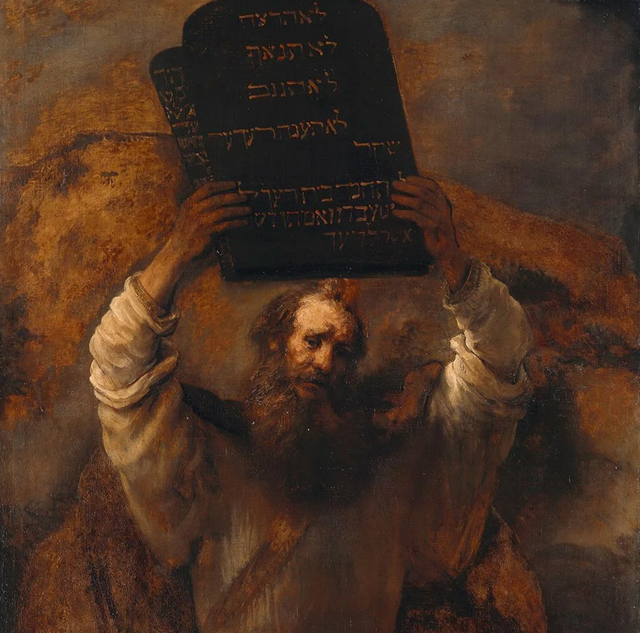
A new interpretation of 3,800-year-old inscriptions discovered in an Egyptian turquoise mine has reopened one of archaeology's most controversial debates: Did Moses, the biblical leader of Exodus, ever exist?
Independent researcher Michael S. Bar-Ron believes the answer lies in Proto-Sinaitic inscriptions carved into rock walls at Serabit el-Khadim, a mining site in the Egyptian Sinai Peninsula. After eight years of studying using high-resolution photos and 3D scans provided by Harvard's Sam Museum, Bar-Ron says he has discovered two inscriptions that read "lord mi'Moshe" — Hebrew for "This is from Moses" — and "ne'um Moshe," which means "A saying of Moses."
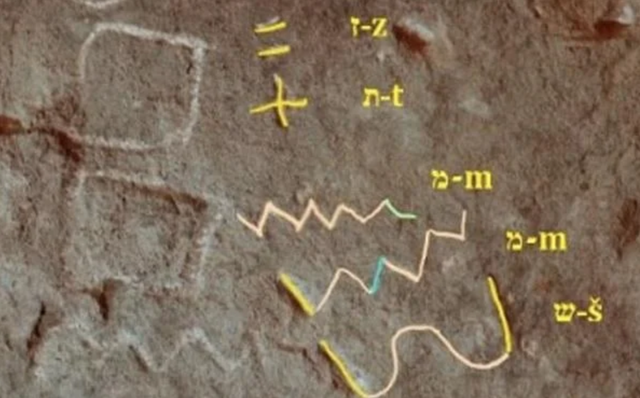
If verified, these will be the oldest extra-biblical overscription references to Moses, a figure long documented in religious tradition but never confirmed by archaeology. The inscriptions are part of a group of over two dozen Proto-Sinaitic inscriptions first discovered by Sir William Flinders Petrie in the early 20th century. These writings, which were most likely created by laborers who spoke Semitic languages during the reign of Pharaoh Amenemhat III (c. 1800 BCE), represent some of the earliest alphabetic texts known, even before the Phoenician one.
However, Bar-Ron's theory is not without debate. In his protothesis (or early thesis), he suggests that these inscriptions are the voice of a single writer who had knowledge of Egyptian hieroglyphs and used Proto-Sinaitic script to encode religious and personal messages. He believes that the writer's personal tone and poetic form support a single authorship.
Inscriptions give more than possible personal marks. Nearby inscriptions contain invocations of "El," the archaic Jewish deity, while others praise Baʿalat, the Semitic counterpart of the Egyptian goddess Hathor. Some of the inscriptions in honor of Baʿalat appear to have been scratched by El's followers, indicating a theological division. A burned-out temple dedicated to Baʿalat and inscriptions mentioning "overseers," "slavery," and a call to leave, perhaps interpreted as "niʻmosh" ("let us leave"), support religious rebellion and mass exodus, recalling the biblical Exodus.
Archaeologists have also discovered the Reniseneb Stele and the seal of an Asian Egyptian official in the country, indicating a strong Semitic presence. Bar-Ron even speculates a connection to biblical Joseph, drawing comparisons to figures like the Semitic vizier Ankhu, who served during the reign of Amenemhat III.
Despite the great fuss, not everyone is convinced. According to The Daily Mail, Dr. Thomas Schneider, an Egyptologist at the University of British Columbia, rejected the claims, calling them "completely unproven and misleading," and warning that "arbitrary identifications of letters could distort ancient history." Proto-Sinaitic writing is notorious for the difficulty of deciphering, and skeptics argue that subjective interpretations can easily lead to erroneous conclusions. But Bar-Ron's academic advisor, Dr. Pieter van der Veen, supports his research.
Bar-Ron acknowledges that his research, which has not yet been peer-reviewed, is still ongoing. He hopes that more research will either challenge or more convincingly prove his claims.
Whether the inscriptions refer to Moses or not, the finds in Serabit al-Khadim nevertheless revolutionize our understanding of ancient Semitic laborers in Egypt and their evolving religious identities.