Is this police force professional and capable of handling violen...
/ 2026-10-16 18:54:07Focus


Federico Rampini - Corriere della Sera
At the Tianjin summit, Xi Jinping presented himself as the leader of the “Great Global South” and the architect of a new world order: anti-Western or post-American. But this is not a novelty. On the contrary, there is a striking continuity with a very different period in the history of China and the world. Exactly 70 years ago, Mao’s People’s Republic placed itself at the head of a vast grouping of developing countries. And since then, it has been doing so in harmony with India. Meanwhile, relations with Soviet Russia were heading towards a serious crisis.
"The despised, the insulted, the humiliated, the wretched, the elite of the human race were meeting. What did those nations have in common? Nothing, except the feelings inherited from their relationship with the West. That meeting was a judgment on the Western world." Thus wrote the African-American poet Richard Wright, impressed, like many intellectuals of the time, by an unprecedented event: the Conference of the Non-Aligned Countries in Bandung, where Mao's China was the protagonist.
From April 18 to 24, 1955, the city of Bandung on the island of Java (Indonesia) saw the birth of a movement that shook the alliances consolidated after World War II. The term “Third World,” which later became synonymous with economic backwardness, then had the charm of a new political bloc. It was “third” because it did not align itself a priori with either America or the Soviet Union, but tried to avoid the logic of the Cold War. Within that bloc there was a “Cindia” axis, Beijing-Delhi, which acted as allies.
Figures like the Indian Nehru, the father of his country's independence, the Egyptian Nasser, the Yugoslav Tito and Zhou Enlai, Mao's right-hand man, began to oppose the Cold War by creating a new global confrontation: No longer East-West, but North-South. In the face of capitalism-communism, other contradictions emerged. Rich-poor, city-countryside, white and other races. This vision showed a surprising durability. Today, the themes of the North-South clash survive in Xi Jinping's propaganda rhetoric, although the context is different.
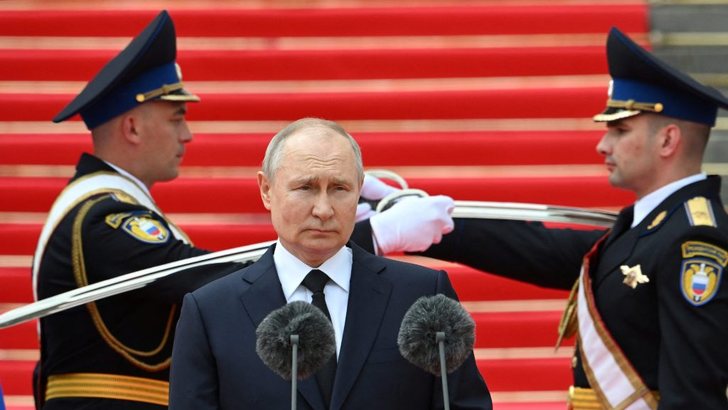
Among the biggest differences: Putin rushed to the Shanghai Cooperation Organization summit to confirm his ironclad alliance with Xi. Seventy years ago, Zhou Enlai’s attendance at Bandung was one of the first signs of the great divide between the two “churches” of world communism, Moscow and Beijing. In 1955, it was not yet certain that China would break free from its communist allegiances and assume leadership of the South. The Maoist revolution of 1949 was a victory for the Soviet Union, which had brought the world’s most populous country into its sphere of influence.
In America, many politicians, military and diplomats considered 1949 a catastrophic year for the weakening of pro-Western forces, and a debate was opened on the political responsibilities of those who had "lost" China, letting it slide into the Soviet camp. However, since Stalin's death (1953), deep cracks began to appear in the Sino-Soviet alliance, and relations between the two communist giants deteriorated.
Mao had cynical reasons to hate the new Soviet leader Nikita Khrushchev, to prevent de-Stalinization from influencing the Chinese and inspiring a “de-Maoism,” but he also had a genuine thirst for independence from Moscow’s hegemony. As seen in its relations with Eastern European countries, the Soviet Union had an imperial vision of its alliances. To be a partner of Moscow meant to obey its directives, otherwise to be expelled from the “church” of Marxism-Leninism and attacked militarily. With or without Stalin, this hierarchical vision would not have changed much. The suppression of the uprisings in Budapest (1956) and Prague (1968), as well as the invasion of Afghanistan (1979), cruelly demonstrated this.
Following the ideological doctrine, the Soviet leaders defended persistent geopolitical interests with Tsarist Russia. For this reason, the two great continental powers like the USSR and China, with gigantic common borders in Asia, were destined to clash (up to armed incidents, such as the clashes on the Ussuri River in 1969). Mao anticipated this disagreement and was determined to break the ranks.
The backdrop to the Bandung conference was jointly prepared by Mao (through Zhou Enlai) and Nehru with the so-called five Pancha Shila principles, taken from the five moral principles of Buddhism, applied to relations between states: mutual respect for territorial integrity and sovereignty; rejection of aggression; rejection of interference in internal affairs; equality; and peaceful coexistence.
At the height of the ideological conflict between the two blocs, the participants in Bandung proposed a “third way,” attempting to unite Asian and African nationalisms, different religions, and humanist traditions. Leaders as diverse as Chinese communists and Japanese capitalists, Saudi theocrats, and Indonesian right-wing nationalists joined forces in the fight against imperialism, racism, and exploitation. For Mao, the logic of Bandung provided the ideal framework for building socialism independent of Moscow and for running as the leader of the Third World.
Ishte edhe rasti ideal për të thyer izolimin diplomatik që kishte dëmtuar Pekinin që nga 1949. Në 1955, Kina ishte ende një shtet i përjashtuar, e bojkotuar nga amerikanët, pa marrëdhënie diplomatike me vendet perëndimore që njihnin Tajvanin, madje as pa një vend në OKB. Bandung ishte rasti i parë i madh që Kina të hynte në politikën ndërkombëtare, duke nisur nga komuniteti aziatiko-afrikan. Më vonë do të bëhej edhe arena e sfidës së saj të hapur ndaj Bashkimit Sovjetik, projekt që Revolucioni Kulturor e shfaqi edhe më fort, të ofrohej maoizmi si varianti më i përshtatshëm i komunizmit për kombet e varfra e bujqësore.
Në Bandung, dëshira për autonomi nga Moska ishte ende dytësore krahasuar me karakterin bazë të asaj konference: Mbi të gjitha, ishte një samit i vendeve që kishin vuajtur nga kolonializmi dhe imperializmi perëndimor.
Gazeta amerikane The Christian Science Monitor në 1955 e komentoi kështu samitin: I përjashtuari është Perëndimi, theksi është te kombet me ngjyrë. Për aziatikët kjo do të thotë se më në fund fati i Azisë vendoset në Azi, jo në Gjenevë, Paris, Londër apo Uashington. Azia është e lirë. Ndoshta ky është evenimenti historik i shekullit.
Për Mao-n, çështja e “ngjyrës”, edhe pse mbetej e pashprehur hapur, ishte një element i rëndësishëm dallues nga Bashkimi Sovjetik. Komunistët e Moskës ishin sërish “të bardhë”, trashëgimtarë të Rusisë cariste, një perandori koloniale agresive dhe grabitqare sa Anglia dhe Franca. Ndërsa Kina kishte qenë viktimë e imperializmave të bardhë (dhe atij japonez). Për vite, propaganda e Mao-s do të luante me këtë afinitet me kombet aziatike, afrikane dhe latinoamerikane.
Sfida e Jugut ndaj Veriut solli shumë suksese. Për disa protagonistë të asaj konference, rruga e bërë që nga 1955 është e jashtëzakonshme. Jo vetëm Kina dhe India janë sot fuqi të mëdha ekonomike, por edhe Indonezia, Malajzia dhe Vietnami kanë arritur përparime të tilla sa nuk mund të konsiderohen më si “të përbuzurit e Richard Wright”. Ajo që i bashkon ende është ndjenja e të qenit “të ndryshëm” nga Perëndimi dhe rrënjosja e identitetit politik në epokën e luftërave të çlirimit nga kolonializmi.
70 vjet pas Bandungut, ajo nismë ka lënë një gjurmë të fortë në politikën e jashtme të Kinës. Edhe pse sot vendi i Mao-s është superfuqia ekonomike që sfidon supremacinë globale të SHBA-ve, diplomacia kineze në vendet e hemisferës jugore vazhdon të paraqitet si “një prej tyre”, duke e quajtur ende veten “komb në zhvillim” dhe duke evokuar solidaritetet e vjetra. Vizionin zyrtar të shekullit XXI, Pekini e mban të bazuar te multilateralizmi, duke shmangur një debat të hapur për “interesat e tij kombëtare”.
Megjithatë, udhëheqja aktuale përdor një gjuhë shumë më të butë, të lirë nga prozelitizmi agresiv ideologjik i maoizmit. Ajo këmbëngul se interesi i Kinës përputhet me interesin e përgjithshëm të njerëzimit. Shmang ta paraqesë ngritjen e saj industriale si një fenomen që mund të shkaktojë tensione me kombet e tjera.
But the reality is marked by stark contrasts to Bandung. Seventy years ago, Third World leaders, even if they did not align themselves with the Soviet Union, embraced socialism as a model of government. Today, all those who have achieved extraordinary progress, China, India, Vietnam and many others, have done so by imitating the West, absorbing science, technology and the capitalist model. Socialism, where it remains an official doctrine as in Beijing and Hanoi, implies authoritarian political control by a single party, but coexists with a market economy.
The prosperity that has transformed the living conditions of 3 billion people came thanks to the opening of Western markets to their products. And China, as it became an economic superpower, often proved to be a dangerous competitor, even a predatory investor, for other developing countries. The “China-India” axis also suffers from these contradictions: while Xi embraces Narendra Modi and offers him an alternative alliance to America, in practice the economies of China and India are rivals.
But the biggest break compared to 1955 is the reversal in Beijing-Moscow relations. 70 years ago, Mao was preparing for the great split, because he feared falling under Soviet imperialism. Today, the balance has been brutally tipped in China's favor: Putin cannot do without its support, but in the long run he has put Russia in the position of a Chinese colony.