Is this police force professional and capable of handling violen...
/ 2026-10-16 18:54:07Focus


Greta Privitera - Corriere della Sera
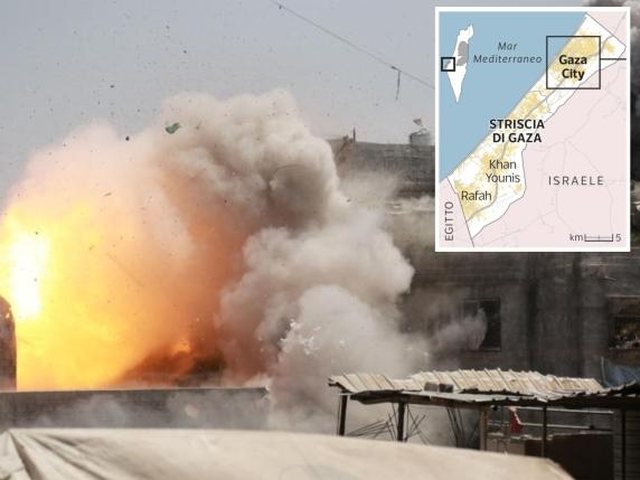
We know it as Gaza City, but the Arabic name is Medinat Ghazzah. In Semitic languages, Gaza means “strong” or “fierce,” while the ancient Egyptians called it “Ghazzat,” meaning “precious.”
The largest and most populous city in the Strip, once again on the front line, was also named “Ghazzat Hashem” in honor of Hashim, Muhammad’s great-grandfather, who, according to tradition, is buried there.
Before October 2023, about 750 thousand people lived in an area of 45 square kilometers, approximately 9 thousand 983 inhabitants per square kilometer.
During the last ceasefire in January, 800,000 men and women returned to what remains of the city, to its destroyed buildings, dilapidated humanitarian structures and tents.
Gaza City was divided into 14 neighborhoods, each with a city council consisting of 14 members, almost all of whom have ties to Hamas. In addition to the Old City, there are the neighborhoods of Shejayia, Tuffah, Rimal, Zeitoun, Judeide, Turukman, Sabra, Daraj, Nasser, Sheikh Radwan, Tel al-Hawa, and Sheikh Ijlin.
Rimal was considered the wealthiest area, but at the beginning of the war, it was almost completely destroyed. It was home to the offices of international NGOs, shops, the most elegant hotels, and Al Shifa Hospital, the most important hospital in the enclave.
To the east is the Shejayia neighborhood, bombed in 2014. On the coast is the Al-Shati refugee camp.
The Strip's only port, Gaza City's fragile economy, damaged by decades of conflict and an Israeli-imposed blockade, relied on small industries, textile, ceramic and furniture artisanal workshops, as well as the cultivation of strawberries, citrus fruits and olives.
Israel almost completely controls both water and electricity, which is often cut off for several hours a day.
More than 70% of the population is under 25 years old and, despite the high level of education – there are four universities – unemployment reaches 40%.
Schools and hospitals are run almost entirely by humanitarian organizations. Gaza City is located in the northern part of the Strip, just 70 kilometers from Tel Aviv.
It has existed since 1500 BC and stands on a small hill overlooking the sea. Over the centuries, many peoples have passed through that strip of land: the Philistines, Egyptians, Assyrians, Persians, Romans, Byzantines and Ottomans.
The bombings damaged many of the city's monuments and landmarks, including the Sayyed Hashim Mosque, which, according to tradition, houses the tomb of Muhammad's great-grandfather.
This is not the first time the city has become a battle zone.
A few weeks after the Hamas terrorist attack, the Israeli military launched major ground operations, destroying neighborhoods and infrastructure.
But the January ceasefire had given hope to its residents, who returned and now, to save themselves, they must face another evacuation.