Is this police force professional and capable of handling violen...
/ 2026-10-16 18:54:07Focus


From the Financial Times
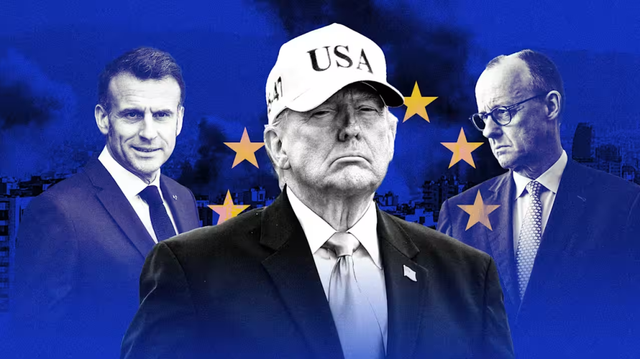
The opposition came quickly, forcefully, and with a sense of liberation. One by one, Donald Trump's European allies rejected the US president's request to join his war in the Middle East.
From Warsaw to Madrid, from Washington's closest friends on the continent to the most skeptical of Trump, leaders united to deliver a clear message: "This is not our war."
This week’s collective rejection by Trump’s European partners of his demand that they help him open the Strait of Hormuz by force, or risk a “bad” future for the NATO alliance, was remarkable for its strength and unity. All the more so after two weeks of chaotic divisions among European capitals over his war on Iran.
“The United Nations and Israel did not consult us before this war,” said German Chancellor Friedrich Merz. “The question of how Germany could be militarily involved here is not even raised.”
Italy, France, Greece and Spain issued similar refusals. British Prime Minister Keir Starmer said the UK “will not be drawn into a wider war.” Even countries like Poland, traditionally Washington’s staunchest transatlantic partner, ruled out participating in Trump’s proposed fleet to force open the chokepoint affecting global oil supplies.
Faced with a conflict where it risks having little influence but much to lose, Europe has found a common voice and a unified message, a stark contrast to the deep divisions over George W. Bush's war in Iraq two decades ago, and one that shows a growing conviction that reconciliation with Trump is not the only possible path.
The question remains how long this unity will last, whether the EU is on the path to the strategic autonomy that France and other countries have long sought, and whether Europe can adapt to the new confrontational world created by the American president.
EU leaders gather in Brussels on Thursday for a summit where many hope unity will be maintained, after the conflict exposed the bloc's weaknesses in defense, diplomacy and energy supplies, as well as deep differences over the legality of regime change.
The long-planned summit was supposed to focus on the bloc's economic recovery. But Iran and Trump have hijacked the discussion, with the 27 leaders preparing for lengthy talks on the conflict, short-term solutions to the war-torn energy crisis, and ways to recalibrate the EU's approach to the Middle East.
“This is no longer a summit on long-term structural economic change,” a senior EU official said. “We are holding an emergency summit on the Iranian crisis.”
National diplomats preparing leaders for the meeting say the big question is whether deep divisions, masked by the new unity, will quickly resurface, on issues ranging from the EU's military presence in the Persian Gulf to increasing state aid.
Permanent crisis
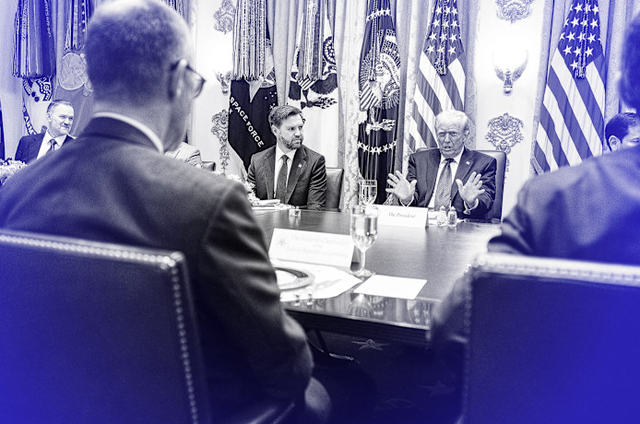
During the first year of Trump's second term, the EU has become accustomed to responding to crises caused by him with tiresome attempts at compromise.
The bloc has weathered threats to NATO, the cutting of aid to Ukraine, the trade war, the meeting with Vladimir Putin and tensions over Greenland.
But the Iran issue touches on an existential problem: how to build an independent future in the shadow of an unpredictable American president.
Discussions of independence from the US have become more common, fueled by France since the time of Charles de Gaulle.
French President Emmanuel Macron has previously said that the Trump administration is "anti-European" and has proposed that French nuclear capabilities also protect other European countries.
This week, Macron said French ships could only accompany the tankers "when the situation calms down," rejecting the intervention sought by Trump.
But Merz's strong rejection was the most striking. It came just days after he had expressed support for the campaign against Tehran.
This change reflects a growing awareness in the EU that there are clear "red lines".
Europe's weaknesses
Although EU countries agree that they will not go to war for Trump, they are not unified in practical responses.
Europe imports around 90% of its oil and gas, making it much more vulnerable to energy crises.
The European Commission has suggested using state aid, but smaller countries worry that this will favor larger economies.
Some countries, such as Italy, are calling for a weakening of the carbon pricing system, while others oppose it.
An even more divisive idea is normalizing relations with Russia to regain free energy, an idea that could strengthen leaders like Viktor Orbán.
Principle or political stance?
The rejection of Trump's Hormuz claim is the EU's strongest opposition to him since the Greenland crisis.
In that case, the EU prepared tariffs on American goods and strong economic measures, showing that it can act unitedly when necessary.
This crisis strengthened the conviction that Europe must reduce its dependence on the US, especially in security.
Spanish Prime Minister Pedro Sánchez was among the first to condemn the war as "illegal," offering an alternative approach to Trump.
However, countries like the Baltic states see the US as their main defense against Russia.
Trump's decision to temporarily halt military intelligence on Ukraine and ease sanctions on Russian oil has added to concerns in Europe.
A crisis with no easy solution
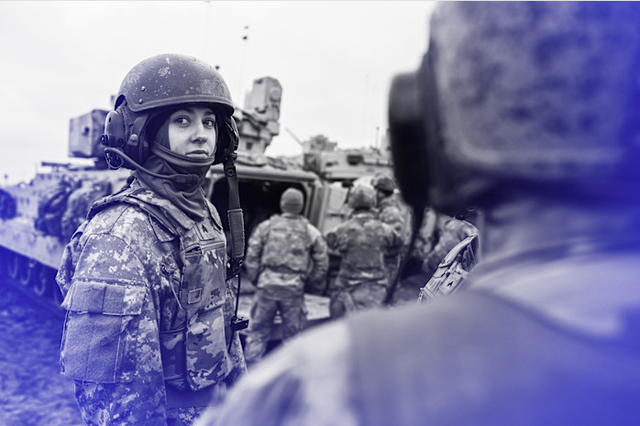
Despite rejecting Trump, EU leaders remain in a crisis with few options. They failed to agree on a joint military alternative in Hormuz.
Differences in military capabilities and national interests make a unified response difficult.
According to Josep Borrell, the EU still has insufficient structures for such crises.
“The EU was created to solve problems within Europe, not for global crises,” he said. “Europe must be reshaped.”
Although some propose majority decision-making in foreign policy, many countries do not want to lose the right of veto.
Even if decision-making is accelerated, the main problem remains: countries often have different interests.
Meanwhile, Europe is increasing military spending, but experts say it will take at least 10 years to achieve self-sufficiency.
Due to difficulties in reaching consensus, countries like Germany and France are increasingly relying on informal coalitions.
“The European project was not built for such crises,” said one EU diplomat. “Slow consensus building does not work in unpredictable crises.”
"We have not been able to turn the tanker into a speedboat," he added. "And now the tanker is blocked in Hormuz."