Protests highlight trauma crisis, operating rooms under reconstr...
/ 2026-10-15 18:35:16Focus


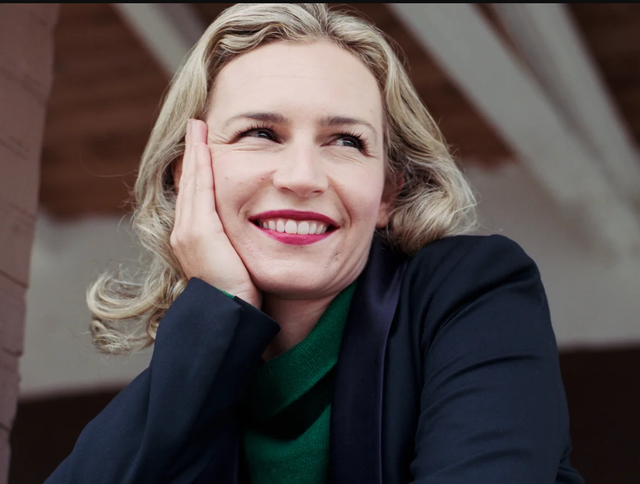
The two writers debate censorship, propaganda, our one-sided history, and the age of populism.
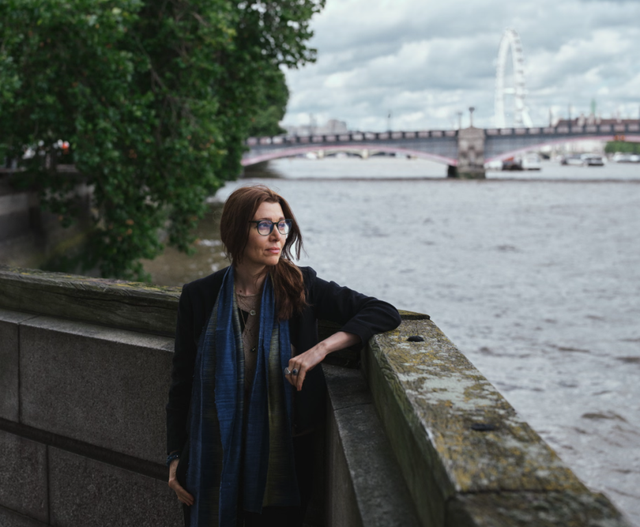
Lea Ypi’s memoirs in her book “Free” evoke her childhood in Albania, before and after the fall of communism. Indignity, (released in the UK on 4 September) reconstructs the life of her grandmother, who arrived in Tirana from Thessaloniki as a young woman and became involved in the country’s political life. She is now the Ralph Miliband Chair in Politics and Philosophy at the London School of Economics. Turkish writer Elif Shafak is the author of more than 20 books, both fiction and non-fiction.
Both writers spoke via video call – Ypi traveling to India and Shafak at her home in London – in conversation about the threat of censorship and the rise of populism, the challenges of being a writer with multiple identities, and the importance of representing complex historical events in their works.
Elif Shafak: This is the age of anxiety. There is so much uncertainty, in the east or in the west, among the young or the old, so many people are anxious right now, it's something you feel in the air. That's why I think in many ways this is a golden age for demagoguery, for populist demagogues to come on the scene and say, "Trust me. I'll make things simple for you."
Lea Ypi: What strikes me is the contrast between the really rich life that you find in literature or in academic environments, and the banality of politics. In literature, you experiment with genders, with cultures, with languages, and this sense of complexity is created. Whereas in politics, it’s almost the opposite, it’s all about simplicity. It’s just a matter of focusing on the message, so that it doesn’t become too complex. It has to be short. It has to be very simple, to the point of banality. And increasingly, it’s also exclusionary. There’s a tendency in contemporary political discourse to say: OK, let’s deport migrants – as if only a homogeneous society can bring justice.
ES: It is important to talk about censorship too. Not only about pressures coming from outside or from above, but also from within: self-censorship. How do we overcome that? I come from a country where words are heavy. Anything you write – about sexuality, gender, memory, history – can offend the authorities. I experienced this when one of my novels, “The Bastard of Istanbul”, was sued: it tells the story of an Armenian-American family and a Turkish family through the eyes of women, but it deals with memory, amnesia and the biggest taboo in Turkey even today, which is the Armenian genocide. When the novel was published, the prosecutor asked for three years in prison. The words of fictional characters were brought to court as evidence. And during those times, there were people burning EU flags, spitting on my picture, burning it, calling me a traitor.
Years later, two of my books were investigated for the crime of “pornography”: “10 Minutes 38 Seconds in This Strange World” because it features a sex worker, and “The View” because it deals with topics like child abuse, in a country where we have child brides – which in my opinion means child abuse. The reason I mention this is because these are the realities of the societies we come from. We need to create a space for ourselves where we forget about these. Because if we start thinking: “Will people be offended? Will the authorities be upset?” – then we can’t write a single sentence.
LY: What was important for me, growing up in Albania and going from communism to the post-communist period, is that living in a totalitarian society makes you extremely sensitive to all kinds of propaganda, all the time. I made the transition from a free world to being part of the free world without any trauma. It was always a matter of vigilance – to see where there is censorship, ideological manipulation or propaganda, even when it happens in places that at first seem completely harmless.
One should always think about what is missing in the society one lives in: where is the gap in democracy? We boast about our freedom, but at the same time we coexist with politicians and decision-makers who so clearly limit the freedom of others everywhere.
We have a saying in Albania: “Istanbul burns and the whore gets fucked.” You fear that sometimes what you do is completely irrelevant, but you tell yourself: my job is just to be critical, to exert pressure, to remember, to try to make people think about how the past shapes the future, how these ideas are repeated, and how these political conflicts in the present all have a history, which comes from unresolved traumas of the past.
ES : We have so many things in common: the themes, the subjects we deal with, the geographies we come from, but also the silences we dig into. I think that for both of us, memory is important – not to remain stuck in the past, but because without remembering we cannot fix things.
LY: We have to understand that every voice that shouts is always the result of a balance of power. This was my experience with writing my last book, which is about my grandmother. While digging through the archives I noticed that it was very difficult to research a woman who had lived in the 1920s and 1930s. She grew up in Thessaloniki, a city that was still very much culturally Ottoman. It had just become part of the new Greek state, which had completely defined the discourse of what it wanted to show and how it should be shown.
If you rely on official sources, they all have their agendas – and the way they build the archive, the way they write history, even the way they shape literary tradition – there is always an agenda, usually that of the people in power. So how do you challenge that? I think only when literature becomes resistance can it challenge it, but it has to have that intention.
ES: I think being a writer is a bit like being a linguistic archaeologist: you have to dig between layers of narratives, but also between layers of oblivion. Of course, when we talk about the Ottoman Empire, we have in mind a multiethnic, multilingual, multireligious empire that lasted over 600 years. It is extremely complex, and of course the narrative changes according to the perspective of the one telling it, but it is also important to ask: who was not allowed to tell the story? That is the point that interests us.
So the way Ottoman history is taught in schools – and I have attended Turkish schools – there are gaps, and those gaps are almost always filled with ultra-nationalism, sometimes ultra-religiousism, or imperial nostalgia that speaks of former greatness. It can be summed up in the motto: wherever we went we brought justice and civilization. But as soon as you ask: well, what about women? What was the Ottoman Empire like for a prostitute, for a concubine in the harem, for a peasant woman with no access to power or authority? Big silence. Or when you ask about minorities: maybe a Jewish miller, a Kurdish peasant, an Arab farmer, a Greek sailor. What was the empire like for them? Or an Armenian goldsmith? Again, big silence.
Lea Ypi: I can add that I don't like it when writers preach or lecture. So we have to be careful about that. Literature has a democratic function only because it doesn't preach. If it preached, it would lose that. If you tell the reader: "This is how you should see the world, this is right, this is wrong," then you become authoritarian. And at that moment, literature loses its power to continue with the reader. I don't think a book ends when the writer writes it; it continues to be written in the way it is expected, how it is discussed, how its themes feed wider social and cultural debates.
When Free came out, people would send me a photo of [Turkish President] Erdogan with the book during a summit on the Armenia-Azerbaijan peace treaty. It was uncomfortable, because you looked at the book and you knew how you had written it, what you wanted to express, it was all about freedom – and suddenly you see it in the hands of deeply authoritarian figures. In every society there are politicians who appropriate art, but my tendency is to say: “Yes, but that is also part of the history of the book.”
Albania is an ambiguous place, and I myself have an ambiguous attitude towards it; I don’t like to be the only writer who writes about Albania, about communism, about life under totalitarianism and then capitalism. What makes this place special for me – and I’m sure it would be for anyone – is that it’s a small place from which you can reconstruct the world. Albania was part of the Ottoman Empire, but my hometown, Durrës, was a Roman city. It has one of the largest amphitheaters in the Balkans. Before that it was a Hellenic city. Then it became a Byzantine center. It was conquered by Venice. So, in these 100 square meters in the center of the city, you have thousands of years of European history.
I always laugh when I hear discussions about joining the EU, because I say: when have we not been affected by Europe? When has Europe left us alone?
ES: It is a difficult experience to be a novelist in Turkey, but a woman novelist is even more difficult, because you have to deal with additional doses of misogyny and patriarchy. I don't want to paint a completely bleak picture, but I want to be honest: you get hit on one cheek, and you always feel the pain; but you get kissed on the other cheek, because readers keep reading you. Writing matters, especially in countries where democracy is in decline. If a country goes backwards, paradoxically literature and art become even more important. So existence is divided between pain and hope.
LY: I don't know if it's a discouraging sign of our times that we have so many interesting debates in the world of culture, but that they are not reflected in anything that happens in the world of politics, where, on the contrary, simplicity, reduction, and exclusion prevail. How is it possible that we still haven't found a way to connect the two?
ES: I can never forget the fact that I am an immigrant in Britain. But equally, I strongly believe in multiple identities. Of course, being Turkish is a big part of my work and who I am, but Britain has given me so much. The English language has given me so much, and I have been writing in it for over 20 years. How can I deny that it has given me a sense of belonging? But I like to think of myself as a citizen of humanity, a citizen of the world – something that in this age of populist demagogy has been scorned. We are told that if you are a citizen of the world, you are a citizen of nowhere. And I want to challenge that. I think it is wrong. We live in a very complex era. Huge global challenges await us, and everything – from the climate crisis, to the possibility of another pandemic, to the deepening and widening of inequalities – shows how deeply interconnected we are.
Interviewed for The Guardian by Alex Clark