How Belinda Balluku is fabricating the rumor about Top Channel's...
/ 2026-10-19 16:19:00Focus


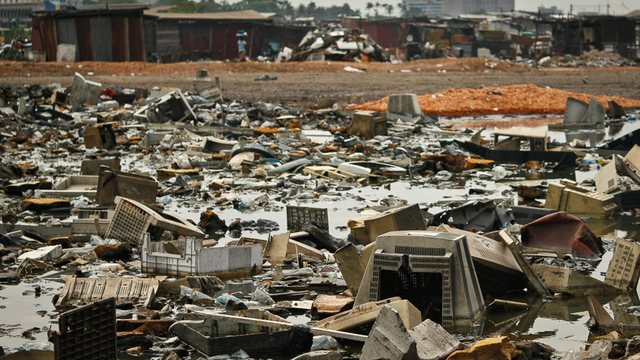
The trash bag you throw in the trash, or even your old phone, could end up on the other side of the world. Every year, Europe exports millions of tons of waste to developing countries, with potentially negative impacts on the local environment. In this highly profitable business, it is estimated that a third of shipments are illegal and criminal organizations are making billions. Therefore, the European Union has decided to limit waste exports and encourage recycling throughout Europe.
An alarming case of illegal domestic waste traffic is remembered as the "Italian Waste" affair. The facts date back to 2020. Nearly 300 containers filled with garbage arrived at the port of Sousse, in Tunisia. Civil society played a decisive role in obtaining the return of most of the remains to Italy and a number of judicial convictions on both sides of the Mediterranean.
Many gray areas remain in this case and illegal trafficking of waste still continues. This year, Italian customs seized another 82 tons of waste en route to Tunisia. Waste management is a pressing issue in Tunisia. The country has embarked on a major modernization plan, but in practice waste is often buried unsorted in large landfills. Some are controlled, others are illegal.
Where does EU waste go?
Economic growth and globalization have led to increased transboundary transport of waste. The EU generates significant waste, most of which is sent between member states, but a large proportion is still exported.
· 3 million tonnes of EU waste
were sent between member states in 2023.
· 1 million tons of additional waste
were exported to countries outside the EU that year, amounting to nearly 80 kg per person.
· About 60% of all waste exports
were sent to only three countries.
· Turkey was the main destination
receiving around 38% of the EU's exported waste, followed by India (17%) and Egypt (5%).
· Up to one third of all waste shipments
believed to be illegal.
A new European regulation has just come into force. Countries that are not members of the OECD, such as Tunisia, will have to prove that they have the capacity to treat waste sustainably in order to receive it. The export of plastic waste outside the EU will be banned. The regulation also includes new tools to fight these eco-mafias.
These new vessels will be deployed in ports such as Genoa in Italy, one of the main shipping hubs in the Mediterranean. Customs officials here are at the forefront of the fight against illegal waste traffic. More than one million containers pass through these docks every year. A part of this waste is exported with false customs declarations. The officers showed us a container full of burnt rubber, which had been stopped before leaving for Thailand.
Italian customs participate in a new European rapid alert system, which is activated when suspicious cargo is identified. They can be scanned and inspected. Another example was found in a container believed to be transporting equipment to Malaysia. After examining the old TV set-top boxes inside the customs officers it was discovered that they were actually electronic waste.
Luigi Garruto, an investigator at the European Anti-Fraud Office, OLAF, explained that such material could "end up in illegal landfills here and there, with a high impact on the environment in Malaysia, of course, just to collect a few grams of precious Materials ". The European Union has also strengthened the law on environmental crime, with tougher penalties and an expanded list of offences. OLAF plays a key role in coordinating investigations.
Waste can be treated as a precious resource. The new rules encourage the transfer and recovery of waste within the EU, as we discovered at a recycling plant in Escaupont, northern France, belonging to Derichebourg Environnement. This new facility recycles old electronic cables. It has a capacity of 20,000 tons per year, equal to two Eiffel Towers.
Copper was listed by the EU as a critical material to drive the electrification of industry and economic output. The group received funding from the French recovery plan to relocate this activity. The circular economy is a priority of the Green Deal. But less than 12% of the materials consumed in the EU today come from recycling.