How Belinda Balluku is fabricating the rumor about Top Channel's...
/ 2026-10-19 16:19:00Focus


When he announced the 10 percent reduction in energy prices for families with consumption below 700 kilowatts per month, Edi Rama described the decision as a historic event, which was made possible thanks to the great success of the energy reform.
"One of the most significant achievements of our government, the first reduction in the price of electricity in the history of these 35 years. Over 1 million subscribers will pay a reduced price thanks to a meaningful success on a path from the abyss to the top of Albania 2030," said the head of government.
His deputy, Belinda Balluku, was even more specific, as she listed the improved indicators of the energy sector.
"We have come this far because we have reduced losses, 17.93% compared to 46% in 2012. Another element, the collection rate has increased. In 2013, it was 65% of the energy sold, not the energy produced. 45% went to losses," said the Minister of Energy.
But the energy success trumpeted by the government is actually a virtual reality, existing only in the heads of the prime minister and his deputy.
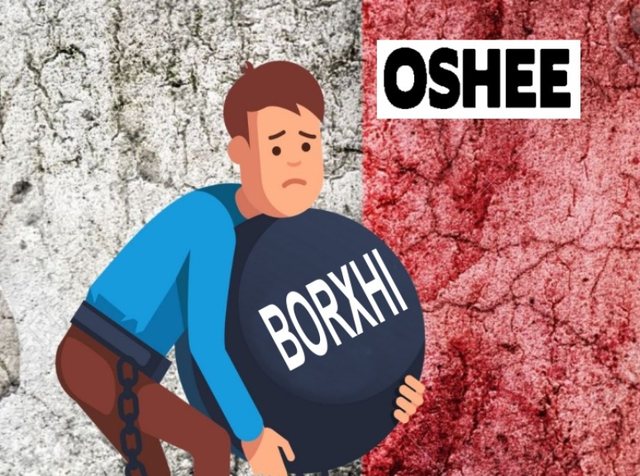
The truth is that the sector is mired in a mountain of debt and OSHEE has declared its inability to repay it. In the real world, this is called bankruptcy.
Half a billion euros in debt
Due to the difficult financial situation and the huge mountain of debts that public energy companies had, in 2018, the Albanian Power Corporation was forced, with the government's blessing, to take out a large loan of 220 million euros from the EBRD.
But KESH did not have enough income to repay the debt, unless it recovered the large debts that OSHEE owed it.
At that time, OSHEE owed KESH 51.4 billion lek, or over half a billion euros at the current exchange rate.
With the EBRD's condition, the government forced the two public companies to enter into agreements to repay the obligation.
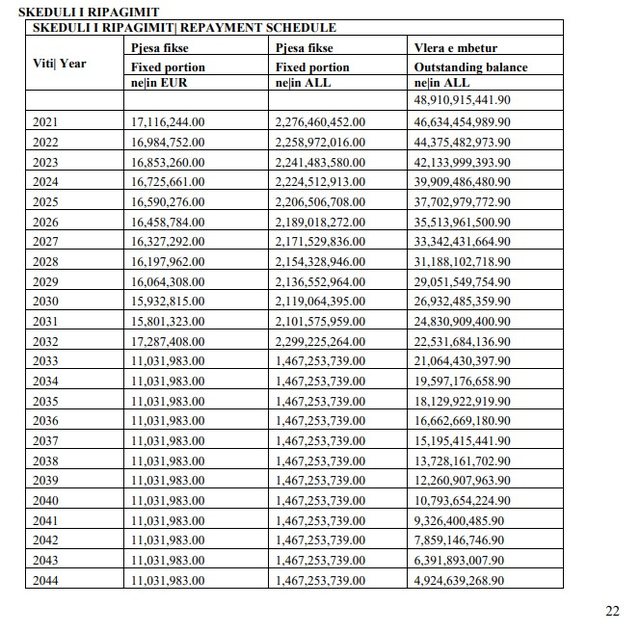
The agreement contained a special annex with the installment schedule, according to which OSHEE would pay around 17 million euros per year to KESH to settle its obligations, in addition to current payments for energy supply.
Agreed debt repayment schedule between OSHEE and KESH
But OSHEE went bankrupt in its first year. According to data made public by the Supreme State Audit Office, in 2018 OSHEE paid only 5 million euros out of the 17 million it was supposed to pay.
In the second year, it paid only 9.7 million euros out of 17 million, while in the third year it paid 7.6 million out of 17 million.
So for three years together from 2018 to 2020, OSHEE paid KESH only 22 million euros out of the 50 million euros it was supposed to pay.
Përballë dështimit të marrëveshjes për shkak se OSHEE nuk paguante, në gusht të vitit 2021 marrëveshja e borxheve u amendua sërish.
“Por amendimi ra dhe më shpejt se marrëveshja bazë. “Për periudhën 2021-2024 detyrimi që OSHEE duhet t’i shlyente KESH-it ishte 90 milionë euro, por u shlyen vetëm 20 milionë euro duke lënë të papaguara 70 milionë euro,” thotë KLSH.
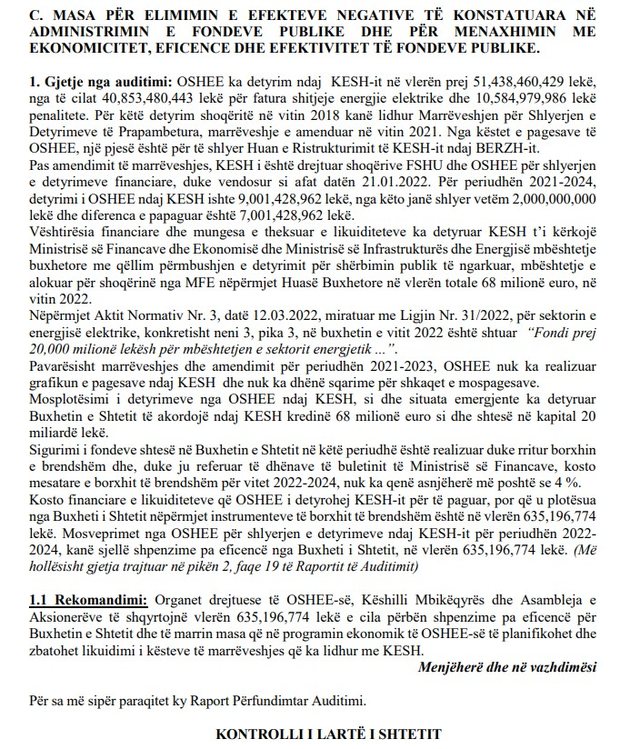
Me pak fjalë, OSHEE ka shpallur zyrtarisht pamundësinë për të shlyer borxhin që ka ndaj KESH.
Aktualisht ky borxh ka arritur në 620 milionë euro sipas KLSH, pasi gjatë periudhës 2018-2024 mes kompanive janë krijuar detyrime të tjera.
Qytetarët po e paguajnë uljen dyfish në krahun tjetër
Borxhet nuk janë thjesht shifra që shkruhen dhe qëndrojnë në copa letrash.
Ato kanë pasoja financiare, pasi në një mënyrë apo në një tjetër, paguhen.
Dhe qytetarët shqiptarë po e paguajnë karamelen elektorale të uljes së çmimit të energjisë, dyfish në krahun tjetër. Përmes arkës së përbashkët të shteti.
“Vështirësia financiare dhe mungesa e theksuar e likuiditeteve ka detyruar KESH t’i kërkojë Ministrisë së Financave dhe Ekonomisë dhe Ministrisë së Infrastrukturës dhe Energjisë mbështetje buxhetore me qëllim përmbushjen e detyrimit për shërbimin publik të ngarkuar, mbështetje e alokuar për shoqërinë nga Ministria e Financave nëpërmjet Huasë Buxhetore në vlerën totale 68 milionë euro, në vitin 2022,” vëren KLSH.
Por kredia 68 milionë euro e arkëtuar nga buxheti nuk është kostoja e vetme, që qytetarët kanë paguar.
Në të njëjtin vit, qeveria injektoi edhe 20 milionë euro të tjera nga buxheti si shtesë kapitali për KEH për ta shpëtuar kompaninë nga falimentimi.
Mbi këto duhet shtuar edhe kostoja e kapitalit, të cilën e llogarit më së miri, KLSH.
“Sigurimi i fondeve shtesë në Buxhetin e Shtetit është realizuar duke rritur borxhin e brendshëm dhe, duke ju referuar të dhënave të Ministrisë së Financave, kosto mesatare e borxhit të brendshëm për vitet 2022-2024, nuk ka qenë asnjëherë më poshtë se 4 %. Kosto financiare e likuiditeteve që OSHEE i detyrohej KESH-it për të paguar, por që u plotësua nga Buxheti i Shtetit nëpërmjet instrumenteve të borxhit të brendshëm është në vlerën 6.3 milionë euro. Mosveprimet nga OSHEE për shlyerjen e detyrimeve ndaj KESH-it për periudhën 2022- 2024, kanë sjellë shpenzime pa eficencë nga Buxheti i Shtetit, në vlerën 6.3 milionë euro,” saktëson KLSH.
Me pak fjalë, ulja e shumëtrumbetuar e çmimit të energjisë për familjet shqiptare, kishte një efekt prej 31 milionë eurosh në vit.
Por vetëm në vitin 2022, KESH hëngri gati 100 milionë euro nga paratë e taksave të qytetarëve.
Pra, në një vit të vetëm qytetarët paguan uljen e çmimit të energjisë për 3 vite.
Moreover, these figures do not show the entire bankrupt reality of the energy sector, as in addition to the money they have eaten from the budget, public energy companies have further increased their debts, which will be paid back by citizens in the future, either through the budget or through missing investments in the energy network or higher prices.
The philosophy of the poor
The Albanian people have a very wise saying. "When you owe 1 thousand, the poor man treats you to meat and rice."
This is what the government has done with the energy sector. The debt has gone up to 1,000,000 kyats. In addition to rice, the government has also added caviar.
But that's the power of propaganda. Only it has the strength to transform a bankrupt failure into a historic success and significant achievement. And yet the reality is there.
Albania's energy sector is crippled by the huge mountains of debt that swirl through the state's ledgers and that the government pretends not to see.
But again, debts are not just numbers in a ledger. They are paid.
Just a little more secretive than direct energy price payments./ Kapital