How Belinda Balluku is fabricating the rumor about Top Channel's...
/ 2026-10-19 16:19:00Focus


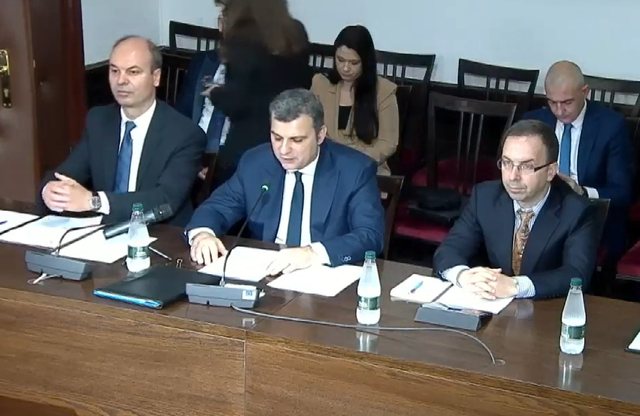
The governor of the Bank of Albania, Gent Sejko, reported today to the Commission for Economy and Finance regarding the activity of the Bank of Albania in 2023.
In his speech, the Governor emphasized that the rapid appreciation of the lek in the exchange rate helped mitigate foreign inflationary pressures, while fiscal consolidation helped curb internal pressures. In particular, he focused on an analysis of the factors that brought about the strengthening of the lek and the implications of this strengthening for the monetary and financial stability of the country.
"In summary, they have concluded that the strengthening trend of the exchange rate of the lek has come as a result of the structural improvement of the balance of commercial and financial exchanges of Albania with the world, reflected in the increase in exports, mainly those of tourism, of remittances and foreign direct investments. Under these circumstances, the strengthening of the lek had an overall positive impact on the economy. It contributed to controlling inflation, increasing the purchasing power of Albanian families, as well as enabling a more gradual normalization of our monetary policy stance, keeping business financing costs low. Consequently, Albania simultaneously had one of the highest economic growth rates, the lowest inflation rate and the slowest increase in financing costs among countries in the region," said the Governor.
However, he added that the Albanian economy has been and remains an economy with a relatively high level of informality. This phenomenon has its consequences in many economic indicators of the country, including potentially the exchange rate.
"The Bank of Albania has continuously taken measures to reduce informality, through the continuous improvement of the payment system, through the introduction of regulatory requirements that enable the granting of loans only against the certified fiscal balances of businesses, as well as through the implementation of all changes of necessary regulatory oversight, which are in our field of competence, within the plan of measures for the prevention of money laundering and the fight against terrorism. However, fully addressing this problem requires further attention. Among other things, it should be addressed both through strengthening and coordinating the work of all law enforcement agencies, as well as through further structural reforms in support of the formalization of the economy," added the Governor.
According to him, the year 2023 marked improvements in the internal and external balances of the economy. He singled out the improvement of the country's foreign position, reflected in an unprecedented drop of five percentage points in the country's current account deficit. This deficit decreased to the level of 0.9% of GDP during 2023, marking a historical minimum of the post-transition period. Likewise, the country's foreign debt dropped below 50% of GDP, while foreign direct investments registered a historic record of 1.5 billion euros. This performance was dictated by the good performance of Albanian exports, which increased by 1.7 billion euros during the past year, as well as the double attractiveness of Albania, as a tourist destination and an investment destination. In parallel with them, the level of foreign exchange reserves of the Bank of Albania registered a historical record of 5.8 billion euros, significantly increasing the solvency of the country.
Also, Sejko underlined the stability of the banking sector, reflected in the improvement of the indicators of capitalization, profitability, as well as the quality of the loan portfolio, with the indicator of problem loans at the level of 4.8%. These positive trends enable the banking sector to supply the economy - efficiently and continuously - with financial funds and payment and savings instruments.
In the analysis of the Bank of Albania, the normalization of the stance of monetary policy, which continued slower even during 2023, enabled the reduction of inflation, without damaging the positive trend of economic growth.
"The positive contribution of the monetary policy materialized through three channels. First, signaling the will and taking concrete measures to respect the objective of price stability helped to anchor inflation expectations and reduce the uncertainties of economic agents. Second, the careful increase in financing costs brought a more balanced performance of demand and supply in the economy, making it possible to curb internal inflationary pressures. Thirdly, the normalization of the monetary policy stance helped the smooth functioning of the financial markets, keeping the risk premiums in them low. Thanks to this response, inflation and expectations are now close to our 3% target, while second-round effects remain under control and the outlook for the future is positive. However, internal inflationary pressures still appear relatively high, while uncertainties about the future are still numerous. In these circumstances, our future monetary policy decisions will be guided by the new data. They will always be consistent with our objective of price stability, continuously factoring both the overall balance of price stability and the factors affecting it, and in particular the direction of fiscal policy and the performance of the exchange rate," Sejko said.