


How Belinda Balluku is fabricating the rumor about Top Channel's...
/ 2026-10-19 16:19:00Focus


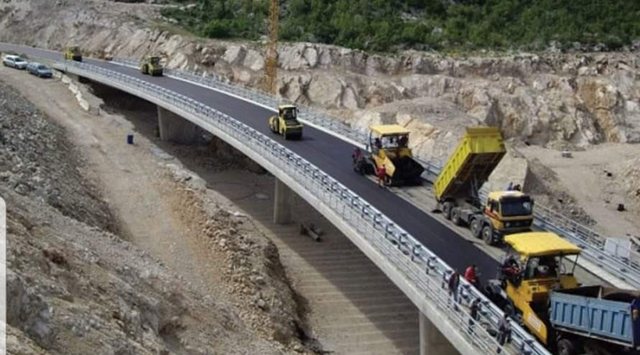
Until the end of November 2022, the Arbri road concessionaire will receive 11.5 billion lek in payments from the state budget, or about 100 million euros, according to official data from the Treasury Department at the Ministry of Finance.
This amount is almost a third of the total funds of 36.4 billion lek that it will receive for the entire concession period.
But in the meantime, the works on Arbri Street are far from finished, as the finished part, although it was taken over by the government, is in a bad condition. Murrizi Tunnel, which is the most expensive axis of the road, is still under construction and is progressing at a very slow pace. The Ministry of Infrastructure expects the works in this segment to be completed within this year.
Arbri Road has gone through a complicated history of costs and procedures from the initial plans for its construction with 70 million euros to today where the bill is expected to reach over 350 million euros.
The government took over the road in November 2021, even though the works had not been completed in a large part and with poor quality of works. The field engineers claimed that the costs were quite high from the initial feasibility studies, as the concessionaire did not respect the width parameters, square breaks, side protection of the slopes, etc.
The rains of the last few days have further worsened the situation, where its segments have been found with massive landslides, so much so that even the vehicles of the concessionaire company have ended up in the adjacent stream.
The duration of the execution of the contract is 13 years, while the works started in 2019. This year marks 5 years since the entry into force of the contract. According to the stipulations in the contract, the road should have been fully delivered by 2022 at the latest, but it is more likely that the works on this axis, which is already dangerous even for users, will last indefinitely.
Arbri Street is not a new project, it started its implementation at the time of the "Berisha" government, during which some parts of the segment were built.
According to the data of the Ministry of Transport, when the concession started, 20.12 kilometers were fully built, 15.17 km partially and 26.3 kilometers were unaffected by the works.
Public investments are losing effectiveness as they are fragmented into unfeasible projects and multi-year contracts. Roads have been the main priority of governments over the years and continue to be, but investments have been concentrated in the outskirts, leaving the center of the country without a modern road network, even though 60 percent of the traffic is in the region, Krujë, Durrës, Tirana./Monitor





