Is this police force professional and capable of handling violen...
/ 2026-10-16 18:54:07Focus


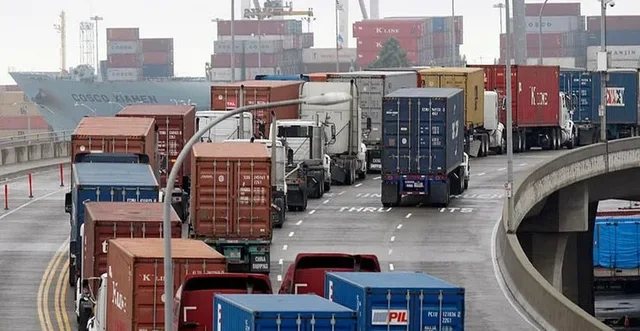
The decline in exports to Serbia, Kosovo and North Macedonia, while imports increase in 2025, is turning regional trade from a source of surplus into a new pressure on the Albanian economy. In two years, Albania has lost about 12 billion lek in surplus with Kosovo alone and over 5 billion lek in exports with Serbia, while imports from the region are growing at a rate of 5-20% per year. From a surplus of 12.8 billion lek in 2024, the trade balance with the region fell to only 3.3 billion in 2025, while exports shrank by 7% and imports increased by almost 8%. The reasons
Albania is gradually losing its position in trade with countries in the region (Kosovo, North Macedonia, Serbia, Bosnia and Herzegovina, and Montenegro), as data for 2025 show a significant deterioration in the trade balance, driven mainly by the decline in exports and the increase in imports.
Albanian products are becoming uncompetitive with Balkan countries, but also beyond, as a result of the decline in the value of the euro, rising domestic costs, and the lack of fiscal policies that encourage low-cost production.
Albanian exports to the region in 2025 fell to 62.7 billion lek, from 67.5 billion lek in 2024, marking an annual contraction of about 7%. At the same time, imports increased to 59.4 billion lek, from 54.7 billion lek a year earlier, or almost 8% more, according to official data from INSTAT.
These developments have significantly worsened the trade balance. In 2024, Albania had a surplus of 12.8 billion lek in trade with the region, while in 2025 it narrowed to only 3.3 billion lek, a deterioration of nearly 9.5 billion lek within a year, with a contraction of about 280%. Our country lost the advantage it had built over recent years in neighboring markets.
The data shows that the problem lies not only in the increase in imports, but especially in the weakening of exports, which peaked in 2023 at over 79 billion lek, but have been in continuous decline since then. Within two years, exports to the region have lost more than 16 billion lek in value.
This trend suggests that Albanian producers are losing ground in the region's markets, facing stronger competition from neighboring countries, higher production costs, and an export structure still dependent on low-value-added products.
If this trend continues, trade with the region, which has traditionally been one of the strongest points of Albanian exports, risks becoming another channel of pressure on the country's trade balance. In conditions where EU markets are also showing a slowdown, the loss of ground in the region makes the external position of the Albanian economy even more fragile.
Ruzhdi Koni, an exporter of fresh agricultural products, said that this year too, the deterioration will deepen due to the damage caused by recent floods in fields and greenhouses, most of which are for export.
Of the exports to the region, the groups with the largest decline were construction materials, energy and fuels, dictated by the contraction cycle that the industrial sector is going through.
Albania's trade volume with the region was 122 billion lek in 2025, almost at the same level as in 2024, and accounted for 9.9% of the country's total foreign trade volume.
Kosovo is the main trading partner with almost 43% of trade with the entire region, followed by Serbia with 26%, North Macedonia with 19.5% and the others less.
Serbia is deepening its lead over Albania, the trade deficit will increase even in 2025
Albania's trade with Serbia is increasingly moving to the disadvantage of the Albanian economy, becoming one of the most problematic points of the trade balance with the region. Data for 2025 show that, despite a slight increase in exports, the trade deficit with Serbia has deepened even further.
Albanian exports to Serbia reached 8.55 billion lek in 2025, up from 8.27 billion lek in 2024, marking a modest increase of 3.3%. However, this increase has not been sufficient to offset the expansion of imports from Serbia, which increased by 5.8%, reaching 23.1 billion lek.
As a result, Albania's trade deficit with Serbia widened to 14.56 billion lek in 2025, from 13.50 billion lek a year earlier, a deterioration of over 1 billion lek in just one year.
This means that for every 1 lek that Albania exports to Serbia, it imports almost 2.7 lek of Serbian goods, making the trade relationship unbalanced. If compared to 2022, when exports to Serbia had reached a peak of 13.5 billion lek, the decline is even stronger. Within three years, Albanian exports to the Serbian market shrank by about 5 billion lek (about 50 million euros), while imports remain high and relatively stable.
The hardest hit is in construction materials and metals, where Albanian exports fell by about 805 million lek or 7% in 2025 alone. The other group with the strongest decline, 24%, was minerals, fuels and electricity, with nearly 382 million lek or -24% fewer exports, which shows that Albania is losing even in segments where it had a cost advantage.
On the other hand, imports of food and beverages from Serbia increased by over 617 million lekë in 2025 or 5.5%, reflecting the increasing dependence of the Albanian market on Serbian food products. Imports of chemical and plastic products also increased by around 249 million lekë or 8.2%, while construction materials and metals increased by around 290 million lekë, or 7.5%.
Data shows that Serbia is expanding its presence in Albania, as a supplier not only of food, but also of industrial products, pushing domestic production towards increasingly difficult competition.
The data suggest that Albanian producers are losing ground in the Serbian market, while Serbian goods are strengthening their presence in the Albanian market. This trend reflects the structural weakness of Albanian exports, concentrated in low value-added products and with limited capacity to penetrate larger markets.
In the regional context, Serbia is increasingly emerging as an "export center" of the Western Balkans, while Albania is at risk of remaining a consumer market.
Albania is also losing the Kosovo market, the surplus drops by 20% within a year
Kosovo, traditionally the most important regional market for Albanian exports, is showing signs of cooling for goods from Albania. Data for 2025 show that Albanian exports to Kosovo fell to 33.65 billion lek, from 36.83 billion lek in 2024, with an annual contraction of 9.5%. This is the strongest annual decline in exports to Kosovo over the last five years under analysis.
The biggest loss comes from construction materials and metals, where exports have shrunk by about 8.7 billion lek in one year, or 73% less. Suppliers from Serbia, North Macedonia and Turkey are increasingly replacing Albanian products in sectors such as cement, iron, aluminum and construction materials.
Chemical and plastic products have also suffered a sharp decline of over 1 billion lek or 28%, confirming that Kosovo is not only being lost as a consumer market, but also as a space for the Albanian processing industry.
At the same time, imports from Kosovo to Albania increased by 2.3%, reaching 16.13 billion lek.
Imports of minerals, fuels and electricity increased by over 1.4 billion lek, or 35%, as a result of electricity purchases, part of energy exchange agreements.
Imports of chemical and plastic products also increased by over 120 million lek, or 9.5%, while textiles and footwear increased significantly by around 29.5%.
As a result, Albania's trade surplus with Kosovo fell to 17.52 billion lek in 2025, from 21.07 billion lek in 2024, a deterioration of 3.54 billion lek, or over 20%, in just one year.
The decline is even deeper when compared to 2023, when the surplus reached over 29 billion lek. Within two years, Albania has lost about 12 billion lek in trade surplus with Kosovo.
This development has a special weight, because Kosovo is the largest regional destination for Albanian exports. The weakening of this market demonstrates deeper problems in Albanian production, since with Kosovo customs barriers are minimal and the language advantage should favor Albania.
North Macedonia is also moving away from Albanian goods
Albania is also losing ground in trade with North Macedonia, another important regional partner, turning this relationship from a surplus into a new source of trade deficit.
In 2025, Albanian exports to North Macedonia fell sharply to 8.99 billion lek, from 11.8 billion lek in 2024, an annual decline of almost 24%. This is the sharpest decline in exports to this market in the last five years.
The strongest decline in exports to North Macedonia is for "construction materials and metals", with nearly 3 billion lek less or -65% exports, turning this market from a source of surplus into a net deficit for Albania.
The second-highest-impacted group was exports of minerals and energy, which contracted significantly by 8%. Meanwhile, imports from North Macedonia to Albania increased by 16.7%, reaching 14 billion lek in 2025, from 12.06 billion lek a year earlier.
Import growth is even stronger and broader with North Macedonia. Imports of minerals and energy increased by over 2.4 billion lek, or 128% last year, becoming the main source of trade growth with this country.
Food imports also increased by 7%, machinery and equipment by 42%, while textiles and wood products recorded significant growth. Only construction materials suffered a sharp decline, with over 1.1 billion lek less imports, but this does not compensate for the strong increase in imports in other groups of goods. This means that Albania is increasingly dependent on North Macedonia for energy supplies and industrial goods.
In 2022 and 2023, Albania had a lead in trade with North Macedonia, but lost this advantage in the following two years. The trade balance deteriorated significantly. From a relatively moderate deficit of 261 million lek in 2024, Albania moved to a deep deficit of 5.09 billion lek in 2025, a deterioration of over 4.8 billion lek in one year.
This reversal reflects a rapid decline in the competitiveness of Albanian exports in the neighboring country, while goods from North Macedonia are gaining ground in the Albanian market.
Montenegro, the only market where Albania is resisting
In 2025, Montenegro remained the only neighboring partner where Albania managed to maintain a relatively stable position. In 2025, Albanian exports to Montenegro reached 8.0 billion lek, up from 7.47 billion lek in 2024, marking an increase of 7.3%.
Even with this country, which overall remains a positive market for Albania, the export structure is weakening. Construction materials and metals are in significant decline, while textiles are also losing ground. The growth of exports comes from energy and food, but these are more volatile sectors and with lower margins compared to the manufacturing industry.
Imports from Montenegro increased by 20.2%, reaching 3.06 billion lek last year, but this increase has not been sufficient to reverse the positive balance. Imports increased mainly for food products and energy and fuels.
Albania maintained a trade surplus of 4.95 billion lek with Montenegro in 2025, almost at the same level as in 2024. Compared to 2023, when the surplus with Montenegro had reached 7.25 billion lek, Albania has lost over 2.3 billion lek of net advantage in this market.
This means that even the most favorable market for Albanian exports is showing signs of slowing down, while the increase in imports from Montenegro is gradually narrowing the space for surplus.
In a region where Albania is losing ground in almost every country, stability with Montenegro is not enough to compensate for the sharp decline in positions in Serbia, Kosovo, and North Macedonia.
Bosnia from secondary market to source of pressure for trade balance
Albania's trade with Bosnia and Herzegovina is gradually losing its balance, transforming from an almost balanced relationship into another source of pressure on our country's trade balance.
In 2025, Albanian exports to Bosnia increased to 3.5 billion lek, from 3.1 billion lek in 2024, an increase of 13.1%. But this increase was not enough to compensate for the even faster growth of imports from Bosnia to our country. Imports from Bosnia reached 2.9 billion lek in 2025, from 2.5 billion lek a year earlier, increasing by 19%.
As a result, Albania's trade surplus with Bosnia and Herzegovina fell to 512 million lek in 2025, from 585 million lek in 2024, a deterioration of about 72 million lek or over 12%.
In Bosnia and Herzegovina, Albanian exports have increased overall, but the structure of growth is weak, as industrial groups are in decline. Textiles and footwear, machinery and construction materials have declined, while growth comes mainly from food and minerals. Albania is losing ground in higher value-added products, while remaining a supplier of more basic goods.
Meanwhile, the structure of imports from Bosnia shows a strong shift. Imports of construction materials increased by 47%, wood and paper products by 27%, textiles and footwear by 23%. Bosnia is increasingly becoming a supplier of raw materials for the Albanian market.
Difficult path for the regional common market
Since the launch of the Berlin Process in 2014, trade in the Western Balkans has become easier in procedures, but their implementation still faces difficulties, hindering the rapid achievement of the goal of borderless trade.
The Berlin Process brought about, for the first time, a coordinated effort by the six countries of the region, together with the EU, to treat trade not as a bilateral issue, but as a single economic space that must function with common rules.
This translated into the creation of the Regional Common Market, agreements on the mutual recognition of certificates, the digitalization of customs documents, and the creation of green corridors, which aim to reduce truck waiting times at borders and transit costs.
This means that today, a company from Albania exporting to Serbia, Kosovo or North Macedonia faces fewer documents, fewer double checks and more standardized procedures than a decade ago.
Before 2014, CEFTA existed, but it was mainly a tariff agreement; the Berlin Process shifted the focus to non-tariff barriers, i.e. to the things that really blocked trade, such as unrecognized certificates, repeated veterinary checks, different technical regulations, etc.
However, the easing has been partial and uneven. Trade is now freer and more integrated, but borders still remain strong barriers in some cases, especially for food goods, agricultural products and low-value shipments.
Countries often implement agreements only when it is politically or economically convenient, occasionally creating tensions, delays, additional controls or temporary bans. Although the Berlin Process framework has reduced the structural costs of trade, the potential of the regional market has not yet been fully exploited.
The Western Balkans is in a market that does not function without friction. The benefit to the economy of the region as a whole still remains below the potential that was intended. /monitor.al