Is this police force professional and capable of handling violen...
/ 2026-10-16 18:54:07Focus



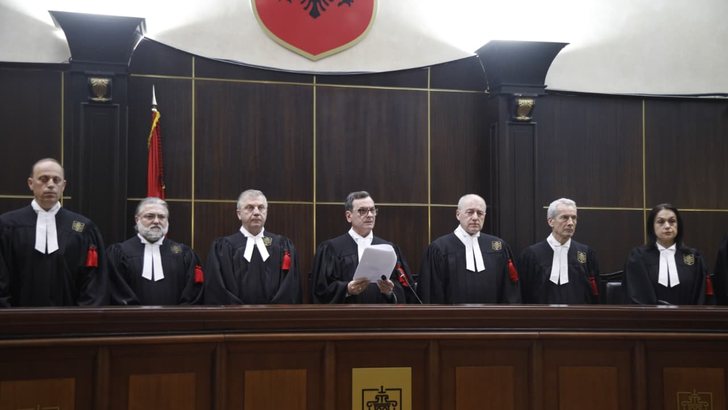
Although today's decision by the Joint Panels of the Supreme Court to ease pre-trial detention measures in Albania is somewhat biased, it constitutes an act for the benefit of citizens and the future.
Let's start with the suspicions. The change in judicial practice to date regarding the most severe security measure for those arrested has fueled fears that an attempt is being made to release Veliaj, Beqaj, Meta, etc. from prison. As such, he bears the suspicion that he is politically motivated.
Secondly, it coincided with a time when the Albanian parliament refused to give way to SPAK's request to lift Belinda Balluku's immunity, adding to the accusations that the brief era of "the end of impunity" is coming to an end, which was also one of the main pillars that motivated the drastic reform in justice.
Third, coincidentally or not, he shot at the peak of the propaganda campaign initiated by Edi Rama, who, for deeply personal interests, remembered to cite international reports that blackened Albania's records as a country where there were more detainees than those convicted by final decision. Whether to prevent one day the shackles from being put on his wrists, or even to save the few soldiers who remained free, the prime minister engaged in this crusade by transforming the repressive mentality inherited from the past into the main theme of his attacks against SPAK and the courts, in order to burst in first.
If you combine this political stance with the fact that the Supreme Court has shown itself to be largely a vassal of political power in its major decisions, doubts cannot help but multiply.
And yet, nevertheless, despite these ominous suspicions, what the United Colleges have decided today remains an act that should be welcomed.
Taking the example of a simple villager from Lezion, Bektesh Zeneli, in whose chicken coop hashish was found, but for whom being held as a pre-trial detainee seemed excessive, the Court of Appeal decided that in order to send someone to prison, the lower levels of the judiciary should not be satisfied with the standard formulas that they constitute a danger, that they may destroy evidence or that they may escape, but that from now on they have the obligation to consider even the mildest measures and even express in a decision why they are not being applied. Explained in simple language, the decision instructs that detention in prison should cease to be a rule and be seen as an exception.
It also increases the burden of doubt on the prosecution's claims and requires a greater controlling role for the courts on the claims of the prosecution that in practice were until now taken for granted. In short, this decision can be translated as the opening of a new era, where our prisons should henceforth be populated with far fewer residents who do not have a final decision. And this is precisely where the good news lies, as this step is an advancement towards the standard of presumption of innocence and consolidation of respect for human rights.
In this sense, no matter how political motives may have pushed Sokol Sadushi to initiate this process, no matter how dangerous the opposition suspects the possible release of Veliaj or the prevention of Balluk's arrest, the extent of the effects of this decision affects the fates of so many people that in this case the personal cases of some officials are completely negligible. Reducing the powers of repressive prosecutors to throw people in prison without facts and with the complete indifference of judges is truly a mini-revolution. And this is worth it even against the high price of saving Lali or Bela.