Is this police force professional and capable of handling violen...
/ 2026-10-16 18:54:07Focus


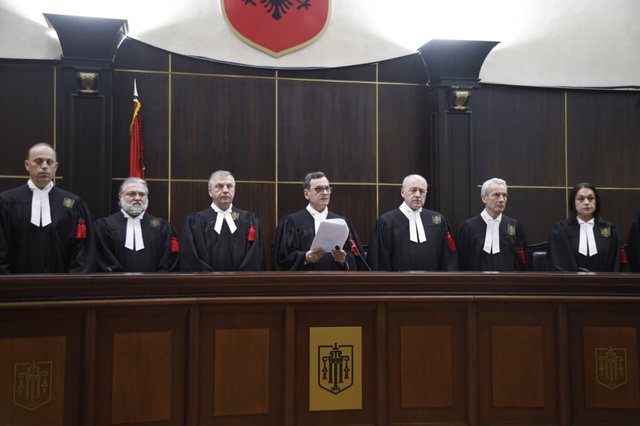
From a first reading of the summary of the Supreme Court's summary decision, I can say that:
1. The decision itself is a logical intervention in clarifying the proportionality of taking the measure of arrest with imprisonment. The decision necessarily requires that prosecutors and judges really explore other security measures before they even think of arresting someone. This is undoubtedly a good thing.
But the decision is silent on how this is guaranteed, as suggested by the Supreme Court. It does not provide a solution, but leaves room for other appeals.
2. The measure of imprisonment, without a doubt, must be individualized, as the Court's decision states. But how is equality before the law guaranteed in proportional treatment if two individuals under the same conditions, one is arrested and the other is not?! So is individualization more important than proportionality?
3. Yes, the prosecutor has the burden of justifying the arrest, and yes, with real arguments and not fantasy. I completely agree with the Supreme Court's decision. But what are "real arguments"? Previously proven factual things, or assumptions based on suspicion?!
I repeat, the court's decision has attempted to change something in decision-making, but it still seems very theoretical and leaves the measure of arrest unaddressed in the context of criminal justice that we have in practice.

There are several aspects that deserve attention and serious intervention so that the suggestions of today's decision of the Court can also make sense. Perhaps not all of them will be resolved by the Supreme Court. Legal intervention will also be needed. But specifically, I am talking about these aspects:
1. Can an irregular criminal proceeding, which has not been subject to judicial adversarial proceedings at all, legitimize a measure of arrest and imprisonment?!
Beware: the prosecutor registers criminal proceedings even for nothing and does not hold anyone accountable for this...
2. Can the measure of detention be imposed on persons under investigation, even at an early stage of the investigation and without a specified deadline? If so, what is the difference between a person under investigation and a defendant? Does the status of these two categories differ according to the evidence (its quality), or simply the stage in which the proceedings are?!
3. Can a wiretap serve as evidence for an arrest, when the Code of Procedure calls wiretap a means of obtaining evidence?
4. Can a person be held in custody by an early decision of the investigating court, when the case goes to trial? Should the trial court have the exclusive right to impose proportionate measures in the interest of the trial?
I remind you: for calculation purposes, pre-trial detention is divided into an investigation period and a trial period. But the trial is not obliged to have its own decision on the measure.
5. What is called "reasonable suspicion"? Any fantasy of the prosecutors?! The bad reputation of the investigated person?! Or the factual connection of his/her actions and inactions with the criminal consequence?!
I recall that the Criminal Procedure Code accompanies the phrase "reasonable doubt" with the words "based on evidence. So in the plural "evidence....".
Now, will the word "evidence" have a double meaning according to the 2011 Supreme Court decision and the law? So will we again have a shred of evidence for arrest and evidence at trial, as is the case to this day?!
6. Which is more important in assessing a prison arrest, the theoretical dangerousness of the alleged offense or the dangerousness of the suspect?! What is the arrest required for, to protect the investigation or to prevent the person from evading the investigation and trial?! If it is the latter, why is pre-trial detention not called a punishment?!
There are more, but those are the main ones I have for the prison arrest debate.
I applaud the Supreme Court's decision because it is an effort nonetheless. That decision has at least overturned the "monopoly" of that infamous decision no. 7 of 2011.
But there are still many other things that require serious intervention in the criminal justice system. A system that was built to make the prosecutor's job easier and the courts deadlocked.
At this point, the intervention of the legislator is also needed.