Is this police force professional and capable of handling violen...
/ 2026-10-16 18:54:07Focus


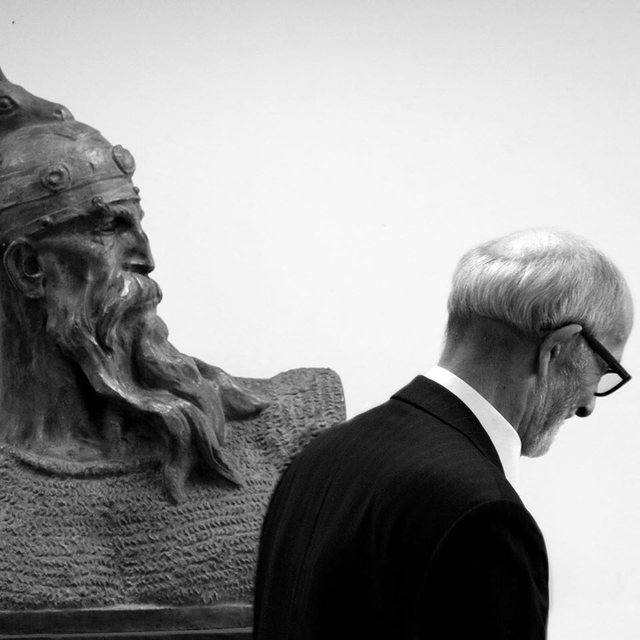
Rexhep Qosja was not just a literary scholar, nor just a sharp creative pen, but a figure who transformed Albanian culture into an emancipatory project. He saw literature not as an archive of the past, but as a generating force of national identity, connecting it to the needs of the time and the challenges of Albanian society. In this sense, Qosja is a modern renaissance man: a thinker who brought back the spirit of renaissance to our time as if to remind us that we have not yet finally solved the national question.
Qosja conceived Albanian literature as a cultural unity, beyond religious or geographical divisions. In his scholarly works, he constructed a narrative where the writers of the past were not only authors, but cornerstones of national consciousness. This vision makes him a direct successor to the Renaissance, but in a modern context.
Like the renaissance men of the 19th century, Qosja did not hesitate to polemicize. Most of the time, the debates he participated in, and not infrequently even in print, were not personal clashes, but paradigmatic and programmatic confrontations. Polemics for Qosja was a form of critical thinking, a way to keep the spirit of freedom of thought alive.
Rexhep Qosja used the Albanian language as an effective weapon and as a sacred instrument. He wrote it masterfully, used it as a means of influence and transformed it into an instrument of emancipation. For him, language was the root of Albanian identity, a spirit that triumphed over any religious or ideological division. This directly connects him to the Renaissance people, who saw language as the foundation of the nation.
Qosja did not limit himself to studies, literary and journalistic creativity. He was part of the Rambouillet delegation in 1999, thus linking intellectual creativity with genuine political activity for the benefit of Kosovo and the resolution of the national issue. For him, culture and politics were two inseparable fields because he was convinced that national emancipation would be severely hampered without the contribution of both. In this aspect too, he revived and gilded the spirit of the renaissance people.
His bequest for a simple burial, without speeches or state ceremonies, is a reflection of his philosophy: to live and act for the good of the nation without fanfare, but with principle and a harshly critical approach “towards rulers and their powers.” The appreciation ceremonies and monuments that exalt and immortalize him are found in the works he left us.