Is this police force professional and capable of handling violen...
/ 2026-10-16 18:54:07Focus


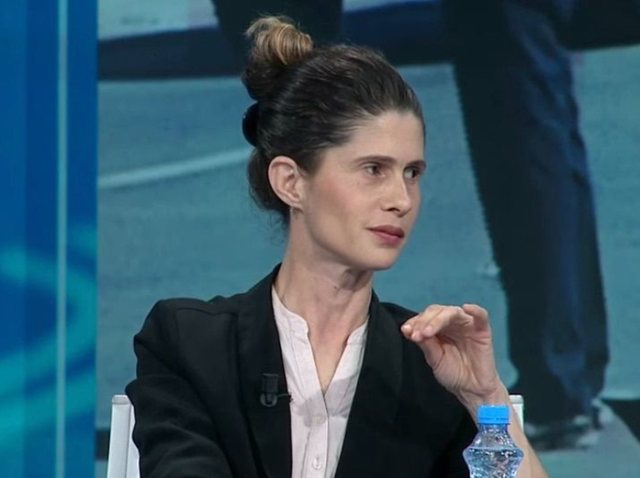
The problem on our roads is not a lack of license. It's a lack of culture. We don't have a skills crisis, we have a mentality crisis.
Many drivers know how to maneuver the vehicle, but very few understand that at the wheel they hold responsibility, not power.
The street is not private property, it is not a territory of force, it is not a place to show ego.
It is a public space where any irresponsible action endangers others.
Driving school is an educational institution that informs, educates, understands and enforces the rules. And most importantly, understands the responsibilities. It is not a store that sells licenses. But it prepares drivers.. The culture of driving is not built with 42 hours of lessons. It is built in the family, in the social model, in the way we react to violations, whether we tolerate or reject them.
As long as leadership is perceived as "me first," we will have conflict, chaos, and uncertainty.
Road safety is not a matter of fate. It is a matter of collective conscience.
Civic awareness is the foundation of road safety. The moment the driver perceives himself as the "owner" of the road, conflict arises.
When you realize that you are part of a public system, responsibility arises.
Driving is a social function. Every decision at the wheel is a decision with collective impact.
As long as leadership is seen as power and not as a civic duty, security will remain fragile.
Are we investing enough in long-term cultural education, or are we focusing only on formal certification?
The question is not:
"Do we know how to drive?"
The question is:
Do we know how to behave like citizens on the streets?
Albanian society facing conflict, the culture of order and the role of institutions:
A topic of serious discussion is Albanian society's continued tendency towards conflict and social tension, even within the community itself or between people of the same nation or blood.
A climate of distrust, harsh reactions, and lack of tolerance is often observed, which in some cases manifests itself in the form of verbal or physical violence.
Although the state has taken steps to strengthen the legal framework through the provisions of the Criminal Code, Article 293, and institutional efforts to protect human rights, some phenomena continue to be present in everyday life. One of them is the culture of behavior in public spaces as road users and in traffic.
On our streets, the phenomenon of the so-called “OWNER OF THE ROAD” is often encountered, where the individual behaves as if the public space belongs to him personally. In this mentality, traffic rules are not perceived as mechanisms for collective safety, but as restrictions that can be bypassed. Where this theory “RULES ARE MADE TO BE BREAKED” creates a risk to the lives and safety of citizens, but also a general culture of disrespect for the law.
This situation raises several questions about civic culture as road users: Why are rules sometimes seen as an obstacle rather than a guarantee of shared safety?
Why do critical thinking and voices demanding respect for the law often remain on the periphery of public debate?
How effective are institutions in preventing and punishing violations, especially in the field of road safety?
What role do community, education, and public awareness play in changing this mindset?
The analysis of these questions is not only related to respecting the law, but also to building a civic culture where individual responsibility and respect for others become part of everyday life.
Only through critical dialogue, strengthening of institutions and social education can a fairer, safer and more responsible society be built towards the rules that guarantee life in the community./Taken from Msc.ing Enirjeta Shehi, technical director, licensed instructor with DAP and road signage expert, interpreter of the Highway Code .