Is this police force professional and capable of handling violen...
/ 2026-10-16 18:54:07Focus


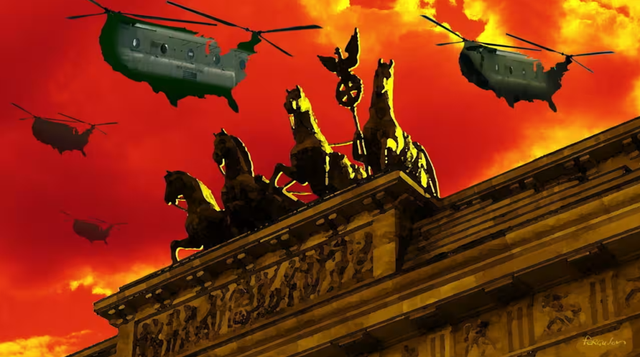
The US Air Force was stationed at Lakenheath in Britain in 1948. Ramstein Air Base was established in Germany in the early 1950s. Today there are more than forty US military bases in Europe, housing around 85,000 troops.
But nothing lasts forever. And, for the first time in a generation, it is conceivable that the American military presence in Europe could end.
The immediate irritant is the war with Iran. European reluctance, and sometimes refusal, to let the US use its European bases for missions in Iran has enraged Donald Trump, who has attacked the Europeans as “cowards” and called NATO a “paper tiger.” Marco Rubio, the US secretary of state, has asked implicitly why America bothers maintaining bases in Europe if it cannot use them when the critical moment comes.
The Trump administration is believed to be considering a list of sanctions on European allies to be imposed after the war with Iran is over. Ideas floated include expelling Spain from NATO and withdrawing recognition of British sovereignty over the Falkland Islands.
What the Trump administration may not fully understand, however, is that the anger flows both ways. European politicians are complaining bitterly, sometimes publicly, that the US launched a reckless and illegal war without consulting its NATO allies. European trust in American leadership is also at an all-time low, which is understandable when America’s commander-in-chief posts images of himself as Jesus and threatens to wipe out an entire civilization.
The war with Iran also comes after a year in which the US has imposed tariffs on European allies and threatened to invade Greenland, raising the tantalizing possibility that European soldiers could end up fighting against Americans. A Politico poll conducted earlier this month showed that in Spain, Italy, France and Germany more people now see the US as a threat than as a “close ally”. Spain’s Pedro Sánchez has revived his political fortunes with his outspoken condemnation of US foreign policy. Even leaders of staunch US allies, such as Poland and Germany, are openly questioning Washington’s leadership.
Since World War II, the American presence in Europe has been an “empire by invitation.” But some Europeans are increasingly tempted to withdraw the invitation.
So who would lose more, the US or Europe, if the American military presence in Europe were reduced?
For Americans, this would depend largely on whether the US still wants to project power into Europe, the Middle East and Africa. Despite the political theatrics on both sides of the Atlantic, the reality is that the US has made heavy use of its European bases during the current war. The pilot of the US military plane that was shot down over Iran and was rescued was likely based at Lakenheath, in Britain.
If the US could be sure that it would never need those European bases again, it could certainly close them. But given the frequency of US military interventions in the Middle East (as well as the Balkans) in recent decades, it seems hasty to assume that the current war with Iran will be the last such involvement. European purchases of US arms and other goods are also implicitly linked to a continued US security guarantee for Europe. As doubts about that commitment grow, the movement to “buy European” is gaining momentum.
Saying goodbye to the Americans would also involve great risks for Europe. Russia is still waging war in Ukraine. And Donald Tusk, the prime minister of Poland, has warned that Russia could attack NATO territory within months. Similar warnings, formulated over years, have come from political leaders in Berlin and London. As Tusk noted, there are growing doubts whether a Trump-led US would honor NATO’s mutual defense clause.
Mark Rutte, the NATO secretary general, has warned that Europe currently cannot defend itself against Russia without American help. He has become the public face of European efforts to keep Trump happy at all costs.
Some European leaders are more optimistic than Rutte about the continent’s ability to defend itself. They note that Russia’s military performance in Ukraine has been less than impressive. Even so, it is widely acknowledged that Europe currently relies on America to provide the military capabilities that would be critical in any conflict. These include air defense, intelligence resources, and the heavy transport aircraft that would be needed to move troops quickly to the front lines. Filling these gaps could take many years. Even NATO’s command structure is built around American leadership.
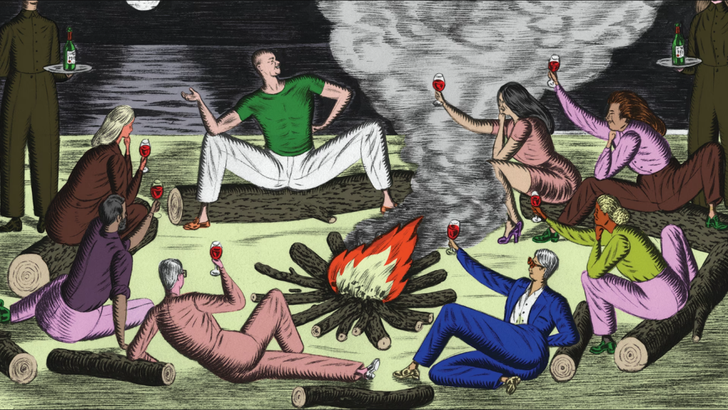
For all these reasons, most European leaders remain extremely wary of pursuing their dreams of punching Americans in the face and telling the American president to fuck off. At the same time, it is significant that the fantasies of revenge against Europe currently circulating in the Trump administration do not actually include the mass closure of American bases in Europe. Both sides of the Atlantic seem to understand that, for the moment, they are locked in an unhappy marriage.
For both the US and Europe, a formal divorce still seems like a huge step. But both sides are saying and doing things that cannot be easily forgotten or retracted. In an alliance, as in a marriage, this is a dangerous state of affairs.