Is this police force professional and capable of handling violen...
/ 2026-10-16 18:54:07Focus


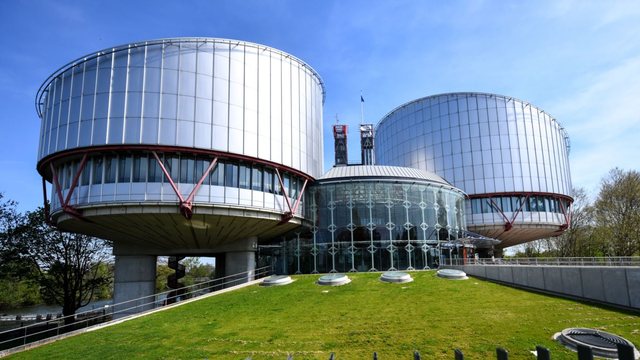
The official report of the State Attorney's Office on the execution of the decisions of the European Court of Human Rights (ECHR) during 2025, submitted to the Albanian Parliament, has brought to light sharp and critical issues that the Albanian justice system is going through.
Although legal representation has managed to avoid major financial damage to the state budget, the Strasbourg findings raise a serious alarm about the functioning of domestic courts, highlighting violations of due process, the collapse of compensation mechanisms, and arbitrary decision-making at the highest judicial levels.
In the 34 decisions issued by the ECHR for 2025, the Court has found violations of the Convention in 12 of them. The violations found prove that the recent reforms are not only not easing the burden, but in some cases are producing new systemic bottlenecks.
1. The collapse of the legal remedy for excessive length of proceedings
One of the most alarming points of the report relates to the domestic remedy for trial within a reasonable time (Article 399/1 of the Code of Civil Procedure), which was created in 2017 to compensate citizens for judicial delays. The report openly acknowledges that this mechanism is not having the desired effect due to the side effects of the vetting process.
Huge backlog: The lack of judges and the failure of the High Judicial Council (HJC) to take concrete measures has caused the number of pending cases to increase drastically, rendering the legal remedy completely ineffective.
ECHR warning: In the key decision "ARB and Others v. Albania" (dated 27.05.2025), Strasbourg has issued a stark warning: if urgent measures are not taken to fill the vacancies (especially at the Appeal levels), this mechanism will be considered definitively failed. Such a scenario would expose Albania to a new massive wave of applications and convictions for systemic violations.
Strasbourg has also rejected the Supreme Court's justification that the delays stem from judicial reform, emphasizing that the burden of institutional transition cannot in any case be left to the individual.
2. Denial of access to the Constitutional Court
The report points to another consolidated and repeated violation: the incorrect calculation of the 4-month deadline for filing appeals by the Constitutional Court.
The 2025 decisions such as "Ibrahimi et al.", "Ilia," and "Fortuzi" confirm that Albanian citizens are unfairly denied access to the highest level of constitutional adjudication.
Ignoring recommendations: The State Attorney's Office reveals that it has recommended that these cases be resolved amicably to avoid punishments from Strasbourg, requesting that the Constitutional Court review its practice. However, the Constitutional Court has chosen not to take any position, resulting in the continuation of the ECHR punishments for Albania.
3. Courts that "hide" the reasoning behind decisions
Another critical point raised by the ECHR is the practice of national courts to dismiss citizens' complaints without providing any full and adequate justification, making do with sterile formulas or simply presenting the result of the vote.
"Frroku" case: The ECtHR found a violation of Article 6 because the Constitutional Court left the applicant without any reasoning on the merits of the case, limiting itself only to the votes for and against.
"Rarani" case: This decision exposed a serious violation by the Supreme Court, which had exceeded its powers as a court of law. It had arbitrarily overturned findings of fact and expert reports accepted by lower courts, without any new evidence and without any sufficient explanation.
4. Violation of judicial impartiality and conflict of interest
The report highlights flagrant cases of structural and procedural lack of impartiality in judicial bodies.
"Kroi & Noçka" case: Three Constitutional Court judges, who had previously judged the same case when they were part of the Supreme Court, refused to recuse themselves from the consideration of the constitutional request. The decision taken by this incomplete body (due to unfilled vacancies in the Constitutional Court) ended with equal votes of 3 to 3, creating strong doubts about the impartiality of the process.
"Kastriot Ismailaj" case: The ECtHR found that a Supreme Court judge had examined a recourse despite having previously given decisions on the same facts. Furthermore, the court entered into the merits of the case without guaranteeing the applicant even the formal right to request the judge's disqualification.
Faced with this critical framework, the State Attorney's Office has forwarded official calls to key institutions such as the Supreme Court of Justice, the Supreme Court, the Constitutional Court, and the School of Magistrates to urgently change their practice.
Among the emergency measures requested by Strasbourg are listed:
Immediate filling of vacancies in the courts (especially in the Court of Appeal).
Deep review of the delay compensation mechanism, as it is becoming a new burden that risks ultimately clogging the system.
Reopening and retrying domestic cases whenever violations of the impartiality and independence of the courts are found, as the only means to correct procedural errors.