


Details of the storm in the administration, here's who will resi...
/ 2026-10-22 22:25:00Focus


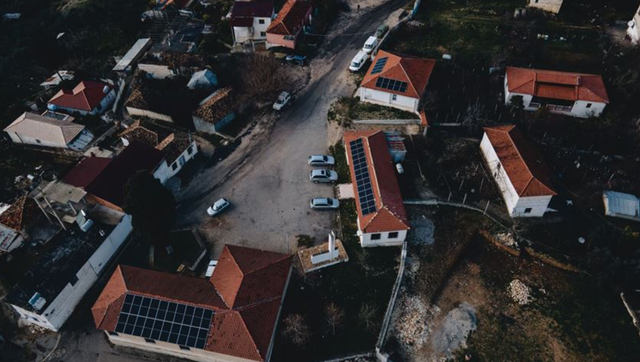
The small village in southern Albania, Kutë, with a population of just under 2,000, is located along the Vjosa River (called the Aoos River across the border in Greece), with a view of Mount Çika. There is a school, some shops, some municipal buildings. But it is a rural area. Look it up on Google Maps and you'll find images of impressive-looking sheep and a river bank.
Like most villages in this part of Albania, the houses have electricity. But Kutë claims to be the site of the first community of energy generated by the sun in Albania. These energy panels currently supply not only the village's street lights, but also a health center, a cultural center, the school and an administrative building.
The next step, say the villagers and the environmental groups that support them in their efforts, is to transform Kuta into an energy community.
"If we can succeed," says Demir Murataj, 59, a farmer born and raised in Kuta, "then the supply of panels to every family will be even better."
But before there was light, there was water. Kuta, an agricultural community, coexists with the Vjosa river it is located next to, which environmental organizations describe as one of the last wild rivers in Europe. Ancient references to the waterway and surrounding valley are numerous.
Today, village farmers, like most who live here in the Vjosa Valley, rely on the ecosystem – of which the river is an integral part – to maintain crops and fish. This coexistence, and the continuity of Kuta as a whole, was threatened in the 2010s when plans to build a hydroelectric dam on the river were revealed.
Villagers and environmentalists say the Pocem hydro plant, which was part of a larger plan to build 400 hydro plants across the country, would have flooded Kuta's agricultural fields, rendering the village uninhabitable.
The resistance to the Pocem dam was not limited to the residents of Kuta, but theirs was louder.
"One of the alternatives that we think is completely unused in Albania is solar energy. And the message we wanted to give is that this community doesn't really need the Pocem hydropower plant because there are other options to get energy", says Besjana Guri, environmental expert from EcoAlbania, who has worked closely with the community.
A later crowdfunding campaign, led by EcoAlbania with the support of Kuta residents and a wide range of supporters that included the American outdoor clothing company Patagonia, raised enough funds to bring the first phase of solar panels to Kuta.
In December 2021, the lights were turned on and the first citizen energy community in Albania was born.
Currently, the law in Albania does not allow communities to turn overproduced energy into monetary value, but there is hope that something will change. With or without lights, Kuta is not without its problems. The population is aging and young people are no longer living in the countryside./ Source : The Parliament Magazine




