Berisha: Altin "Troplini" Dumani amnestied electoral crimes, SKA...
/ 2026-10-19 11:44:20Focus


In Albania, political disinformation is not a sporadic anomaly or simply the product of media hype, it is a systematic structure built and maintained by the close ties between politics, business and the media. Political propaganda finds a well-prepared terrain, where real information is overwhelmed by narratives produced to serve the purposes of the moment.
At the heart of this system lies the media ownership structure, which in Albania is dominated by families and business groups that simultaneously own media and activities in other strategic sectors such as construction, telecommunications, energy, or real estate. This configuration makes the media dependent on public funds and, as a result, directly influenced by political power. A report by BIRN’s “Media Ownership Monitor Albania” revealed how some of the most powerful media groups benefit significantly from state contracts, which translates into editorial support for the government.
This addiction feeds a practice now widespread in Albanian newsrooms: “churnalism,” or the recycling of pre-prepared news from the PR offices of public institutions. A MediaLook study found that the content of news stories broadcast by some of the national television stations matched 93-98% with press releases from the Municipality of Tirana.
Moreover, political debate television programs, which in theory should be spaces for free discussion and the confrontation of ideas, have often become sold products, where politicians or businesses buy television time to control the narrative. Moderators and program directors confess that they are often forced to invite the same people and ask pre-agreed questions, a parody of free journalism.
In this tight climate, journalists themselves are exposed to structural censorship and self-censorship. Without regular employment contracts and with a weak position in the editorial hierarchy, they face political pressure, especially if they dare to publish investigations in media with foreign funding or outside government control. Reports by MOM and BIRN document cases where journalists have been publicly attacked for exposing abuses of public funds.
On the other hand, a fundamental dimension of the lack of resistance to this phenomenon remains the low level of media literacy. Educational curricula at pre-university and university levels rarely include critical analysis of information sources, leaving the younger generation vulnerable to manipulation, fake news or the moral panic that often accompanies the increase in the use of technology.
From structure to strategy: The TikTok case as a reflection of a model of disinformation
This complex panorama of information capture and propaganda dissemination explains how the TikTok case was not an isolated act but a manifestation of a model built to produce narrative control. The decision to close the platform, with the justification of a parental consultation, was announced as a reaction to a tragic event, but in fact served to shift public attention from the failures of the security system in schools and to strike at an independent space of political communication – a social network where new parties and alternative voices had found influence.
On November 13, 2024, as a result of a conflict between several young people, very close to the premises of the Fan Noli school in Tirana, Martin Cani, 14, lost his life after being stabbed by his peer Mario Prelleshaj, while Luis Meçja ended up in the Trauma Hospital with serious wounds, which fortunately did not prove fatal for him.
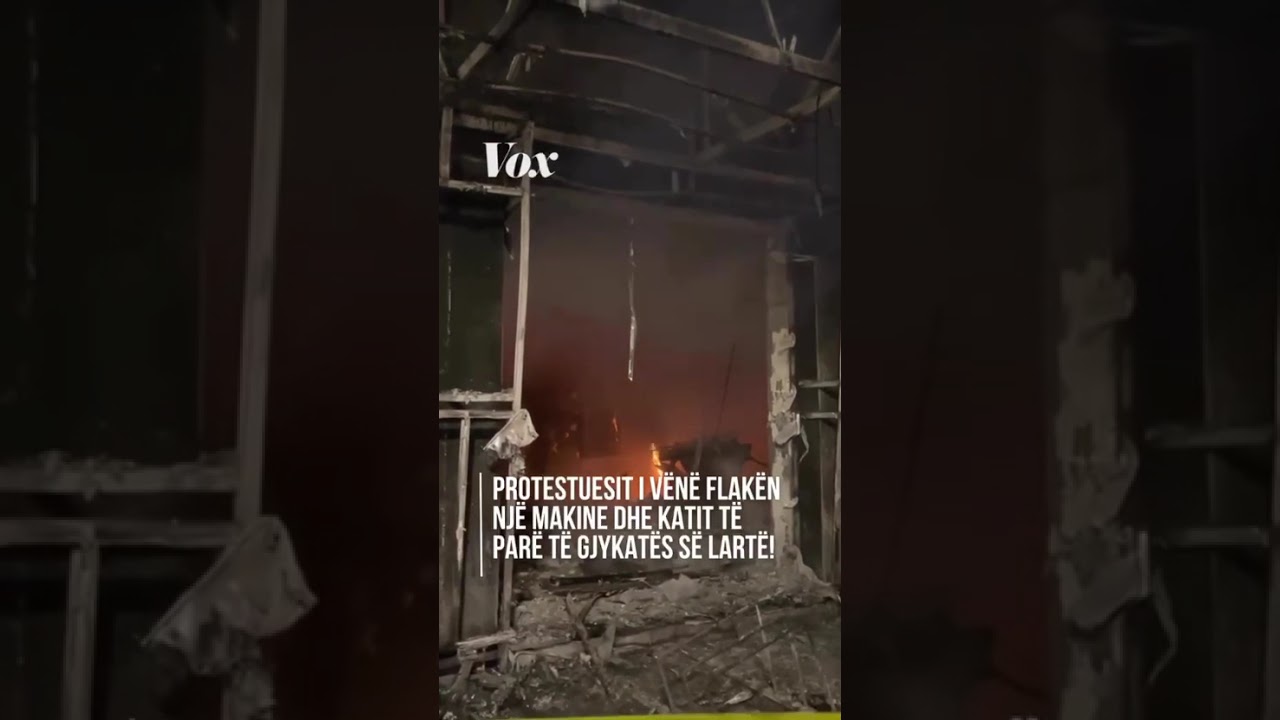
The event shocked public opinion, which launched massive protests in front of the Ministry of Education, demanding the resignation of the head of this department, as an act of responsibility for the failure of an entire security system in public pre-university education schools.
Faced with this pressure from citizens, mainly parents and teenagers, Prime Minister Rama publicly targeted the social network "TikTok" as a bad influence on the younger generation, while announcing that he would launch a national consultation with parents to get their opinion on whether or not to close the social platform.
A month after the tragic event, while the protests in front of the MAS continued, the Rama government held a closing meeting of the National Council where the reform in pre-university education was presented, which included a series of measures on increasing security and the need to educate the younger generation in relation to new media. The prime minister also announced the closure of TikTok, which he described as the "neighborhood street", as a temporary one-year measure and the launch of a dialogue with the platform to increase security filters.
"This measure", said the Prime Minister, "was also requested by 90% of the 65 thousand parents surveyed in 1300 meetings organized throughout the country, within the framework of the National Consultation with teachers and parents".
The decision to close TikTok suddenly shifted the political discourse, the attention of public opinion and the media, who reported on an unprecedented and radical measure, as Albania would be the first country in the EU to completely close the social network.
The event took on international proportions, while TikTok itself reacted in an interview with the Associated Press, emphasizing that "no evidence has been found that the perpetrator or the victim had accounts on TikTok and that many data indicate that videos that may be related to the incident were posted on another platform," referring to SnapChat.
The debate was amplified by the head of government himself, who publicly responded that: "The ban on TikTok for (at least) a year in Albania is not a hasty reaction to a simple event, but a decision widely consulted with parent communities in schools throughout Albania. TikTok does not require any clarifications from Albania, because in Albania, Albanians decide, not the owners of the TikTok algorithm," wrote Prime Minister Rama on the X network, on December 22, 2024.
The election of President Donald Trump to the White House and his approach not to immediately close TikTok had its impact on softening the statements of Prime Minister Rama. A month after the verbal confrontation with TikTok, the head of government used the World Economic Forum in Davos to give a speech regarding a new approach to the social network. He discussed the possibility of reopening the platform, although Albania had not yet officially closed it: “A discussion in a constructive spirit, where we set cooperation milestones in the coming weeks and months to ensure the reopening of TikTok at the most reasonable time, but of course with all the necessary guarantees in the absence of which we are forced to close access to the platform soon”, – announced Rama after a meeting with the senior representative of TikTok, Christine Grahn.
Time showed that managing the tense situation after the murder of the 14-year-old minor and managing the security crisis in schools through the sensational statement to close TikTok was a “dead cat strategy.” All attention was focused on the “dead cat” (closing TikTok) that was first thrown on the table by Prime Minister Rama.
But, this strategy also carried a second function: closing an atypical communication platform like TikTok from new political entities.
For the lecturer of the Department of Journalism and Communication, Ervin Goci, the rush to close TikTok, on the eve of the electoral campaign, could not but be related to the electoral campaign: "...it was clear that we were dealing with a typical electoral maneuver, which was carried out with a concrete and practical goal: Preventing the campaign from being carried out by competing actors, with better performance and outside the control of the mechanisms that the government uses to influence virtual communication."
At the beginning of March, the Council of Ministers approved the Council of Ministers Decision No. 15 "On taking temporary measures to avoid the negative impacts of the Tik Tok online platform", in which it tasked the National Cyber Security Authority and public agencies in the field to close access to the social network in Albania.
Although the initial plan of measures to close access failed, AKSK requested the logistical and technical assistance of the Israeli Cybersecurity Authorities who helped apply DPI technology to close TikTok, although this caused experts to react to a risk of personal data exposure.
For BIRN Albania editor-in-chief Besar Likmeta, the ban on access to the platform constitutes an act of censorship of these freedoms, especially in the context of a campaign eve: “The closure of TikTok raises serious concerns for freedom of expression and equal access to the digital space during an election campaign.”, – analyzes Likmeta. According to him, the closure of TikTok also affected the political discourse during the election campaign, especially for new and emerging parties./ Albanian Center for Quality Journalism (ACQJ)