Is this police force professional and capable of handling violen...
/ 2026-10-16 18:54:07Focus


The fuel tax was introduced in Albania in 2012. Initially, it was only 7 lek per liter, but it gradually increased in subsequent years until 2015, when it reached the level of 27 lek per liter, which remains unchanged today.
The idea of road users contributing to infrastructure was not new. It had been discussed since the time of the National Road project, when it was argued that part of the cost of building and maintaining roads should be covered by their users themselves.
Later, this philosophy was institutionalized in the form of the fuel tax, which is now paid by every consumer each time they fill up their vehicle. The official goal was clear: road users would contribute to financing, primarily, the maintenance of road infrastructure.
The tax is collected for each liter of gasoline or diesel sold and is considered a fee for the use and maintenance of the road network.
In practice, it has become one of the main components of the fiscal burden on fuel, along with excise duty and VAT. With the increase in fuel consumption over the years, the revenues that the budget collects from this tax have also increased. According to data from the Ministry of Finance, in 2025 alone, about 220 million euros were collected from the turnover tax.
Here begins the paradox. There is almost no transparency about how these funds are used. In theory, they should go towards maintaining and improving the road network. In practice, if the roads had a voice to complain, many of them would tell a completely different story.
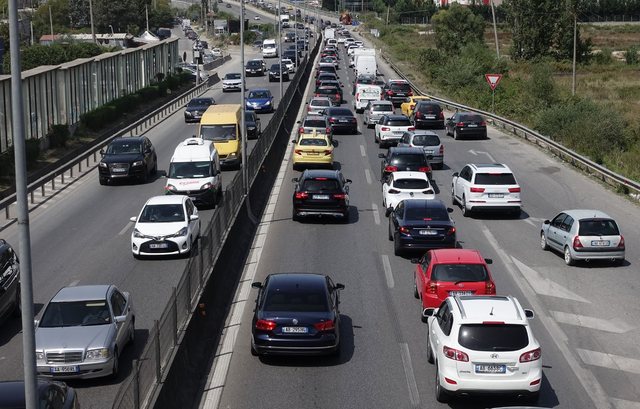
The Tirana-Durres highway, the main hub connecting the country's economic center, has been riddled with potholes for years, and asphalt repairs take only a short time. On other important roads, repairs are often made before investments are fully completed.
The National Road is another example of this fiscal irony. Its repair and maintenance are paid for by users themselves through a toll fee, which continues to be calculated at the old exchange rate of 138 lek to one euro, when today the European currency is exchanged for around 96 lek.
High taxes are one of the reasons why fuel in Albania is among the most expensive in the region when measured in relation to income. In nominal terms, oil can cost 15-30% cheaper than in some other countries in the region. But when the price is compared to purchasing power, the situation is reversed: for Albanian citizens, fuel is up to twice as expensive.
This is not the only reason. Another ongoing problem is the very rapid reaction of prices when oil prices rise on international exchanges and the much slower decline when prices fall.
The behavior is also reflected in the performance of the profit margins of the country's main fuel traders, which increase when the price cycle is down.
Tensions and conflicts in the Middle East are once again affecting global energy markets. History has shown that oil crises linked to geopolitical conflicts usually last longer than expected and price fluctuations can be strong and unpredictable.
In such a situation, any price increase in international markets quickly translates into an increase in the price at the pump for Albanian consumers, as happened in recent days, when oil increased from 175 to 200 lek per liter in a few days.
Faced with this situation, the most common response of governments has been administrative intervention in the market. In Albania, this was tried with the creation of the Transparency Board, a mechanism that in theory was supposed to stabilize prices, but which in practice raised many questions about the way the market functioned.
Instead of re-creating new administrative structures like a kind of “Board 2” that could initially lower prices and then become part of the problem (the cartel), the simplest and most direct measure would be to reduce the fiscal burden on fuel.
If a tax was imposed to finance roads and today there is no transparency about its use, then the question is simple: why should it continue to be paid at the same level? At a time when energy prices are volatile and citizens' purchasing power remains low, easing fuel taxes would be the most direct way to reduce the cost paid by families and businesses.
After all, if the government cannot lower the price of oil on international markets, it can at least lower taxes on it!/ monitor