Protests, violence, curfews: From France to Albania, why Europe'...
/ 2026-10-20 23:47:20Focus


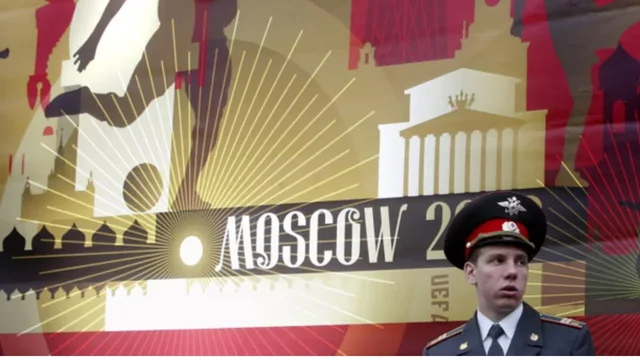
Solidarity payments are generally offered to clubs that fail to perform well enough at domestic level to enter European competitions.
They are designed to " maintain competitive balance in Europe's top divisions in light of the additional income that some clubs receive through participation in European competitions," according to UEFA.
Russian clubs and the national team have been banned from participating in international competitions since Vladimir Putin ordered the invasion of Ukraine in February 2022.
Despite the ban, UEFA paid €3,305,000 in solidarity payments to the Russian Football Union in the 2022-23 season, another €3,381,000 in the 2023-24 season and €4,224,000 for the 2024-25 season.
There was also a payment of €6,209,000 in the 2021-22 season, according to UEFA circulars. The football association is obliged to pass on the money to the clubs.
At the same time, the directors of five Ukrainian clubs wrote to UEFA president Aleksander Čeferin, a Slovenian lawyer, on July 27 to complain about an “exceptional situation” in which their “solidarity” payments for the 2023-24 and 2024-25 seasons were withheld.
The affected teams are Chornomorets and Real Pharma, which are based in Odessa; IFC Metalurg from Zaporizhzhia; FSC Phoenix Mariupol from the occupied southern port city; and FC Metalist 1925 from Kharkiv.
The club directors write: “As a result of our communication with both the national association and UEFA officials, we have been informed that the obstacles to the above payments are some completely unclear requirements of a bank in Switzerland, which are allegedly related to the geographical location of the football clubs in the ‘war zone’.
“We have not received any more detailed information or any legal justification for these restrictions on payments .” The wording used regarding the 'area of military operations' is completely unclear to us and does not correspond to reality.
"The zone of military operations, or rather the zone of Russian military aggression, is not a specific region of our country, but the entire Ukraine ," the statement reads.
The port city of Mariupol and parts of the Zaporizhzhia region in southeastern Ukraine are occupied, but not Odessa, in the south, nor Kharkiv in the northeast.
The letter to Čeferin continues: “Many loyal Ukrainian football fans went to the front from the first days of the aggression, many of them unfortunately will never be able to support their teams in the stadium, as they have died with the names of their favorite people and the name of their favorite team in their mouths.
Therefore, in this difficult time for our country, any additional financial assistance and support will certainly help clubs ease the burden of financial expenses which, as mentioned above, due to the circumstances of military aggression cannot be balanced by potential income.”
A UEFA spokesperson initially said they would issue a statement to explain the payments, but then gave no response.
The revelation will raise fresh concerns about UEFA's approach to the Kremlin. Russia has maintained its presence within UEFA because its federation, the Russian Football Union, has not been suspended.
Polina Yumasheva, the ex-wife of “the Kremlin’s favorite industrialist,” billionaire oligarch Oleg Deripaska, is on UEFA’s governance and compliance committee. She is the daughter of a former Putin adviser.
In September 2022, Ukraine coach Oleksandr Petrakov was fined by UEFA after vowing in an interview with the Guardian that he would take up arms against Russia following the invasion of his country.
UEFA also attempted to reintroduce Russia's under-17 team to international football in 2023, but the proposal was withdrawn after a dozen national associations, including England's, publicly expressed their opposition.
In a letter to UEFA last March, the executive committee of the Ukrainian football association complained that Russian clubs were being awarded ranking points by UEFA in every season they were suspended.
The total number of points earned by a country in a season determines how many teams in their domestic leagues will participate in European tournaments, including the Champions League.
The number of points awarded to Russia is equal to the lowest Russian teams have earned in the past five seasons, but critics have argued that this undermines the impact of the international suspension.