Details of the storm in the administration, here's who will resi...
/ 2026-10-22 22:25:00Focus


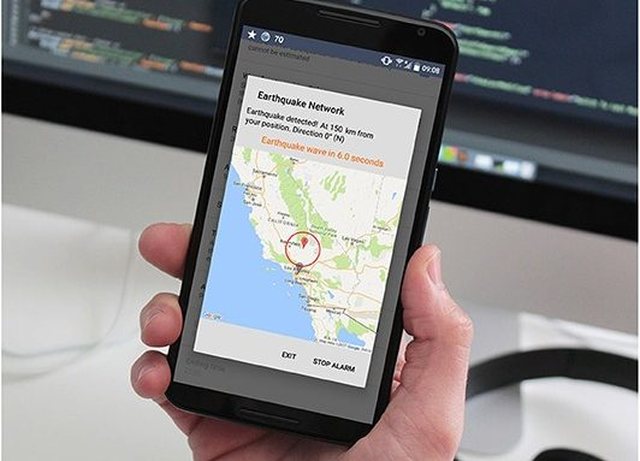
Fifty years since that first phone call, the technology we carry in our pockets is helping to create the world's largest earthquake detection system.
When a magnitude 5.1 earthquake hit the California Bay Area, many people in the area received notifications on their phones up to 30 seconds before the tremors began.
Google has worked with the United States Geological Survey (USGS) and academics at a number of California universities to develop a system that warns users seconds before tremors arrive. It's a brief moment of warning, but a few seconds might give you enough time to duck under the table. It can also be enough time to slow down trains, stop planes from taking off or landing, and prevent cars from entering bridges or tunnels.
The system uses data from two sources. Initially, it relied on a network of 700 seismometers (devices that detect ground vibrations) installed throughout California. But Google has also created what is the world's largest earthquake detection network through phones.
Most smartphones running Google's Android operating system have a circuit that detects when a phone is being moved. This feature is often used to reorient the screen when it's tilted and also helps provide step count information. But the sensors are surprisingly sensitive, and can also act as a mini-seismometer.
Google has introduced a feature that allows users to automatically send data to the Android Earthquake Alert System if their device receives vibrations that are characteristic of the main waves of an earthquake. Thus, the system can determine if an earthquake is occurring and can send alerts to phones in the area where seismic waves are likely to hit, giving an early warning.
And because radio signals travel faster than seismic waves, alerts can reach areas far from the epicenter before shaking begins. But the system has its limitations, especially in remote areas where there are few phone users and in offshore earthquakes that can trigger tsunamis.