Is this police force professional and capable of handling violen...
/ 2026-10-16 18:54:07Focus


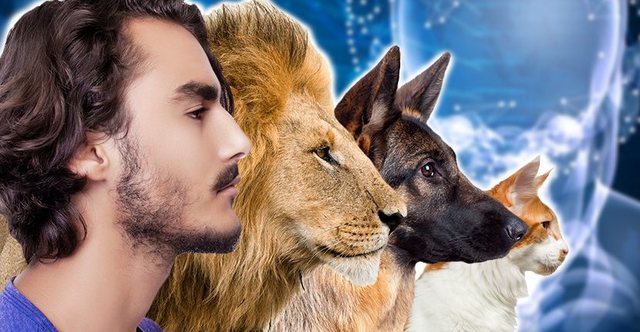
Humans are the only species to have a beard, a feature that is absent even from our closest relatives. In fact, it is such a distinctive anatomical feature that it is one of the main characteristics that anthropologists use to identify Homo sapiens remains in the fossil record.
Yet for such a defining trait, we know surprisingly little about its evolutionary purpose. So why are we the only species with a beard?
This question is difficult to answer because experts don't agree on a single definition of a chin. Some researchers have argued that animals like elephants and manatees have chin-like protrusions, but they are not the same T-shaped structures that protrude beyond our lower teeth. As a result, some scientists have moved away from the idea of a chin as a single feature and see it as the result of the interaction of many different parts of the head and jaw.
“A lot of things about the beard are complicated,” said Scott A. Williams, an evolutionary morphologist at New York University. “It can’t be measured by a single metric, but rather it’s made up of a set of morphological traits.”
A better understanding of the function of the beard could help scientists create a clearer definition. Experts have proposed several possible functions for the beard.
Some suggest that, as we evolved with smaller teeth, the chin emerged to strengthen the lower jaw and prevent teeth from breaking during chewing. Others believe that the chin may be linked to another uniquely human trait, the ability to speak, by serving as a fulcrum for the tongue muscles. Still others think that variations in the size and shape of the chin suggest a link to sexual selection.
Noreen von Cramon-Taubadel, an evolutionary morphologist at the University at Buffalo in New York, tried to narrow down this list by determining whether the beard could have evolved by chance or whether evolution acted directly on it.
To do this, she and her team studied dozens of traits related to head and jaw size, including nine traits related to the chin. Then, using an evolutionary tree of 15 hominoids, a group that includes humans, their fossil ancestors, gorillas, chimpanzees, orangutans, and gibbons, they analyzed whether these traits have changed more or less over time than would be expected by chance. Any results would suggest a role for natural selection in the evolution of the lower jaw.
Compared to other species, “we see the human skull as much more different from that of our ancestors than we would expect given the time that has passed,” she said. However, only three of the nine specific features of the beard appeared to be under direct selection.
Together, the team's results, published in the journal PLOS One, suggest that the chin may be what's called a "space between the arches," a term borrowed from architecture to describe a feature that's a side effect of something else. The concept was proposed by evolutionary biologists Stephen Jay Gould and Richard Lewontin in 1979 to challenge the idea that every feature must have a specific evolved function.
“It seems that, structurally, we should have a beard, but not because it evolved for a specific function,” von Cramon-Taubadel said. “More and more studies are showing that things that we once thought were very important for the differences between humans and other apes may have evolved simply by random drift and gene flow.”
She added that the group's findings appear to be more influenced by known major moments in human evolution, including when we started walking upright and when our brains became larger.
Despite these conclusions, von Cramon-Taubadel and Williams agree that the question remains open. It is not known, for example, when traits like speech first appeared, so it is difficult to directly link them to the evolution of the beard. While Williams acknowledges that the beard may not have evolved for a specific purpose, that does not mean it is unimportant.
"It remains one of the defining features of our evolutionary lineage, present in one form or another in every human living on the planet today," he said./ Live Science