Frident Kuqi and Halil Gashi win the 62 million USD auction to b...
/ 2026-10-26 22:13:42Focus


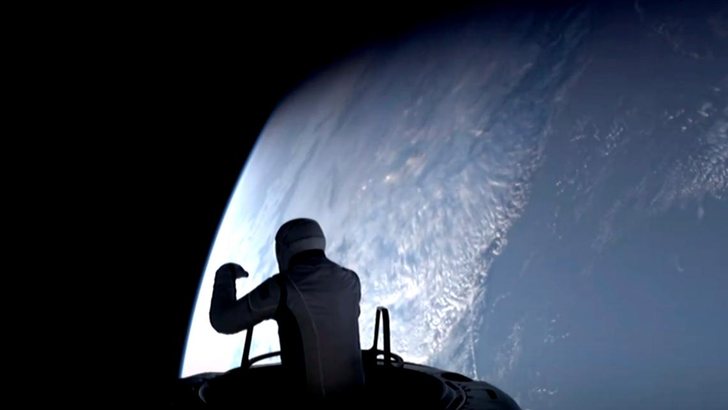
A billionaire completed the first-ever spacewalk by a civilian on Thursday, stepping out of his SpaceX capsule hundreds of kilometers above Earth. Tech entrepreneur Jared Isaacman and his crew waited until their capsule was crushed before opening the hatch.
Isaacman was the first to go, joining a small elite group of spacewalkers that had until now included only professional astronauts from a dozen countries. The commercial spacewalk is the main focus of a five-day mission called Polaris Dawn that Isaacman and Elon Musk's company funded, and the culmination of years of development geared toward settling Mars and other planets.
All four on board donned SpaceX's new spacewalk suits to protect themselves from the harsh vacuum. They launched Tuesday from Florida, rocketing farther from Earth than anyone since NASA's moonwalkers. The orbit was halved to 740 km for the spacewalk. This first spacewalk test, expected to last approximately two hours, involved more stretching than walking.
More and more affluent passengers are spending large sums on private jet travel to experience a few minutes of weightlessness. Others have spent tens of millions to stay in space for days or even weeks.
Space experts and risk analysts say it's inevitable that some will seek the thrill of a spacewalk, described as one of the most dangerous parts of spaceflight after launch and reentry, but also the most exciting.
This operation was planned down to the minute with little room for error. Testing new spacesuits from a new spacewalk spacecraft added to the danger. So did the fact that the entire capsule was exposed to the vacuum of space.
Isaacman, 41, CEO and founder of credit card processing company Shift4, declined to disclose how much he invested in the flight. It was the first of three flights in a program he called Polaris; this was called Polaris Dawn. For SpaceX's inaugural private flight in 2021, it took competition winners and a cancer survivor.
As of Thursday, only 263 people had completed a spacewalk, representing 12 countries. Alexei Leonov of the Soviet Union started it in 1965, followed a few months later by Ed White of NASA.