How Belinda Balluku is fabricating the rumor about Top Channel's...
/ 2026-10-19 16:19:00Focus


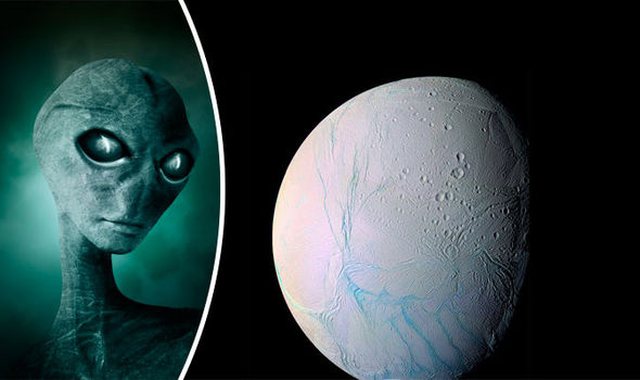
Life on Earth can be found in the strangest places, but scientists think extraterrestrial life could be found in the underwater oceans of a small, icy moon of Saturn.
Enceladus is widely seen as a prime candidate for alien life. The moon, about 480 kilometers wide, has an ocean with a rocky bed beneath its bright white surface.
Oxford University scientists have discovered that the moon is warmer than previously thought, adding to the mystery of whether life could exist there.
For years, NASA's Cassini spacecraft has only noticed heat loss at the south pole, where plumes of vapor and ice crystals were emerging from cracks.
Now they have found similar results at the North Pole, according to a study in Science Advances. The surface in this region was about 7 degrees Celsius warmer than expected, a difference that can only be explained by heat coming from the ocean.
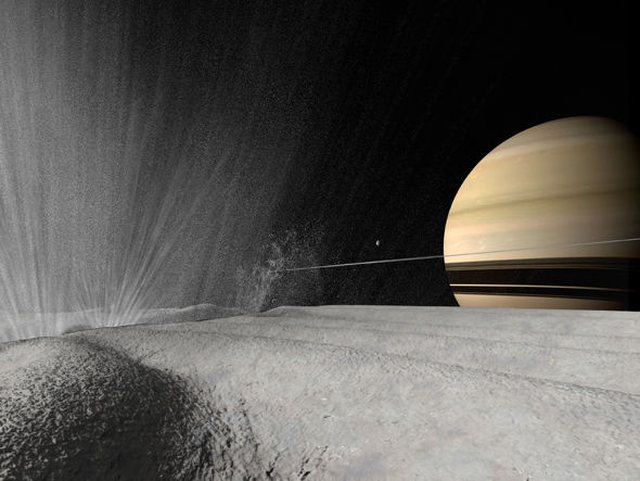
They discovered this by comparing how much energy the moon loses from the 'warm' ocean (o degrees Celsius) while heat builds up on the freezing surface (-223 degrees Celsius).
According to calculations, heat loss on Enceladus reaches 55 gigawatts, equivalent to more than 100 million solar panels, indicating that it is neither heating nor cooling.
Heat is one of the three essential properties for life, and Enceladus already has water and the right chemical elements. For life to flourish, the subsurface must have a balance between heat gain and heat loss.
This is regulated by Saturn's gravitational forces shaking the interior of Enceladus, creating enough friction to melt the ice. The moon's proper distance from the Sun also plays a role here.
The next step for scientists is to determine the age of Enceladus' salty seas to see if there was enough time for life to form.
The Cassini mission ended in 2017, and until a new expedition launches, scientists can only speculate about extraterrestrial life.