


Protests, violence, curfews: From France to Albania, why Europe'...
/ 2026-10-20 23:47:20Focus


Tristan Rutherford – BBC Travel
After being isolated from the outside world for decades and experiencing a mass exodus, Albania is leaning into its culinary roots with the help of its chefs' grandmothers.
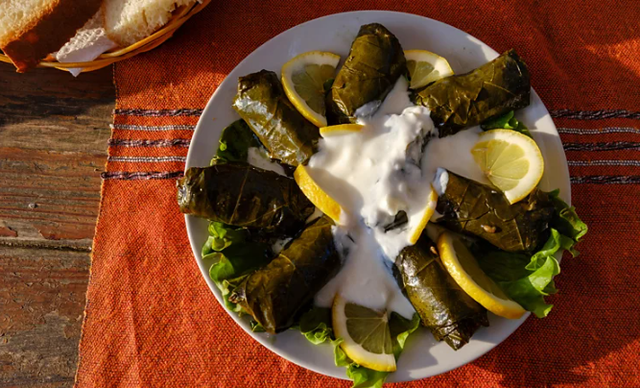
Tefta Pajenga, 76, is one of Albania's many retired TV chefs. On her cooking show, the retired teacher instructs younger housewives on how to cook japraka, for example, a traditional dish of vine leaves stuffed with rice.
Japrak holds a special place in Albanian hearts. It is usually prepared by families together and then shared on holidays.
Today, Albanian grandmothers like Pajenga are teaching generations in one of Europe's oldest countries how to cook age-old dishes. That's because the Balkan nation has suffered not one, but two periods of culinary 'closure' over the past 80 years.
First, from 1946 to 1991, Albania was ruled by communists, who effectively closed the small mountainous nation off from the outside world, leading Edi Rama, the country's current prime minister, to say that it was once "the North Korea of Europe."
During this period, cookbooks were burned, imports were banned, foreign travel was banned, food was collectivized, and shortages were widespread. It was a recipe for disaster.
Second, in the violent buildup and aftermath of the collapse of communism in the 1990s, 710,000 citizens, 20% of the population, left Albania from 1989 to 2001 in search of work in other countries. Over time, Pajenga said, many of these immigrants forgot their grandmothers’ recipes as they adapted to new places and cultures. Amid widespread food shortages during communism and subsequent emigration, by the early 21st century, many Albanians at home and abroad had forgotten how to prepare traditional Albanian cuisine, with the exception of women of a certain age.
Ironically, Pajenga says that Albania's transition to democracy complicated the problem.
“During communism, people had a fixed job from 7 a.m. to 3 p.m.,” she recalls. “When democracy came, you needed more than one job to feed your family.” Therefore, many of those who remembered how traditional Albanian dishes were prepared now no longer had the time to prepare them.
So when Pajenga started her TV show in 2004, “my audience was not for chefs, but for housewives” and also young people “who didn’t have the knowledge or had forgotten how to make traditional cuisine.”
Albania's culinary culture has long reflected its status as a stepping stone between East and West. The Romans introduced grapes, olives, and other modern Albanian produce when they conquered the area in the 2nd century BC.
Starting in the 16th century, dishes like Arnavut cigeri (Albanian liver) spread east from Albania throughout the Ottoman Empire, while sutlijas (rice pudding) probably arrived in Albania from the Ottomans. And after World War II, imported dishes like ajvari (a relish made from roasted red peppers, eggplant, and spices) migrated south from the northern Balkans.
Some local foods, like mishavina (a type of white cheese), cannot be found anywhere else. Its preparation method, in which the curd is stored for three months in animal fat until it ferments into a spicy cheese, has been passed down from generations of shepherds in the Albanian Alps. Other centuries-old Albanian dishes include flina, pancakes, and pie.
Gjyste Bici, 67, learned centuries-old recipes in the northern Alps of Albania, where snowy winters can still await residents for months.
"Even before communism, little material was published, so recipes were always passed down from grandmothers to younger generations," she says.
Many Albanian recipes have religious roots. This was unpopular under communism, especially after 1967, when Enver Hoxha banned all religious practices.
“The dictatorship tried to destroy all religions,” recalls Dallendyshe Xhahysa, a 91-year-old chef who memorized Albanian recipes from her ancestors and made them during the country’s nearly half-century of communist rule.
According to Xhahysa, "the recipes used in Muslim and Christian celebrations would never have survived if it weren't for the efforts of grandmothers like me."
"We had to cook special dishes secretly during Easter or Ramadan," Xhahysa continues.
One such dish was halwa, a dessert traditionally served on the holiest day of Ramadan.
"If you cooked halva for Ramadan, your neighbors would spy on you to get a bonus from the state," Xhahysa recalls.
To avoid attracting attention, the ingredients were purchased weeks in advance.
“We cooked halva with the windows closed or the curtains drawn” to limit the delicious aroma of sugar, nuts and rose water.
The punishment for anyone caught preparing food for a religious holiday was severe.
"They could take us to a re-education camp for many months, giving us a bad job, like cleaning a prison in a remote area," Xhahysa recalls, shivering.
The extreme food shortage led to the loss of other recipes.
“Very few people were allowed to keep animals or agricultural land,” Bici explains. Only those in rural areas were allowed to work a 50 m2 plot and keep a few chickens.
"It was forbidden to have a pig or a sheep."
Everything was rationed, Bici continues.
"Every month you were allowed 10 kg of potatoes and 2 kg of cheese per family."
Without easy access to ingredients or cookbooks, centuries-old recipes like carp casserole were largely forgotten due to the ban on private fishing.
When Albania's borders finally opened in the 1990s and national television networks were no longer controlled by the state, many grandmothers began using TV to revive the country's long-lost culinary heritage.
But while Bici and Pajengë's cooking shows were helping to revive traditional recipes, they were fighting against another wave: farmers in rural Albania were migrating to Tirana in search of work, and many rural villages became ghost towns.
“Agriculture has still not fully recovered from what happened in the decades after communism,” says Pajenga.
Bici has made it her mission to ensure that traditional Albanian recipes are not forgotten for the third time. Her grandmother has compiled old cooking methods in a book, The Unique Cuisine of the Albanian Highlands.
“I get a lot of requests from Instagram for old recipes,” says Bici. “If young people follow my recipe for lakror on TikTok, that’s good too.”
Even Xhahysa, now a great-grandmother, is still sharing her knowledge. She began cooking with her grandmother in the 1930s and contributed recipes to restaurants.
Xhahysa's recipe for frige is a popular appetizer at Uka Farm.
Fried peppers with farm butter served with cottage cheese is a taste of Albania's forgotten past.
Thanks to grandmothers, Albanian cuisine is finally being reborn.





