How Belinda Balluku is fabricating the rumor about Top Channel's...
/ 2026-10-19 16:19:54Focus


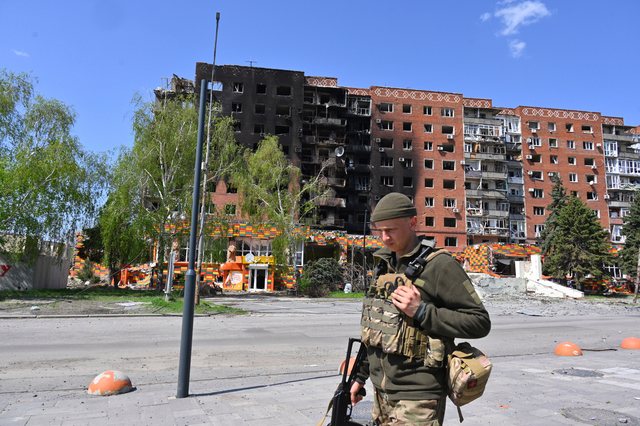
Ukraine as a sovereign nation, with its borders protected by international security guarantees, part of the European Union and committed to rebuilding its economy thanks to major investments from the United States and Europe. This is the kind of agreement that, according to the Washington Post’s David Ignatius, seems to be approaching, citing official American, Ukrainian and European sources. The negotiating package, according to one of the sources, includes three documents: a peace plan, security guarantees and an economic recovery plan.
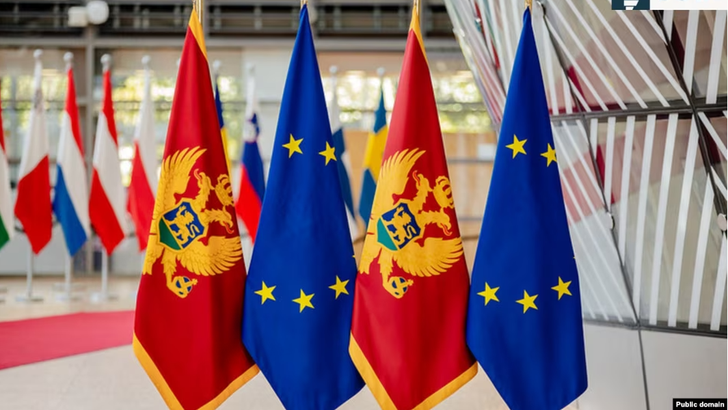
The talks are far from over, with Ukraine and its European backers expected to release a joint set of amendments on Wednesday, Ignatius writes, listing some of the ideas being considered. One is that Ukraine would join the European Union as early as 2027. That fast-track membership worries some EU powers. But the Trump administration thinks it can overcome opposition from Hungary, Kiev’s main opponent in the EU. Membership would boost trade and investment, but perhaps most importantly, it would force Ukraine to rein in a culture of widespread corruption at state-owned enterprises.
Among other things, the United States would provide “Article 5-like” NATO security guarantees to protect Ukraine if Russia violates the agreement. Ukraine wants the U.S. to sign such an agreement and have Congress ratify it; European countries would sign separate guarantees. Ukraine’s sovereignty would be protected from any Russian veto. But negotiators are still grappling with sensitive issues, such as limits on the Ukrainian military. There is talk of increasing the initial U.S. proposal for an army of 600,000 troops to 800,000, which is roughly the size Ukraine would have after the war. But Kiev rejects any formal constitutional limits, as demanded by Russia. Despite the nominal size of the army, there could be additional forces such as the National Guard or other support units.
A demilitarized zone (DMZ) would be established along the entire ceasefire line, from Donetsk province in the northeast to the cities of Zaporizhzhia and Kherson in the south. Beyond this DMZ would be a deeper zone where heavy weapons would be banned. This line would be closely monitored, modeled after the DMZ separating North and South Korea.
“Territorial swaps” are an inevitable part of the deal, but Ukraine and the US are still arguing about how to draw the lines. Russia wants Ukraine to give up about 25% of the Donetsk region it still controls; Trump’s team argues that Ukraine risks losing much of this area in the next six months of fighting and must make concessions now to avoid further casualties. US negotiators have sought different formulas to make this concession more acceptable to Zelensky. One proposal calls for the withdrawal zone to become a demilitarized zone.
Zelensky reiterated on Monday that he has “no legal right” to give territory to Russia. One way to overcome the problem is the Korean model — even today, South Korea claims the entire peninsula, as does North Korea.
The Zaporizhzhia nuclear power plant, the largest in Europe, would no longer be under Russian occupation. Negotiators are discussing the possibility of the United States taking over the plant. Strange as it may sound, the idea appeals to some Ukrainian officials because it would offer a kind of American guarantee against further Russian aggression.