Is this police force professional and capable of handling violen...
/ 2026-10-16 18:54:07Focus


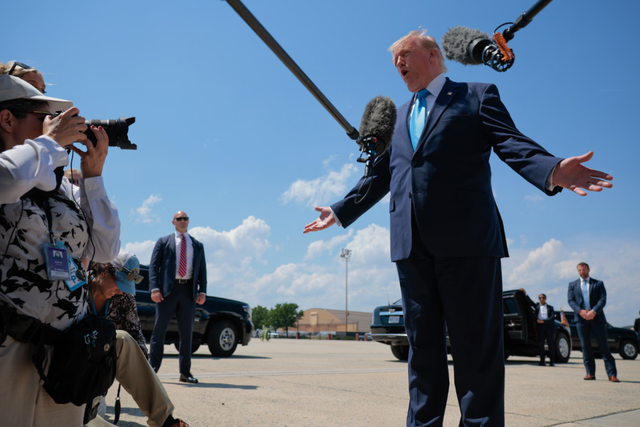
US President Donald Trump has said he will hold talks with Taiwan's President Lai Ching-te, a step that would constitute a significant departure from US diplomatic practice since 1979.
Since then, the US has had no direct official contacts between American presidents and Taiwanese leaders, after Washington officially recognized the Beijing government and severed formal diplomatic relations with Taiwan.
Trump's move comes at a delicate moment for US-China relations, as Beijing considers Taiwan part of its territory and has not ruled out the use of force for reunification.
In his statements, Trump said he intends to discuss a possible arms sale and regional security issues with the Taiwanese leader, calling it simply "the Taiwan problem," while emphasizing that he maintains good relations with Chinese President Xi Jinping, whom he described as "very good."
The US administration is reportedly considering a $14 billion arms package for Taiwan, including anti-drone defense systems and anti-aircraft missiles. A final decision has not yet been made.
This development has caused an immediate reaction from China, which has stated that it opposes any official contact between the US and Taiwan, as well as any arms sales that strengthen the island's military capabilities.
On the other hand, Taiwan considers military cooperation with the US as a key element for maintaining strategic balance in the Taiwan Strait and preventing military escalation.
Under US law on relations with Taiwan, the US is obliged to provide the means for self-defense, although it has maintained a careful diplomatic balance for decades to avoid escalating relations with Beijing.
Trump's statements mark another departure from this tradition, adding to uncertainty about the direction of American policy in the Indo-Pacific and the delicate balance between support for Taiwan and relations with China.