Protests, violence, curfews: From France to Albania, why Europe'...
/ 2026-10-20 23:47:20Focus


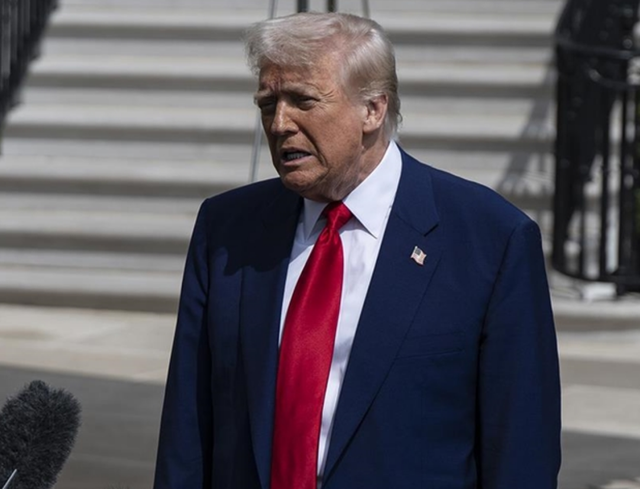
President Donald Trump said on Wednesday that he could reimpose "reciprocal" tariffs on several countries within two or three weeks, a potentially significant re-escalation of the global trade war that has already raised fears of a U.S. and global recession.
“Ultimately, I think what’s going to happen is we’re going to have great deals and by the way, if we don’t have a deal with a company or a country, we’re going to put the tariff on,” Trump said at a ceremony in the Oval Office. “I would say within the next two weeks, wouldn’t you say? I think so. Within the next two, three weeks. We’re going to put the number on.”
Trump on April 9 halted his massive so-called reciprocal tariffs, which technically aren’t reciprocal. The wait was meant to be 90 days to allow countries to negotiate with the administration. Trump officials have said that about 90 to 100 countries have offered to negotiate deals, setting an extremely difficult task for trade negotiators racing against time to secure new commitments.
Without these negotiated agreements, Trump could impose his own tariffs on countries that rise as high as 50% – with the exception of China, which the Trump administration set at an astronomical 145%.
It is not clear what new tariffs Trump will impose on countries that are unable to reach a deal with the United States in the coming weeks — and whether those new tariffs will permanently replace the discontinued reciprocal tariffs or simply serve as a temporary tariff while negotiations continue. In the meantime, the United States maintains a universal 10% tariff on almost every good imported into America, plus higher tariffs on certain goods.
Trump's back-and-forth stance on tariffs has caused immense uncertainty for businesses and consumers. It has also rattled markets, sending U.S. stocks and assets plunging. Despite a two-day market recovery, the S&P 500 has still lost $7 trillion in value since hitting a record high in mid-February.
Major organizations have warned of a global economic slowdown as Trump's import tariffs threaten to reshape global trade and redirect money flows around the world.
China’s appeasement — perhaps
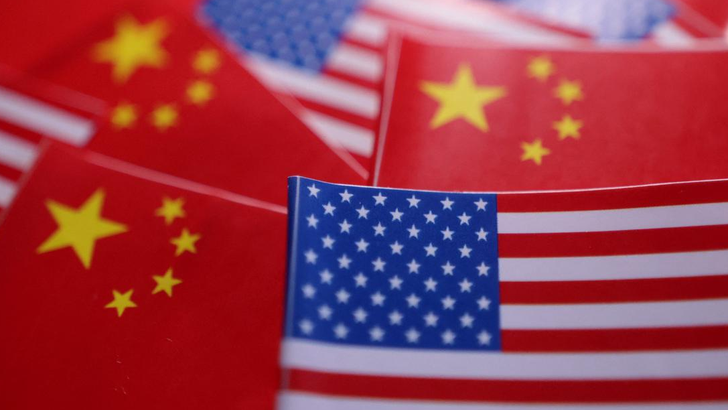
Even as reciprocal tariffs on dozens of countries were halted, the trade war with China escalated dramatically over the past two months, alarming Wall Street and economists. Many major banks predicted that the massive tariffs — as well as China’s larger retaliatory tariffs on American goods — would plunge the U.S. and global economies into recession.
U.S. Treasury Secretary Scott Bessent acknowledged Tuesday at a private equity conference hosted by JP Morgan Chase that the trade war with China is unsustainable and said he expects the battle to de-escalate in the very near future, a person familiar with the matter told CNN. He said the tariffs are effectively an embargo on every nation, preventing business from developing.
Trump echoed that sentiment on Wednesday.
“It’s 145%. That’s very high,” Trump said. “But I haven’t lowered it. It basically means that China is not doing any business with us, basically, because it’s a very high number.”
Although he has said that significant tariffs will be lowered soon, Bessent predicted that they would not be eliminated — a notion that Trump also echoed.
Instead of a hard break or a complete disengagement between the United States and China, Bessent told investors on Tuesday that the goal is to have a rebalancing of trade, the source told CNN. But in a separate discussion with reporters on Wednesday, Bessent noted that it could take two to three years to restore normal trade with China, a person familiar with the matter told CNN.
Stocks rose on Bessent's comments on Tuesday and continued to rise on Wednesday. U.S. stock futures were mostly flat after hours on Wednesday.
China responded to the Trump administration's new openness to a deal with a sharply worded statement, urging America to change its approach to trade.
“Our doors are open if the US wants to talk. If a negotiated solution is truly what the US wants, it should stop threatening and blackmailing China and seek dialogue based on equality, respect and mutual benefit,” Chinese Foreign Ministry spokesman Guo Jiakun told reporters on Wednesday, according to a transcript posted online by the Chinese government.
"Continuing to seek a deal by applying extreme pressure is not the right way to deal with China and simply will not work," he added.
Although Trump on Tuesday said he expected tariffs on China to be “substantially reduced,” on Wednesday he said he wouldn’t wait forever for a deal from any country — including China. Within weeks, he said, his administration could reimpose those tariffs.
Trump called trade with China "very one-sided," but said "we get along well" and rejected harsh language from the Chinese government on Wednesday.
“I get along very well with President Xi,” Trump said. “I have to hope we can make a deal, otherwise we’ll put a price on it.”