How Belinda Balluku is fabricating the rumor about Top Channel's...
/ 2026-10-19 16:19:00Focus


On a hot evening, a farmer from a village of modest tin-roofed houses surrounded by lemon plantations in the coastal mountains of western Mexico approached priest Gilberto Vergara for help.
Drug cartels were blackmailing him and other farmers so badly that it was no longer worth harvesting the lemons. The farmer tearfully told the priest after Mass that the authorities were doing nothing. The residents feared that speaking out was a death sentence, but silence meant starvation for them.
Two recent murders (the first of a representative who spoke out for lemon farmers and the other of a mayor who challenged the cartels) made it impossible to ignore the long-known truth: organized crime controls much of the Mexican state of Michoacan and its economy.
As US President Donald Trump has launched several military strikes against suspected drug smuggling vehicles in the Caribbean and Pacific and offered to send the US military into Mexico, Speaker Claudia Sheinbaum faces increasing pressure to solve a problem that no leader has been able to solve. But years of failed tactics have left residents skeptical that the government will offer a solution.
Father Gilberto Vergara didn't expect much from the authorities, but he told the farmer he would try to talk to them. Later, still wearing his white priest's robe, he returned home in the darkness of Tierra Caliente, along cartel-controlled roads, at risk of landmines or drone strikes.
"The cartels have the state in their hands," the priest told the Associated Press.
"He was fighting for us"
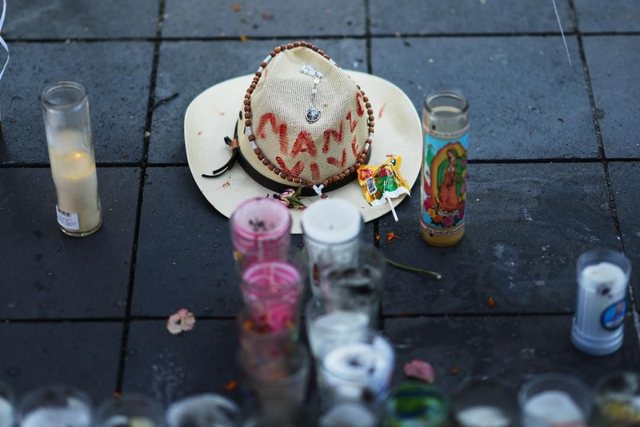
Carlos Manzo, the 40-year-old mayor of Uruapan, was in the city's central square during Day of the Dead celebrations when a teenager shot him seven times, despite having 22 bodyguards, including members of the National Guard, present. The message from the criminals was clear: we can kill anyone.
Manzo was seen as the only politician trying to crack down on drug cartels. He had fired corrupt cops, promoted drug busts on social media, and earned a reputation for going to the most dangerous areas to talk to people. In October, he asked the federal government for help.
“It seemed like he was fighting for us,” said Imelda Peña, a 42-year-old teacher.
The message that resonated
Uruapan residents called Manzo the “Mexican Bukele,” referring to the president of El Salvador, who is known for his tough fight against gangs. Some saw him as a possible candidate for governor, but his anti-cartel message resonated across the country.
Investigators linked his killing to the powerful Jalisco New Generation cartel, but who ordered it and why remains unclear.
After his assassination, protests erupted in Michoacan and Mexico City. President Sheinbaum announced the deployment of 2,000 additional troops, in addition to existing forces, promising better coordination and intelligence.
Endless war
Michoacan has become one of the biggest challenges for the Mexican government. Numerous cartels operate there, using drones with bombs, 3D-printed grenade launchers, and improvised explosive devices. They tighten their grip on every economic sector with blackmail, as lucrative as drug trafficking.
Residents live in fear and uncertainty. Many have been forced to abandon their homes, while lemon farmers say they are not receiving even half the price they need for their produce. Their representative, Bernardo Bravo, was killed two weeks before Manzo, after calling the situation a “permanent commercial kidnapping.”
“We see no solution,” said one farmer. “The criminals have put a noose around our necks!”