"We are drowning..." - From Lisbon, Milan to Tirana, "The Guardi...
/ 2026-10-18 23:13:32Focus



For the first time in the history of the French Fifth Republic, founded in 1958, a government has not fallen due to a motion of no confidence from the parties, but because the prime minister took the initiative himself to seek confidence and failed to obtain it. This record belongs to François Bayrou.
In addition to the deep and distant reasons for the political crisis that France is going through, there is also a very personal element related to the figure of the prime minister, who this morning will submit his resignation at the Elysee before President Emmanuel Macron.
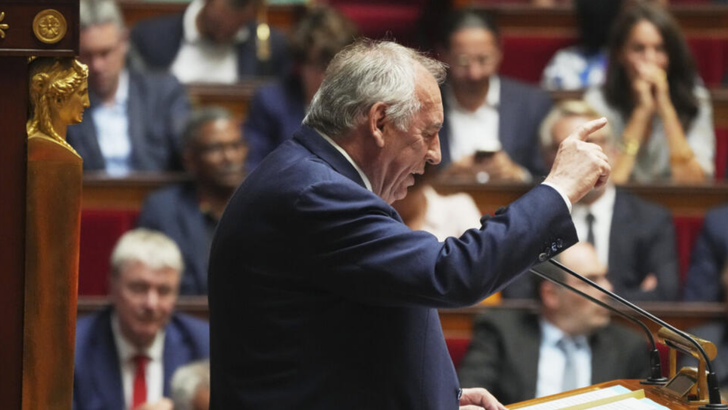
Bayrou yesterday asked for confidence, calling it "proof of the truth", to hold the French parliament and people accountable for the state of emergency regarding public finances.
Perhaps, when he announced this step on August 25, he knew he would lose and sacrificed himself out of a sense of duty to the state; or he simply miscalculated by relying on the support of Marine Le Pen and the Socialists, which was immediately denied.
A grave mistake for an experienced centrist politician like Bayrou, who has been active in French politics for more than five decades, but who only stayed as Prime Minister for nine months. He took office on December 13 and yesterday at 7 p.m. he was defeated in the National Assembly with 35 abstentions, 194 votes in favor and 364 against, more than his unhappy predecessor Michel Barnier.
In his latest speech, Bayrou denounced the state of public accounts and criticized the right that tries to blame immigrants, saying that "they are not the cause of everything" and the left that wants to increase taxes on the rich: "Ask our British neighbors. The result has been the increase in real estate prices in Milan." Here we recall that a week ago Bayrou had accused Italy of "fiscal dumping" that attracts foreigners, causing a harsh reaction from the French government.
But the solutions Bayrou proposed did not convince. He is leaving now, perhaps to prepare and run in the next presidential elections.
What is expected now?
President Macron has accepted the situation and “will name his successor within a few days,” but the problem is that the Assembly formed after the snap elections of summer 2024 remains unfit for government. There is no majority in sight and whoever is appointed risks being overthrown at the first opportunity, which will be the presentation of the budget in October.
Therefore, Marine Le Pen is calling for new elections and says that “if we win an absolute majority, we will go to Matignon to heal the country.” While her rival and anti-system ally, Jean-Luc Mélenchon, is calling not only for new elections for deputies, but also for Macron’s resignation and early presidential elections, because “we will never vote for a socialist prime minister supported by the Macronists (a term he uses to refer to Macron’s supporters).”
Official consultations have not yet begun and the objections and objections of everyone against everyone are beginning, making it very difficult to choose a prime minister who will last until Christmas.
Possible names for prime minister
Names of many current ministers are circulating: Macron's favorite is Sébastien Lecornu (Defense), Catherine Vautrin (Labor and Health), Éric Lombard (Economy), and Gérald Darmanin (Justice); or a rightward return with the other minister Bruno Retailleau (Interior); or a leftward turn with Pierre Moscovici (currently president of the Court of Auditors). Many others hope for a "technical" figure like in Italy, who would be above the political parties.
To avoid rejecting any proposal, former Prime Minister Gabriel Attal wants to go through a "negotiator" to find an "agreement of general interest" before appointing the prime minister who will implement it. A kind of "exploratory task" previously unknown to French politics, which is increasingly approaching the Italy of the past./ Corriere della Sera