Protests, violence, curfews: From France to Albania, why Europe'...
/ 2026-10-20 23:47:20Focus


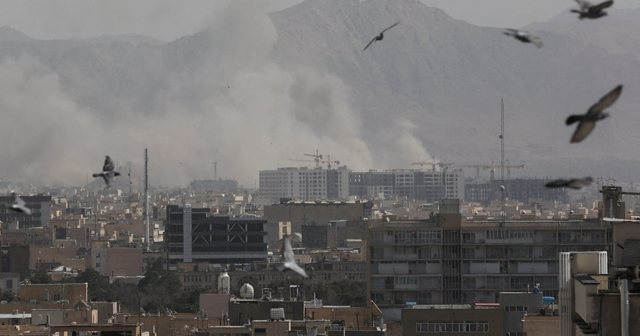
As the war in the Middle East escalates, the question often asked is why the United States has not yet launched a ground operation in Iran.
The answer is not simply strategic, but is closely related to the geography, history, and military complexity of the country.
The main issues are several.
The challenge of the terrain
Iran is a large and geographically complex country. It is surrounded by powerful mountain ranges: the Zagros to the west and the Alborz to the north.
These mountains are not just stunning landscapes, but natural obstacles that any army would have to overcome.
Mountain corridors are narrow, easy to hold under constant attack, and difficult to secure supplies and logistics.
History has shown this clearly: during the Iran-Iraq War in the 1980s, Saddam Hussein's army tried to penetrate Iran, but quickly got stuck in the mountains and failed to advance deeply.
A large country with an organized force
In addition to the challenging terrain, Iran is a country with a large area and a significant population.
Its military forces are structured and prepared for deep territorial defense.
A ground invasion would require the mobilization of thousands of troops, hundreds of billions of dollars in budget, and a long confrontation with a powerful and motivated opponent.
Such an action also risks spreading to the region, turning the conflict into a wider regional war.
American strategy
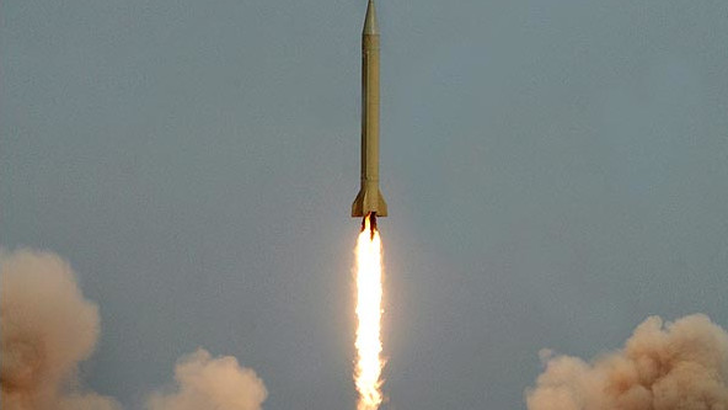
For these reasons, the United States has focused its military activity primarily on air and missile strikes, aiming to strike Iran's military and infrastructure capabilities without engaging in a long and uncertain ground conflict.
The strategy is clear: to strike key elements of Iran's weapons force, while preserving the lives of soldiers and avoiding an uncontrolled escalation of the conflict.
A broad perspective
Security experts warn that a ground intervention in Iran would not only be logistically challenging, but would have major global political and economic consequences.
The conflict could spread to the Middle East, raise energy prices, destabilize neighboring countries, and lead to a more direct clash with other powers like Russia and China.
Under these conditions, the use of air and missile power remains the most sustainable and manageable alternative for the US, while a ground operation is still considered out of practical and safe reach.