Protests, violence, curfews: From France to Albania, why Europe'...
/ 2026-10-20 23:47:20Focus


Germany is using part of its national oil reserves.
The reason is the significant increase in oil and fuel prices worldwide due to the war with Iran.

The release of reserves is intended to curb price increases: " If market concerns about shortages disappear, prices will fall and we certainly expect a cushioning effect ," German Economy Minister Katharina Reiche said at a midday press conference about the release.
"The situation is tense in the field of oil supplies, as the Strait of Hormuz is currently impassable," the German minister explained. Global oil prices have risen by 30%.
According to Reiche, the current high prices are a reflection of risk premiums and speculative profits.
IEA recommends its members to release reserves
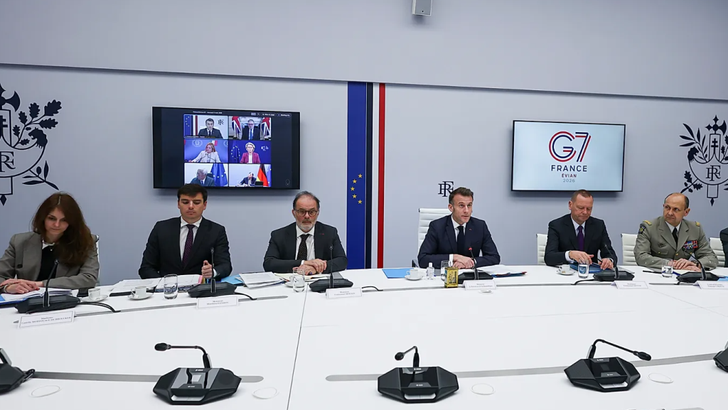
Therefore, the G7 countries discussed today the release of reserves. This measure is coordinated by the International Energy Agency (IEA), which held an extraordinary meeting yesterday. Reiche confirmed that the IEA has recommended that its member states release reserves. This amounts to a total of 400 million barrels of crude oil, the largest release in the history of the IEA. According to the Minister of Economic Affairs, Germany will release 2.64 million tons, equal to 19.51 million barrels.
Germany imports only small amounts of oil from the Middle East. However, according to Reiche, it will comply with the IEA's request: "Because Germany supports the IEA's fundamental principle: mutual solidarity."
Asian countries are the main importers of oil from the Gulf region
Reiche stressed solidarity within the IEA, because large quantities of oil from the Gulf region are destined for Asian countries, and maritime transport has practically stopped due to Iran's blockade of the Strait of Hormuz. According to Reiche, IEA member countries, such as Japan and South Korea, are particularly affected by the price increase.
Reiche stressed that there is no shortage of supply. Japan also has large reserves. It has already announced that it will follow the IEA recommendation, as has Austria.
The latest authorization after Russia's attack on Ukraine
The IEA’s 32 member countries have yet to accept the IEA’s recommendation, but Reiche assumes they will. Member states hold a total of 1.2 billion barrels of oil in emergency reserves. In addition, there are 600 million barrels of industrial reserves, according to the Paris-based organization. The IEA requires its members to hold oil reserves equivalent to at least 90 days of their net imports.
Reasons for releasing emergency reserves previously included the 1990/91 Gulf War, the damage caused by Hurricanes Katrina and Rita in 2005 in the United States, and the disruption of Libyan oil exports in 2011. The most recent use of national oil reserves occurred in 2022 due to the war against Ukraine.
Reiche stressed in the statement that Germany's gas supply remains secure. Gas storage facilities are at 21% capacity and dependence on gas from the Gulf region is very low, less than 4%./DW