How Belinda Balluku is fabricating the rumor about Top Channel's...
/ 2026-10-19 16:19:00Focus


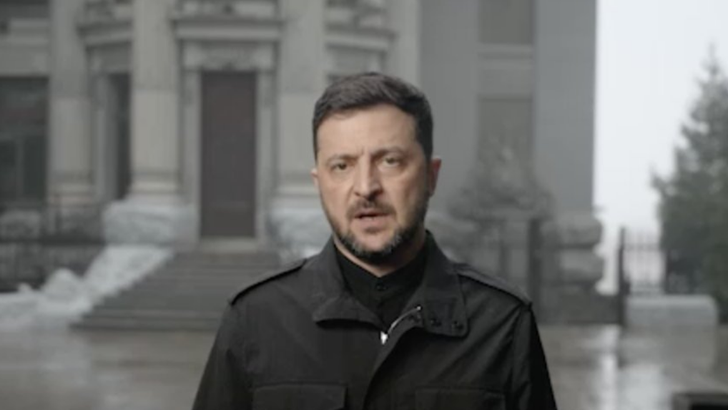
Syrian President Ahmad al-Sharaa has revealed details of military operations in the western suburbs of Aleppo, where his forces took control of key areas before the fall of Bashar al-Assad's regime.
Al-Sharaa said that during the advance, the Russians had sent him a message.
“Stop at this border, take what you have and do not proceed further, otherwise the situation will escalate.” This was the Russian warning.
But the Syrian president showed that he understood the situation as a collapse of the regime, so he did not respond to the Russian warning and the operation continued.
He concluded by emphasizing that the decision was the right one: "And thank God, it was a good and right decision."
The peace of difficult questions
In an emotionally and politically charged interview, Syrian President Ahmad al-Sharaa answered questions from renowned journalist Christiane Amanpour about his alleged past ties to terrorism, using a familiar political tactic: returning the blame to the accuser.
"What does terrorist mean?" was his counter-question.
He answered yes himself.
According to al-Sharaa, a terrorist is anyone who kills innocent people – children, women, civilians – and uses illegal means to cause harm to the population.
But, relying on this standard, he immediately extended the accusation to other global actors.
Al-Sharaa cited the 60,000 civilian casualties in Gaza, emphasizing that most are innocent, and compared the international silence to the stance towards the Syrian regime - which he severely accused.
He stated that the Syrian regime has killed more than 1 million people over 14 years, with 250,000 still missing and another 14 million displaced.
However, according to him, the regime is never labeled as "terrorist".
The Syrian president expanded his analysis to military interventions in Afghanistan and Iraq, arguing that there too, most of the victims have been civilians and that often those who apply the "terrorist" label are the very causes of the destruction.
His final message was that time has changed global perception and that the international public understands more clearly who truly deserves the label 'terrorist'.