Protests, violence, curfews: From France to Albania, why Europe'...
/ 2026-10-20 23:47:20Focus


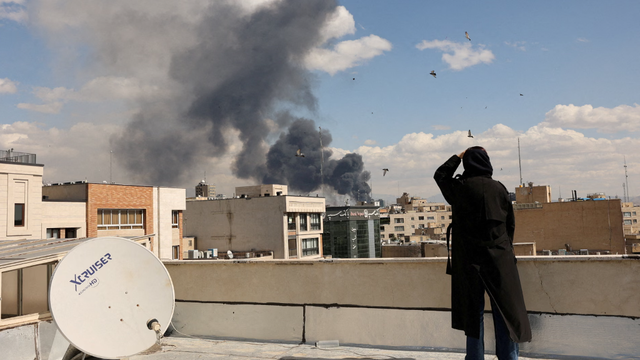
The escalation of the war in Iran affects not only the Persian Gulf, but also Europe. Its involvement in the conflict is now almost a fait accompli. Not for the EU as a whole, but for some individual states. And this is happening at the request of the US. While the European Commission hesitates without being able to take a clear position, a very specific request has come from Washington. Not for all 27 countries, but for Great Britain and France. These have then extended the invitation to Germany: to participate at least in the defense of the allied countries of the Persian Gulf and Jordan, freeing American troops from part of the commitment. In other words, in a "defensive" and not "offensive" function against Tehran.
The request was conveyed through military channels, following London's refusal to actively participate in the attacks against the Pasdaran, and is therefore all the more urgent. It is no coincidence that yesterday French President Emmanuel Macron spoke openly about a "possibility of a clash on our borders."
A phrase that does not exclude involvement, but rather anticipates it. Similarly, British Prime Minister Starmer, after an initial refusal, has authorized American troops to use United Kingdom military bases.
“It is clear that Tehran’s excessive response has become a threat to our people, our interests and our allies and cannot be ignored,” he said. Germany has also begun to emphasize the need to protect German soldiers engaged in the area. In short, some form of participation in the conflict has become almost inevitable.
For Paris, London and Berlin, this is also an opportunity. An opportunity to restore relations with the White House on a more equal footing and with mutual recognition of the role as allies, also in the perspective of Ukraine.
Not to mention that few people want to risk handing over to the Gulf countries (major oil suppliers) a "friendship" with China if Europe does not ensure its presence. Protecting the Gulf countries also means closing the door to Beijing. In this context, some "mediators" between the capitals of Europe and the United States point out that it was no coincidence that Italy was informed of the operation by Israel only when the attack had begun. Some relations with Lebanon have their weight. It was not entirely coincidental that Rome did not receive the same request as France and Britain: to defend the area with fighter jets and not just to supply weapons.
But the risk of the conflict escalating also depends on the choices Tehran makes: the decision to direct drones towards British bases in Cyprus could in fact bring about the involvement of the European Union.
During the extraordinary meeting of the Commission, the possibility of Cyprus referring to Article 42, paragraph 7 of the EU Treaty, that of mutual military assistance between the 27 countries in case of danger, was also analyzed. At the moment, Nicosia has not requested activation, but if the attacks on the island were to intensify, it would not be ruled out. Also because Cyprus, not being part of NATO, would have no other alternative. Meanwhile, the Atlantic Alliance is staying out of the conflict: as NATO's supreme commander in Europe, Alexus Grynkewich, explained yesterday, it would intervene only to protect one of the partners that would need it. And the only member of the zone is Turkey.
Moreover, the EU is strengthening the Aspides mission, created to protect commercial ships in the Persian Gulf. In fact, maritime transport is becoming one of the emergency consequences of this war. From which Europe is not able to stay away. And which risks bringing the war closer to home./ La Repubblica