How Belinda Balluku is fabricating the rumor about Top Channel's...
/ 2026-10-19 16:19:00Focus


This week has been a watershed moment for Europe, a week when European leaders realized that they can no longer fully rely on the United States for their protection against the Russian threat.
The recently released American peace plan for Ukraine highlighted a bitter reality: the US appears willing to accept Moscow's demands and leave Europe in a powerless position, recreating a new European order in Russia's interests.
Kaja Kallas, the European Union's foreign policy chief, asked her officials to count the times Russia has invaded other countries in the 20th and 21st centuries, and the result showed 19 countries out of 33 times.
This was not just a historical calculation, but a warning that Russian aggression did not cease with the collapse of the Soviet Union and that its reward would only bring more war.
Her warnings were also echoed by German Foreign Minister Johann Wadephul, who announced that intelligence services are warning of the possibility of a war against NATO by 2029 and that Vladimir Putin was regularly recruiting new divisions, which are also targeting Europe.
French President Emmanuel Macron did not hesitate to characterize Russia as a persistent destabilizing force, a predator constantly seeking to extend its power, and a direct threat to Europe.
While British Prime Minister Keir Starmer warned that without adequate protection, Putin's ambition to advance will not be stopped and that Europe must be prepared for any scenario.
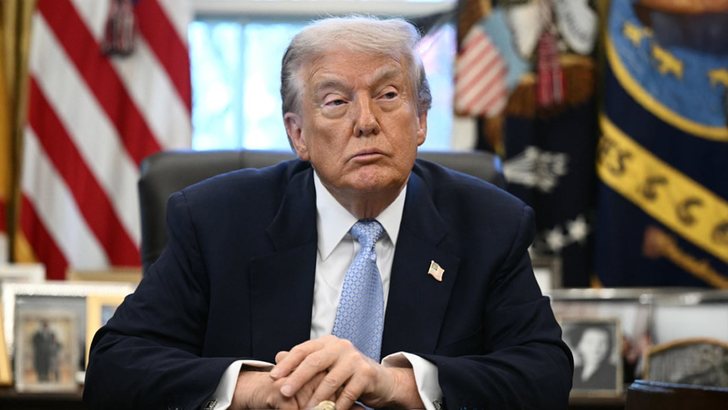
In contrast to this European alarm, some American officials, such as Steve Witkoff and US President Donald Trump, appear to treat Russia as an ordinary partner, minimizing the risk of Moscow's aggression and interpreting any expansionist gesture as acceptable.
This dramatic difference between European perception and American policy has brought visible tension to the transatlantic alliance.
The 28-point American plan for ending the war in Ukraine, which was drafted after Witkoff's contact with Russian officials and made public, clearly showed that the US was ready to accept Russia's demands and eliminate European security from the balance established after the start of Russian aggression.
Former French President François Hollande described this moment as historic and dramatic, as it signifies the capitulation of Ukraine and the degradation of Europe to a position dependent on a Russian-American condominium.
To protect its interests, Europe reacted by eliminating the most threatening parts of the American proposal.
Of the original 28 points, only 19 remained, while those that affected NATO or European security were deleted.
This action demonstrated a European unity that, despite rivalries over the roles of France, Germany, and Britain, managed to maintain strategic integrity and prevent Russia from easily taking advantage of American disorientation.
In this context, Ukraine set red lines for further negotiations: Donbass must remain under Ukrainian control, the army cannot be limited, and NATO membership remains uncontested.
Although the US may try to impose a plan favorable to Russia, Europe is prepared to act autonomously to ensure its security and protect Ukraine from further aggression.
This week has shown that Europe must learn to stand alone in the face of threats and understand that American support is no longer guaranteed.
For the first time, European leaders deeply understood that the continent's security cannot rely solely on allies abroad and that the future requires decisive action, strategic unity and a willingness to confront Russia independently./ The Guardian