Is this police force professional and capable of handling violen...
/ 2026-10-16 18:54:07Focus


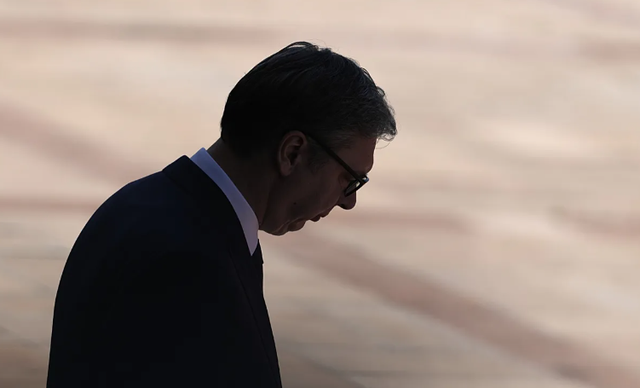
In a major blow to Belgrade's bid to join the European Union, EU ambassadors who met in Brussels on Wednesday failed to find unanimity on Serbia's path to membership in the bloc.
Eight of the 27 member states opposed opening another round of accession talks with Serbia at a meeting in Brussels on Wednesday attended by European Union ambassadors, three EU diplomats confirmed to Euronews .
The member states opposing the opening of Group 3 – which focuses on competitiveness and inclusive growth – were the Netherlands, Sweden, Finland, Belgium, Estonia, Lithuania, Bulgaria and Croatia.
The three member states that remain least opposed, but not convinced, are Denmark, Luxembourg, and Latvia, while general supporters of Serbia's membership include the powerful mediator, France.
French President Emmanuel Macron previously stated that the bloc wants a strong and democratic Serbia on its side.
Supporting states are concerned about the risk of further alienating the Western Balkan country and not rewarding it for attempted reforms.
'Double standards'
Serbia officially applied for EU membership in 2009 and was granted official EU candidate status in 2012. Twenty-two chapters have been opened during this time and two have been provisionally closed.
Unanimous support from the 27 EU member states is required to open and close each negotiating group, which are thematic groupings of areas of law and policy.
Serbia's former prime minister, Ana Brnabic, has rejected claims that her country is pro-Russian, telling Euronews that Serbia has supported Ukraine since Russia's full-scale invasion, while criticizing what she described as "double standards" of EU accession.
A European Commission spokesperson told Euronews on Monday that a document explaining why the EU executive believes that the "recent steps" taken by Serbian authorities justify the opening of Group 3 had been shared with EU countries that day.
Serbia has implemented significant elements of the commitments it has made to address member states' concerns, including repealing controversial changes to judicial laws, along with progress on media freedom, the electoral framework and cooperation with the EU on foreign and security policy, according to a document seen by Euronews.
While Serbia has not yet aligned itself with EU sanctions against Russia over its full-scale invasion of Ukraine, the Commission noted that Belgrade has cooperated with the bloc to combat sanctions circumvention, provided significant support to Ukraine and intensified high-level political contacts with Kiev.
The document also acknowledged that Serbia's work is far from finished, stating that "further work is still required" in judicial reform and the prosecutorial system.
Wednesday's meeting was called to see if this assessment is shared by the capitals.
'Positive developments'
An EU diplomat, speaking to Euronews on condition of anonymity, said the general opposition from the eight countries was focused on Serbia's "problematic" rule of law issues and "non-compliance with sanctions".
Another said that several member states agreed with the Commission's positive approval, stating that Serbia "has fulfilled" or is "on track" to fulfill the criteria to move forward with Group 3.
Various senior EU officials have publicly supported the opening of Group 3, especially after Serbian President Aleksandar Vučić overturned controversial judicial changes in June, after the Venice Commission recommended changes.
European Commissioner for Enlargement, Marta Kos, is among the biggest supporters.
"In light of some recent positive developments, the Commission renewed its recommendation to the Council to open Group 3 in accession negotiations with Serbia," Kos said on Tuesday during a debate on Serbia's accession in the European Parliament in Strasbourg.
“The Commission will also continue to promote further progress of reforms for the benefit of all Serbian citizens and the entire Serbian society.” (Euronews)