"We are drowning..." - From Lisbon, Milan to Tirana, "The Guardi...
/ 2026-10-18 23:13:32Focus


Germany has long been seen as the indispensable nation of the EU, or as the largest, richest, and most important power.
But in recent years, Berlin has been seen as a country that has disappeared from this position in the EU, hampered by internal disputes in a coalition government, which has caused clashes and delays in decisions.

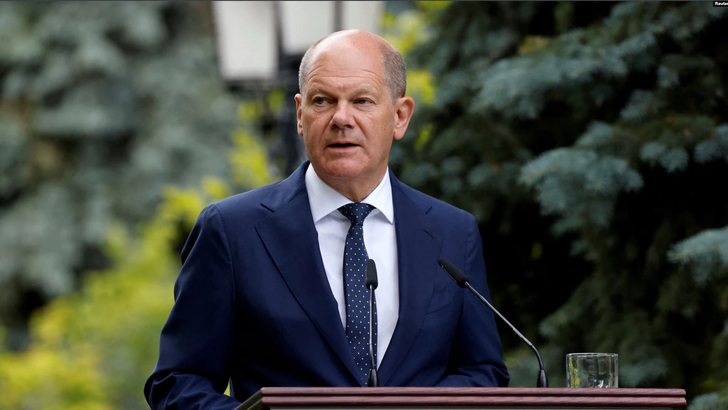
According to "The Guardian", Olaf Scholz has had a good relationship with Emmanuel Macron, slowing down the Franco-German engine that powers the EU.
Polish-German relations have also been difficult, strained by disagreements over European air defense and historical grievances.
Friedrich Merz, on his way to becoming Germany's next chancellor, has promised to restore German leadership in Europe.
“I think Merz and his team understand the urgency of the global situation and that we need a functioning German government soon,” said Jana Puglierin, head of the Berlin office at the European Council on Foreign Relations. “The situation is so urgent that we need to first agree on some basic principles to be able to speak with one voice in Brussels… of course, for the EU, the sooner the better.”
The rest of Europe is calling on the continent's largest economy to send more military aid to Ukraine.
Merz, who has previously warned Scholz against a policy of cooperation with Russia, has promised to send long-range Taurus missiles to Kiev.
He is also likely to face demands to send German troops to Ukraine as part of a preventive or peacekeeping force, a discussion that Scholz described as “ completely premature .”
Jana Puglierin said there was consensus among the main parties that “we cannot abandon Ukraine,” but predicted difficult coalition negotiations over aid funding and this, of course, could paralyze support for Ukraine.
Merz's government, at a NATO summit in June, is expected to face calls to increase Germany's defense spending to at least 3% of GDP.
Such demands will intensify pressure to reform Germany's debt curbs, which limit annual government borrowing to 0.35% of GDP. Many EU countries also want Berlin to reverse its opposition to pan-European defense borrowing, so-called eurobonds.
Despite his fiscally conservative economic stance, Merz has signaled that he is open to both options, but neither has been set in advance.
Janis Emmanouilidis, deputy chief executive at the European Policy Center, said Merz has been extremely careful not to say anything that could cost him in his party, where many do not want debt-reinforcement reform or eurobonds.
" It's difficult to judge Merz's room for maneuver in curbing debt ," he said.
The center-right leader is expected to remove radical ideas from the campaign trail, such as permanent controls on the German border as part of a five-point plan that included turning away all asylum seekers.
Strict controls would damage relations with Germany's neighbors.
Poland's Prime Minister, Donald Tusk, last year condemned the controls imposed by Scholz's government as "unacceptable."
Emmanouilidis expects Merz to enjoy better relations with Tusk and Macron, although he said it would be difficult for relations not to improve.
"Merz's leadership style shows that he will try to play a stronger role in contrast to Scholz's lack of courage," Emmanouilidis said.
But the most testing leader for Merz will be Donald Trump, who in the space of a month has overturned the certainties of post-war German foreign policy, an icy reality for Merz's Christian Democratic Union party, a traditional ally of the US Republican Party.
Since US Vice President JD Vance met with far-right leader Alice Weidel and attacked European democracies, Merz, a lifelong transatlanticist, sounds less optimistic about reaching agreements with Trump, Puglierin said.
“Germany is very sensitive to attacks on the EU… I think this could lead to more openness to help the EU function,” he said.