"We are drowning..." - From Lisbon, Milan to Tirana, "The Guardi...
/ 2026-10-18 23:13:32Focus


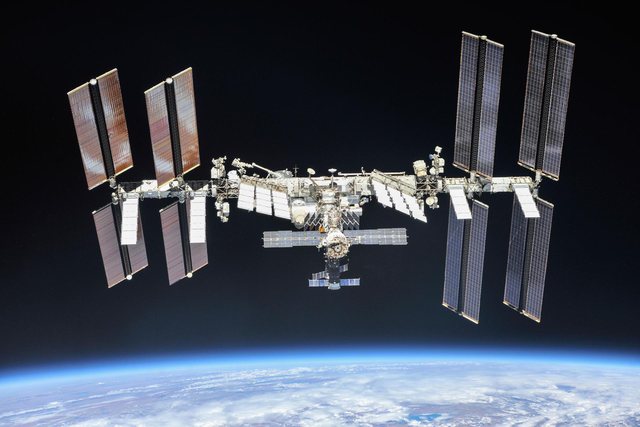
The International Space Station (ISS), located in low Earth orbit for more than 25 years, will be withdrawn and deorbited in a controlled manner by the end of 2030, NASA has announced.
This space laboratory, where astronauts from all over the world have lived and worked, has served as a platform for scientific research in microgravity and has also paved the way for private commercial missions.
The ISS is an international project operated by NASA, Roscosmos, the European Space Agency, Japan's JAXA and the Canadian Space Agency, and has welcomed over 280 astronauts from 26 countries. The 108-meter-long station has six bedrooms, two bathrooms, a gym and space to host up to eight spacecraft at a time.
As the station has begun to show structural problems and air leaks, NASA has decided that the safest way to retire it is a controlled re-entry into Earth's atmosphere, culminating in a crash in a remote ocean area. SpaceX will provide the vehicle to perform the deorbit, with most of the ISS modules burning up or melting during re-entry, while the denser parts will fall into the ocean and sink safely.
Currently, seven astronauts live on the ISS, part of the 73rd expedition, including members from NASA, Roscosmos and JAXA.
For the successor to the ISS, NASA is relying on the private sector, while the agency itself has no plans to build another space station. NASA's goal is to remain a commercial sector customer for human operations in low Earth orbit, including the transport of crews and cargo.