Protests, violence, curfews: From France to Albania, why Europe'...
/ 2026-10-20 23:47:20Focus


The tariff circus continues. From Brazil to Canada, from India to Switzerland: uncertainty still prevails.
And just hours before the new US tariffs come into effect, the controversial agreement, reached with difficulty in Scotland, between the presidents of the European Commission, Ursula von der Leyen , and US President, Donald Trump, also appears to be faltering.

The 15% general tariff on most European imports, set by the executive order signed on July 31, could be revised.
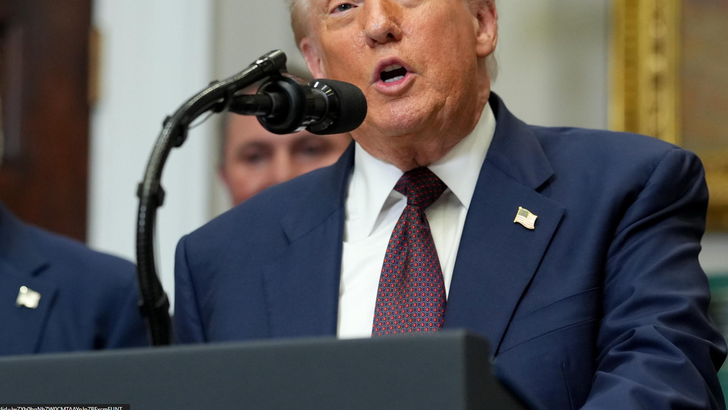
"They bought a $600 billion tariff cut. I can use it however I want. And if they don't honor the deal, there will be a 35% tariff," Trump told CNBC yesterday, referring to the political agreement under which Brussels commits to investing $600 billion in the United States and buying $750 billion in liquefied natural gas (LNG) over three years.
But the offensive is even broader. Trump has announced that drugs imported into the United States currently under investigation under Section 232 of the Trade Expansion Act could face tariffs of up to 250%, the highest level threatened so far by the new administration.
The stated objective is to return pharmaceutical production to American soil and reduce drug prices, among the highest in the world.
"I'll start with a small tax, then I'll take it to 150%, and finally to 250%," Trump explained.
The measures could be announced within a week. Another provocation by the American tycoon to increase pressure on the European bloc, which seems increasingly divided?
New criticism of the trade deal came from the Berlin government. Finance Minister Lars Klingbeil, who met with Treasury Secretary Scott Bessent in Washington on Monday, called the agreement unsatisfactory.
“We were very weak,” he declared, announcing the intention to negotiate separately with the United States to secure “a quota system for German steel.”
These words indicate not only the temptation to return to the trade bilateralism of individual states with the US when it comes to protecting their interests, but also the weakening of the European Union's power in one of the few areas where it has exclusive competence.
The SPD leader's statements have angered Brussels: "We were surprised," a spokesman said. "I recall that EU member states and economic actors have repeatedly stressed that a trade conflict with the United States was not the desired path. They have insisted that only a negotiated solution could guarantee stability and protect our common interests. This was the position of the overwhelming majority of member states, including the one from which the minister in question comes."
However, the European Union is pressing ahead. Yesterday, as expected, through an urgent procedure, the Commission suspended for six months European countermeasures against US tariffs, which, starting on 7 August, would have hit a total of $93 billion in imported US goods.
Within two weeks, member states must approve the decision by simple majority.
This is only a suspension, and countermeasures can be reactivated if necessary. An indication that nothing, even in Brussels, is taken for granted.
An official close to the matter confides that discussions on the US-EU joint statement are " quite advanced " and the text is practically " 90-95% ready ."
Trade Commissioner Maroš Šefčovič also announced that he is “in contact” with US Commerce Secretary Howard Lutnick and Trade Representative Jamieson Greer “to implement the EU-US agreement of July in all its elements.” “Work continues in a constructive spirit,” he stressed, despite Trump’s threats.
But the open files are numerous. Brussels expects the 15% tariff to be applied "very soon" to cars, which are currently subject to a 27.5% tariff, as Trump's executive order only dealt with so-called reciprocal tariffs.
Vehicles, like other sectors, fall under a different legal basis.
Meanwhile, the numbers seem to back up the White House. The overall US deficit fell 16% in June, to $60.2 billion, the lowest level in two years.
This decline was mainly caused by the decrease in imports of consumer goods and contributed to GDP growth in the second quarter, which increased by 3% after -0.5% recorded in the first quarter.
But worrying signals about the state of the economy are coming from the labor market and consumer prices.