How Belinda Balluku is fabricating the rumor about Top Channel's...
/ 2026-10-19 16:19:00Focus



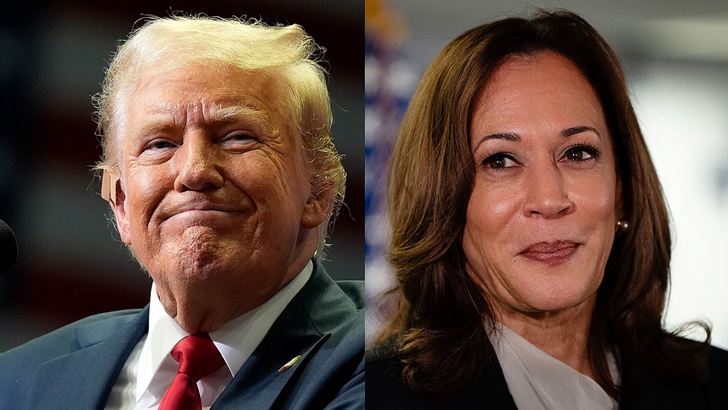
Donald Trump does not tire of denigrating his rival, the Democratic candidate for president, Kamala Harris , the current vice president of the USA.
He makes fun of her, as a woman, as a person of color.
His online followers join in, spreading offensive memes and fake videos. But Harris and her campaign team weather these attacks by holding a mirror up to the Trump team.
Many followers online are taking this case, – especially on TikTok. Channels that used to deal with showbiz celebrities portray Kamala Harris as a pop icon.
The focus is on the laughter of Kamal Harris, who laughs even at himself, who lets the campaigns of attacks pass without fear and, if necessary, even counterattacks. So recently she said that as a prosecutor she knows law breakers of all kinds. "Criminals who mistreat women, cheaters, liars, who use the rules to their advantage. Trust me, I know guys like Donald Trump.”
She really annoys Trump when she calls him "weird" - "strange", funny - and then returns to the seriousness of the election campaign topics. With this tactic, she, together with Tim Walz, the candidate for vice president, is gaining points with no less humor, says the humor researcher, Eva Ullmann: "The election campaign in the USA is certainly not only about humor. The Harris-Walz duo has a clear political line, can be affirmed and has a high status. They are not comedians, nor do they want to appear as such, but there is something very warm, down-to-earth, attractive about their humor, and that is very disarming."
Ullmann says the big advantage they both have over Trump when it comes to humor is "the fact that they don't come off as disrespectful at all. This is exactly what seems to be returning to Trump and his circle like a boomerang, because society says: 'No, we no longer have the nerve for this continuous denigration, for contempt, for hatred, we are fed up with this, we don't want this form anymore. humor."
Humor is not a waste of power
Eva Ullmann, author of the book "Humor is the boss's business", is convinced that the culture of humor and laughter is changing. "Humor in positions of power has long been associated with an aggressive form of humor such as that practiced by Trump. But this is not enough to manage employees well. The awareness that there is also humor that can make others look good, that does not embarrass others, this is actually a new development in high positions. The greatest fear of humor among people in positions of power is that they will not be taken seriously, that they will become ridiculous and be seen as clowns.
Fear of laughter is archaic
This fear is deeply rooted in human history. Researchers of human behavior are convinced that laughter was at the root of human communication – prehistoric people laughed before they could talk. Psychologist and laughter researcher Michael Titze explains how, around 400,000 years ago, a joking laugh could also turn into a threat: “Laughter gave a sense of closeness, connection and well-being within the group. But as soon as two clans faced each other, for example due to a fight over hunting grounds, the laughter of others could also mean: we have been defeated, they are dominating and laughing at us." The fear of being ridiculous is something very archaic - and every politician today is afraid of it."
Laughter has been politicized since ancient times. The Greek philosopher Plato, for example, was not a supporter of humor, he was of the opinion that laughter was dangerous for the state. According to him, anyone who indulges in laughter is no longer able to think rationally and loses his power. On the other hand, his student Aristotle loved to laugh and was of the opinion that laughter distinguishes humans from animals. Perhaps world history would have been different if Aristotle had been followed as a model. But no, when Christianity came, along with it came a religion in which joy and laughter were frowned upon for a long time.
Laughter in different regions of the world
This has changed over the centuries to today, but the age-old fear of losing power through being laughed at - experts call this fear of being laughed at as "gelotophobia" - is still in the minds of many people - in some regions of the world even more than in western countries. In 2009, a multinational study in 73 countries conducted by the University of Zurich found that in certain cultures such as the Middle East or Asia, where special emphasis is placed on honor and saving face, laughter can be perceived very differently. "Snickering or mocking can lead to incredible reactions, it can even cause wars," says Michael Titze. "This is why laughter itself is very ambivalent."
Going back to Kamala Harris: According to expert Titze, she can simply laugh at the negative sides of other people's laughter: "She is criticized and then starts laughing with all her heart, so as to weaken her opponents." Kamala Harris' cheerful nature is also a form of communication. "According to the motto: "Watch how I act and if you want, come with me and we will do the rest together".
When someone – like Harris – laughs out loud, the brain releases neurotransmitters that convey a good feeling. It is not for nothing that it is said: "Laughter is the best medicine".
Happy people are attractive. However, laughter researcher Michael Titze makes it clear that laughter is genetic: “ You can't teach humor, you can't play it or force it, because then it looks forced. The individual potential for humor development is innate .”/DW